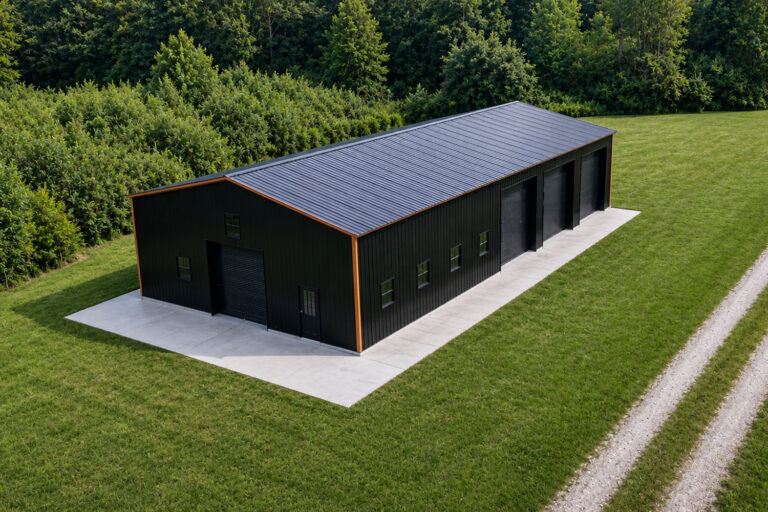
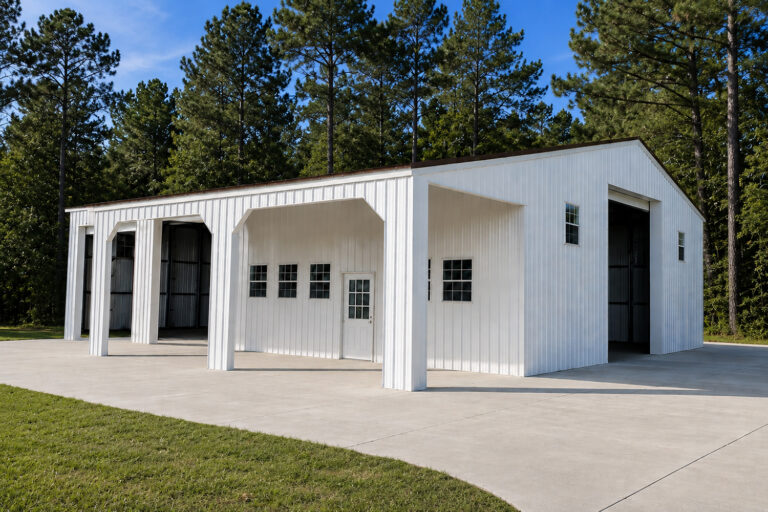
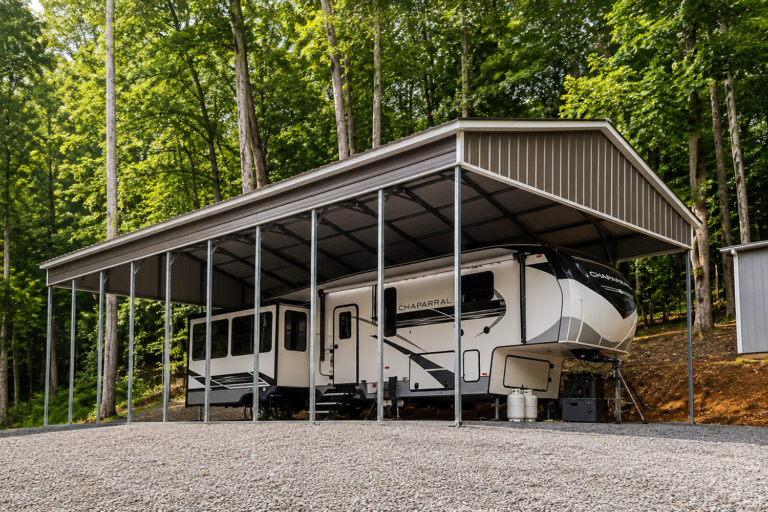
Choosing metal buildings in Washington, DC is different from planning a building in a rural state or large suburban county. Washington, DC has dense neighborhoods, limited lot sizes, alley access, historic districts, zoning overlays, stormwater concerns, snow and ice events, humid summers, heavy rain, and strict building permit review. A small detached garage, vehicle cover, storage structure, or commercial-use metal building must be planned around the property’s available footprint, local zoning rules, existing structures, alley access, drainage, and any historic or design review requirements.
Blue Valley Steel helps customers compare practical building options for urban, residential, commercial, and small-lot storage needs. Whether you are considering metal garages, metal carports, metal barns, metal RV covers, or commercial metal buildings, the structure must match DC’s zoning, permitting, lot layout, access, and stormwater conditions.
This guide explains how to choose metal buildings in Washington, DC with practical guidance on urban and suburban storage needs, limited lot sizes, zoning, permits, historic district concerns, snow and ice, heavy rain, drainage, humidity, commercial storage, vehicle protection, small garages, carports where allowed, RV storage limitations, and DC Department of Buildings planning requirements.
Table of Contents
- Why Metal Buildings in Washington, DC Need Urban Planning
- Snow, Ice, Heavy Rain, Humidity, Drainage, and Flood Risk
- Product Type Comparison for Washington, DC Properties
- Roof Style Recommendations for Metal Buildings in Washington, DC
- Size and Layout Guidance for Limited DC Lots
- Commercial Storage, Vehicle Protection, and Urban Use Cases
- DC Permitting, Zoning, Historic Districts, and Building Review
- Final Buying Checklist
Why Metal Buildings in Washington, DC Need Urban Planning
Metal buildings in Washington, DC should be planned around the lot first and the building size second. In many parts of DC, the usable building area is limited by setbacks, alley access, rear yard requirements, lot occupancy, existing structures, historic district rules, public space concerns, stormwater requirements, and neighboring properties. A building that looks simple on paper may require more review if it changes the exterior of a property, adds a new structure, affects an alley, or sits in a historic district.
That makes DC different from a rural storage project. In a rural setting, a buyer may focus mostly on width, length, roof style, and equipment clearance. In Washington, DC, the first questions are often: Is this structure allowed in the zone? Is the building in the rear yard? Does it meet alley setback rules? Does it affect lot occupancy? Is the property in a historic district? Does the work require a garage permit, new building permit, building plat, zoning review, or special review? Can vehicles access the structure from an alley without blocking public space?
For homeowners, metal buildings in Washington, DC may be used as detached garages, compact storage buildings, protected parking, workshop space, or tool storage. For businesses, they may support commercial storage, service equipment, contractor materials, fleet coverage, or secure utility storage. For institutions, nonprofits, and urban agriculture projects, a small metal structure may support maintenance tools, supplies, or protected equipment storage. In all cases, the building must be planned carefully because land is limited and the approval process can be more detailed than in less dense areas.
Snow, Ice, Heavy Rain, Humidity, Drainage, and Flood Risk
Washington, DC has a Mid-Atlantic climate with hot, humid summers, winter snow and ice events, heavy rain, thunderstorms, and localized flooding concerns. The National Weather Service notes that Washington’s biggest winter storms are often nor’easters, and the DC government’s climate planning resources identify heavy rain, flooding, record-breaking extreme weather, heat, and snowstorms as important concerns. For metal buildings in Washington, DC, these conditions make roof drainage, site grading, ventilation, and permitting especially important.
Snow and Ice Planning for Metal Buildings in Washington, DC
Washington, DC is not a heavy-snow city like northern New York or western Pennsylvania, but snow and ice still matter. A winter storm can create roof load, block alley access, freeze at doorways, and make compact parking areas difficult to use. A detached garage or carport placed in a rear yard should be positioned so snow removal remains possible and roof runoff does not refreeze at the entrance.
For metal buildings in Washington, DC, the best winter planning usually includes a roof style that drains efficiently, a door location that does not collect ice, and a pad that slopes water away from the structure. If the building opens toward an alley, think about where snow piles, trash bins, parked vehicles, and utility poles may affect access after storms.
Heavy Rain and Stormwater Runoff
Heavy rain is a major planning concern in Washington, DC because many properties include hard surfaces, compact yards, alleys, sidewalks, patios, and limited green space. Stormwater that cannot soak into the ground can move quickly across paved areas and into low spots. A small building placed in the wrong location can worsen drainage around a rear yard, garage entrance, or neighboring property.
Before installing metal buildings in Washington, DC, review how water moves across the property during a heavy storm. Avoid placing a building where roof runoff will discharge toward a basement entrance, alley low point, neighbor’s yard, or existing drainage problem. Gutters, downspout routing, permeable surfaces, grading, and stormwater controls may be important depending on the project size and location.
Flooding and Low-Lying Areas
Washington, DC has riverine, tidal, coastal storm surge, and interior flooding risks. Low-lying areas near the Potomac River, Anacostia River, Rock Creek, Southwest, Buzzard Point, Navy Yard, and other flood-prone neighborhoods may require additional review. Even properties away from rivers can experience interior flooding during intense rainfall when drainage systems are overwhelmed.
For metal buildings in Washington, DC located near a flood-prone area, confirm floodplain rules before planning the structure. A garage, storage building, or commercial metal building may need elevation, drainage, floodplain review, or additional construction requirements. If the building will store vehicles, tools, equipment, records, inventory, or electrical components, flood risk should be considered before choosing the final location.
Humidity and Ventilation
DC summers are humid, and enclosed buildings can trap hot, moist air. A metal garage or storage building without ventilation may become uncomfortable and may allow condensation to develop. This is especially important if the structure will store tools, electronics, upholstered vehicles, business inventory, landscaping equipment, or materials that should stay dry.
For enclosed metal buildings in Washington, DC, consider vents, windows, framed openings, walk doors, roll-up doors, insulation, and airflow. Ventilation is especially useful for small garages and commercial storage spaces because the smaller the building, the faster heat and humidity can build up inside.
Product Type Comparison for Washington, DC Properties
Different building types solve different problems. In DC, the best choice depends on lot size, zoning, access, whether the structure is residential or commercial, and whether the building is allowed in the desired location. The comparison below explains how common Blue Valley Steel building categories may fit metal buildings in Washington, DC.
| Building Type |
Best Uses in Washington, DC |
Planning Notes |
| Metal Garages |
Compact vehicle storage, alley-access parking, tools, small workshops, secure residential storage |
Confirm garage permit requirements, building plat needs, zoning, alley setback, lot occupancy, and historic review. |
| Metal Carports |
Vehicle protection where allowed, limited covered parking, small-lot weather protection |
Carports may face stricter zoning limits and should be reviewed carefully before purchase. |
| Metal Barns |
Rare in DC, but relevant for institutional, garden, maintenance, or urban agriculture support storage |
Most DC lots are not suited for traditional barns; compact storage or commercial-style buildings may be more realistic. |
| Metal RV Covers |
Limited use for large vehicles, specialty parking, or off-site storage planning |
RV storage is difficult on many DC lots due to height, access, zoning, and space limitations. |
| Commercial Metal Buildings |
Contractor storage, service equipment, fleet support, utility storage, business material protection |
Expect detailed review for use, occupancy, zoning, fire access, utilities, and certificates of occupancy. |
Metal Garages in Washington, DC
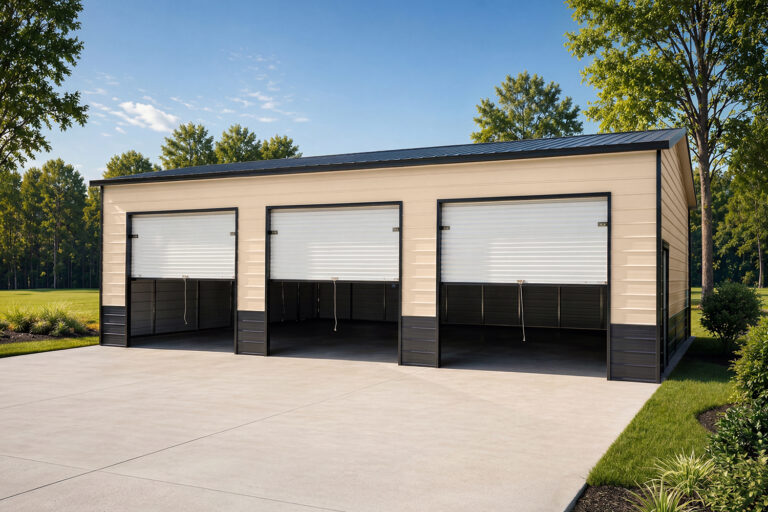
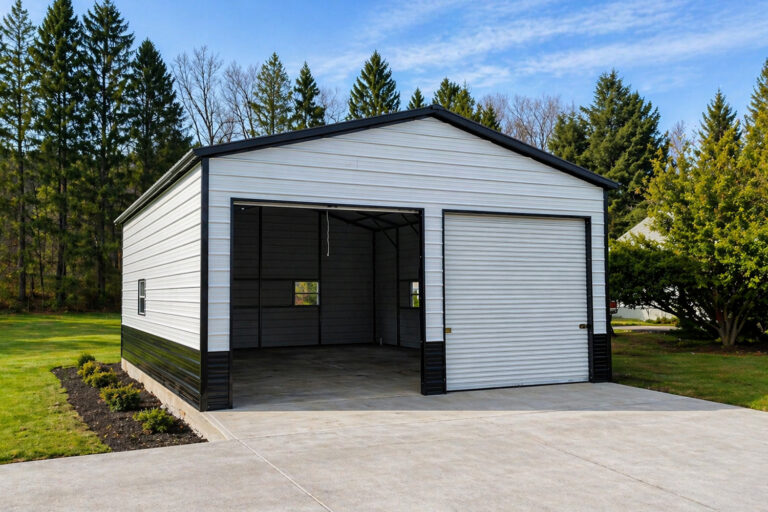
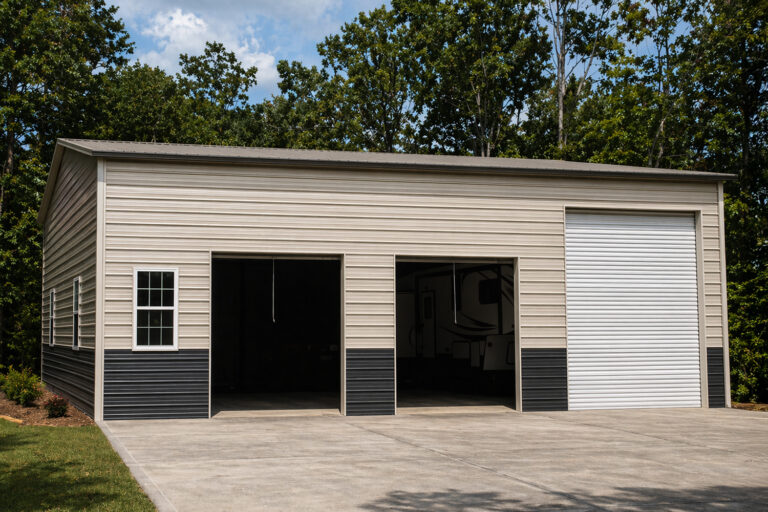
Metal garages in Washington, DC are usually the most practical building category for residential properties. A detached garage can protect a vehicle from snow, ice, sun, rain, tree debris, and theft. It can also create secure storage for tools, bicycles, lawn equipment, motorcycles, and seasonal items. In neighborhoods with alley access, a rear-yard garage may be useful when designed around the alley width and required setbacks.
DC garage planning should start with the permit process. The DC Department of Buildings identifies a garage permit for renovation or new construction of a detached or attached garage on private property. New garage construction generally requires architectural plans and a surveyor’s plat. If the garage borders a public alley, DDOT review may also be required depending on location and scope.
Metal Carports in Washington, DC
Metal carports in Washington, DC require careful review because carports may be treated differently from garages, and zoning can limit where they are allowed. A carport can provide basic vehicle coverage from rain, sun, and snow, but the structure’s location, attachment, setbacks, visibility, and impact on the lot may affect approval.
Before ordering a carport, confirm whether it is allowed on the property, whether it must be attached or detached, whether it can be placed in the desired yard, and whether zoning relief is needed. Because DC lots are often narrow, a carport that physically fits may still fail zoning or public space requirements.
Metal Barns in Washington, DC
Metal barns in Washington, DC are not common in the traditional rural sense. DC does not typically have the same large agricultural parcels as surrounding states. However, barn-style or utility-style metal structures may be relevant for urban agriculture, institutional maintenance, park-adjacent storage, community garden support, or specialty commercial storage where zoning allows.
For these uses, the structure should be evaluated more like a utility storage building or commercial accessory structure than a rural livestock barn. Confirm the use, occupancy, zoning, stormwater, access, and whether the building can store the intended materials. If the structure supports urban agriculture, also review local rules for soil, water, compost, tools, fencing, and public access.
Metal RV Covers in Washington, DC
Metal RV covers in Washington, DC are limited by space, height, access, and zoning. Many DC lots cannot reasonably support a tall RV cover, and many alleys are not suited for large RV movement. Even when a property has enough space, height limits, lot occupancy, setbacks, and neighborhood character rules may make approval difficult.
For RV owners, the best approach is to confirm local parking and storage rules before planning a structure. If the RV cannot be stored on the lot, Blue Valley Steel’s RV cover options may still be relevant for nearby properties outside DC, commercial storage yards, or larger lots in surrounding jurisdictions.
Roof Style Recommendations for Metal Buildings in Washington, DC
Roof style is especially important for metal buildings in Washington, DC because the structure must manage rain, snow, ice, leaves, humidity, and compact-lot drainage. A stronger roof style can help move water away from the building and reduce maintenance over time.
Vertical Roof Style for Metal Buildings in Washington, DC
A vertical roof is the best all-around recommendation for most metal buildings in Washington, DC. Vertical roof panels run from the ridge down toward the eaves, helping water, light snow, leaves, and debris move off the roof more efficiently. This is useful on small lots where poor drainage can quickly become a problem.
Vertical roofing is especially recommended for garages, commercial storage buildings, and any structure where long-term drainage matters. It is also a better fit for buildings near trees because leaves and debris are less likely to sit on the roof compared with lower-cost roof styles.
A-Frame Horizontal Roof Style
An A-frame horizontal roof provides a more traditional look and may work for smaller buildings in moderate-use situations. It can be suitable for some garages or storage structures when budget is a major factor. However, because the panel orientation is not as efficient for shedding rain and debris as a vertical roof, it may not be the best choice for tight urban lots with limited drainage options.
Regular Roof Style
A regular roof style may work for small, simple covers where cost is the main concern. In Washington, DC, however, buyers should compare the lower upfront cost against the need for durable drainage, snow shedding, and long-term performance. On compact lots, a roof that moves water efficiently is often worth the upgrade.
Size and Layout Guidance for Limited DC Lots
Size planning for metal buildings in Washington, DC starts with the property boundaries, not the product catalog. DC lots can be narrow, shallow, irregular, alley-facing, rowhome-adjacent, or affected by easements and public space. The usable building area may be much smaller than the open area that appears available.
Start With the Plat and Property Lines
Before choosing a building size, obtain or review the property plat. DC DOB notes that building permit applications for exterior work may require a building plat showing existing and proposed improvements. A plat helps identify the main structure, driveway, proposed building location, trees, and other improvements that may affect review.
For metal buildings in Washington, DC, the plat is especially important because a few feet can determine whether a building meets setbacks, alley clearance, rear yard limits, and lot occupancy rules. Do not rely on a fence line as the property line without verification.
Plan Around Alley Access
Many DC garages and rear-yard structures depend on alley access. Alley width, turning radius, trash collection, neighboring garages, utility poles, and parking patterns can all affect usability. A garage door that is too wide, too narrow, or poorly placed may make the building hard to use.
Before selecting a garage, measure the alley, turning area, vehicle width, and door opening. If the garage opens onto an alley, verify setback and clearance requirements. If the alley is narrow, a smaller garage with better door placement may work better than a larger structure that is difficult to enter.
Use Compact Layouts Wisely
Small garages and storage buildings should be planned carefully. A compact structure can still be very useful if the door placement, shelving, lighting, and interior organization are designed well. For one-car garages, add space for door swing, walking clearance, tools, bikes, and bins. For small commercial storage, plan vertical shelving, clear aisles, and secure access.
For metal buildings in Washington, DC, avoid oversizing the structure if it creates permit problems or poor site function. A smaller building that meets zoning and drains properly is better than a larger building that blocks access or creates water problems.
Consider Height Limits and Neighborhood Character
Height can be more sensitive in DC than in rural areas. A tall garage, RV cover, or storage building may affect neighboring views, historic district review, alley character, or zoning compliance. Before choosing sidewall height, confirm local height rules and whether the structure’s appearance may be reviewed.
Commercial Storage, Vehicle Protection, and Urban Use Cases
Metal buildings in Washington, DC can be useful for more than residential garages. In commercial and institutional settings, they may support contractor equipment, fleet vehicle protection, maintenance supplies, landscaping tools, utility equipment, or secure inventory storage. However, commercial uses usually require more review than simple residential accessory storage.
Commercial Storage Buildings
Commercial metal buildings in Washington, DC should be planned around zoning use, access, fire safety, utilities, loading, parking, and certificate of occupancy requirements. If the building changes how land or space is used, a certificate of occupancy or zoning review may apply. Storage of vehicles, materials, tools, chemicals, fuel, or business inventory may also trigger additional requirements.
For businesses, the best planning step is to define the exact use before choosing the building. A structure used for secure tool storage is different from one used for repair work, vehicle storage, retail inventory, or industrial materials. The more active the use, the more likely additional review will be needed.
Vehicle Protection
Vehicle protection is one of the most realistic uses for metal buildings in Washington, DC. A small garage or approved cover can protect vehicles from weather, tree debris, snow, ice, and theft. For electric vehicles, plan carefully if charging equipment will be installed, because electrical work will typically require proper permits and licensed installation.
For alley-access garages, think about the full daily-use pattern. Can the vehicle enter easily? Can doors open inside? Is there enough space for trash bins? Will snow or stormwater block the entrance? Can the building be ventilated? These details matter in dense neighborhoods.
Urban Agriculture and Garden Storage
USDA urban agriculture resources identify community gardens, rooftop farms, hydroponic systems, vertical production, and other urban growing operations as part of modern urban agriculture. In DC, a small metal storage structure may support tools, soil amendments, irrigation parts, garden equipment, or controlled-environment growing supplies if zoning and property rules allow.
For these uses, the structure should be planned around access, security, ventilation, stormwater, and neighborhood context. If it is part of a community or institutional project, confirm ownership, permits, public access, and maintenance responsibilities before selecting the building.
DC Permitting, Zoning, Historic Districts, and Building Review
Permitting is one of the most important parts of choosing metal buildings in Washington, DC. The DC Department of Buildings regulates construction activity through permit review, construction document review, zoning compliance, inspections, and code enforcement. Depending on the project, approvals from other agencies may also be required.
DC Department of Buildings Permit Guidance
For new structures, the DC Department of Buildings identifies a new building permit for construction of an entirely new structure. New building permits generally require architectural plans, structural engineering where structural work is involved, and a surveyor’s plat showing the location of the new structure. For garages, DOB identifies a garage permit for new construction or renovation of a detached or attached garage on private property.
For metal buildings in Washington, DC, this means buyers should not assume that a prefabricated structure can simply be placed on the property. Plans, plats, zoning review, permit fees, and inspections may apply. Work involving electrical, plumbing, mechanical, or other trade systems may require supplemental permits and licensed contractors.
Accessory Structures and Small Projects
DOB homeowner guidance references accessory structures such as garages and sheds. Some smaller accessory structure alteration and repair work may fall under simplified permit categories when the structure is no more than 500 square feet and 15 feet high, has no change in use, and meets the applicable scope. However, a new structure, larger structure, structural work, historic property, change in use, or commercial use can require standard permit review.
For metal buildings in Washington, DC, confirm the exact permit type before ordering. A simple shed repair is not the same as a new detached garage, a carport, a commercial storage building, or a structure in a historic district.
Zoning, Rear Yards, Garages, and Carports
DC zoning rules are detailed and zone-specific. Accessory buildings are generally tied to the principal use on the same lot and often have rear-yard, height, lot occupancy, and alley-related restrictions. Historic older zoning references also show how private garages and carports can be regulated differently, including alley setback and location requirements. Modern zoning, zone district, overlays, and Board of Zoning Adjustment requirements should always be confirmed with the current DC Office of Zoning or DOB zoning review.
For metal buildings in Washington, DC, this is why a zoning check is essential. A garage may be possible where a carport is not. A storage structure may be allowed in one zone but limited in another. A rear-yard building may need to meet height, footprint, and alley clearance rules. If relief is needed, the process may take more time.
Historic District Concerns
Historic district review can affect even small exterior projects. DOB’s historic property special permit guidance includes certain scopes of work that require a permit because a property is located within a historic district, and it notes that applicants should confirm requirements with the DC Office of Planning before submitting to DOB. Garden storage sheds and exterior work may require special review depending on the property and scope.
If the property is in a historic district or is a landmark, review requirements before choosing a metal building. Materials, visibility from public space, height, roof shape, color, door style, and placement may matter. A building that would be straightforward elsewhere may need design approval in a historic district.
Permit and Planning Checklist
- Confirm whether the project is residential, commercial, institutional, utility, or urban agriculture-related.
- Verify the property’s zoning district, overlays, historic district status, and alley access conditions.
- Obtain or review the building plat before choosing the structure size or location.
- Ask DOB whether the project requires a garage permit, new building permit, alteration permit, historic property permit, or another permit type.
- Confirm whether architectural plans, structural plans, a surveyor’s plat, engineering, or ProjectDox review is required.
- Check setbacks, rear yard rules, lot occupancy, height limits, alley clearance, and public space concerns.
- Ask whether DDOT review is required if the garage or access point borders a public alley or affects public space.
- Review stormwater, floodplain, and drainage concerns before preparing the pad.
- Ask whether electrical, plumbing, mechanical, charging equipment, lighting, or commercial use requires supplemental permits.
- Keep approved plans, permits, inspection records, plat documents, and warranty information for future property records.
Final Buying Checklist for Metal Buildings in Washington, DC
Before purchasing metal buildings in Washington, DC, use this checklist to make sure the structure fits the property, the local rules, and the long-term use.
- Define the use: Decide whether the building is for vehicle protection, garage storage, tools, commercial materials, garden equipment, small workshop space, or another approved use.
- Confirm zoning early: Check zoning, setbacks, lot occupancy, rear yard rules, height limits, and whether the structure is allowed in the proposed location.
- Check historic status: If the property is in a historic district or is a landmark, confirm review requirements before selecting a design.
- Review the plat: Use a current building plat to confirm property lines, existing improvements, proposed building location, trees, and access.
- Measure access: Confirm alley width, turning radius, door clearance, trash access, utility locations, and vehicle movement.
- Choose the right roof: Use a vertical roof for better rain, snow, ice, and debris shedding on compact urban lots.
- Plan drainage: Make sure roof runoff and yard drainage move away from doors, basements, neighboring properties, and low areas.
- Account for humidity: Add ventilation or insulation if the building will store tools, vehicles, inventory, or equipment long term.
- Confirm permits: Contact the DC Department of Buildings before ordering, especially for garages, new structures, historic properties, and commercial uses.
- Plan for long-term usability: A smaller approved structure with good access and drainage is better than a larger building that creates zoning or site problems.
Blue Valley Steel offers flexible options for property owners, homeowners, businesses, contractors, and organizations comparing metal buildings in Washington, DC. From compact garages and approved carports to commercial storage buildings and utility structures, the right building should be planned around DC’s limited lots, zoning rules, historic district concerns, permit process, drainage, snow and ice, humidity, and urban access needs. A well-planned structure will be easier to permit, easier to use, and better suited for the property where it is built.

 Sale
Sale