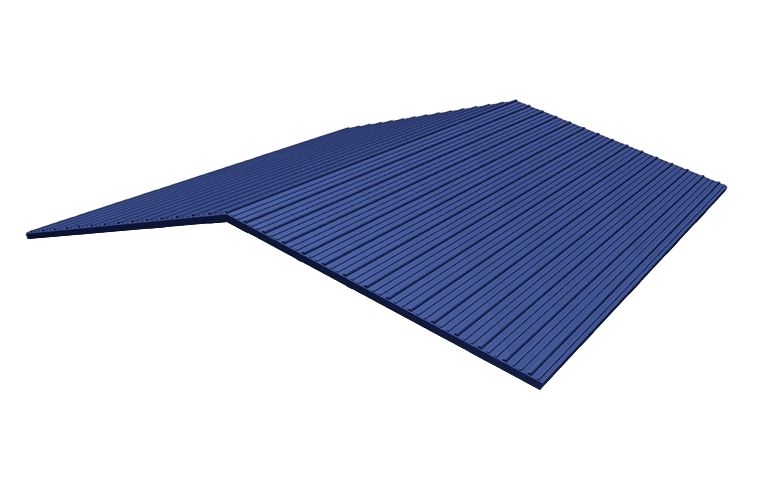
Metal Building Components

Get familiar with the key parts of a metal building—Steel framing, panels, and anchors—so you know what you’re getting and which options matter most.

Metal Building Frame

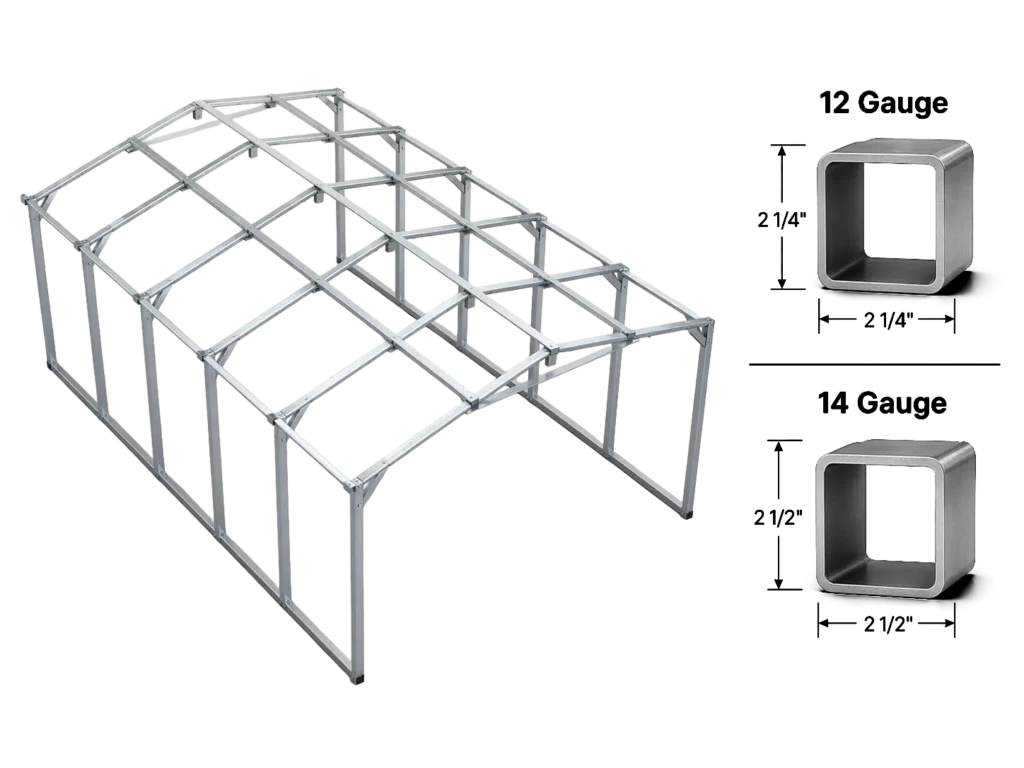
Our steel buildings and carports are built with either 14-gauge or 12-gauge steel framing.

The 14-gauge frame (typically 2½” x 2½”) is the most common option and works great for many standard applications.

The 12-gauge frame (typically 2¼” x 2¼”) offers higher tensile strength and is often recommended for high-wind or heavy-snow areas, or for taller carports over 10 feet.

Rust-perforation limited warranty coverage is 10 years on 14-gauge frames and 20 years on 12-gauge frames.
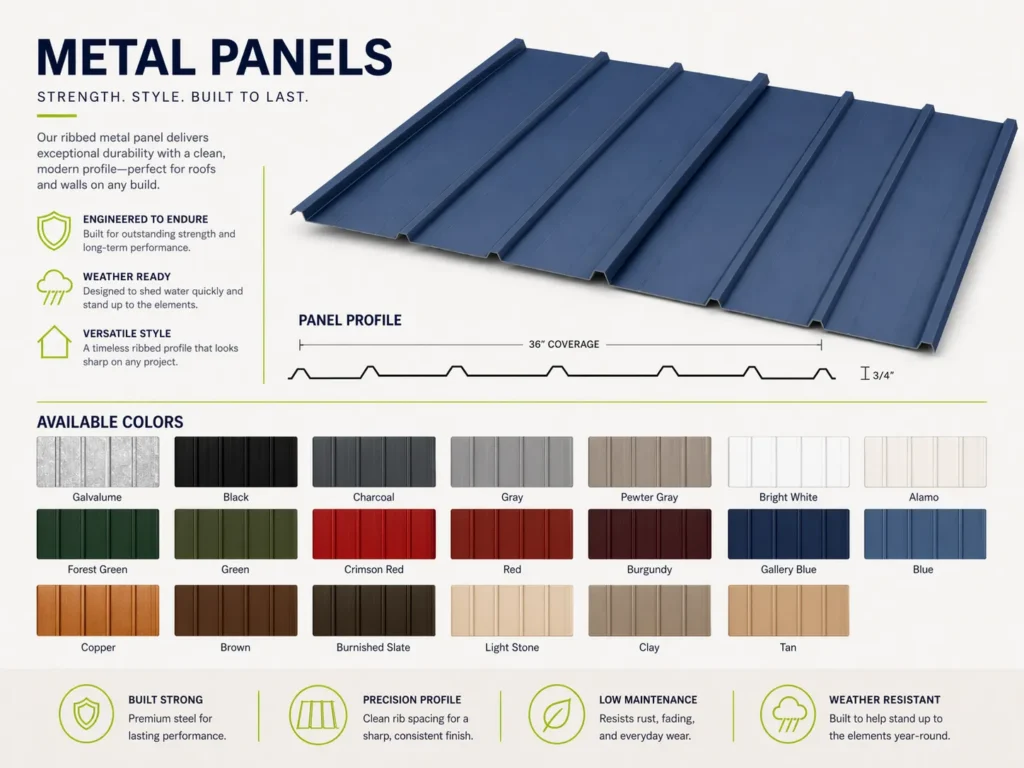
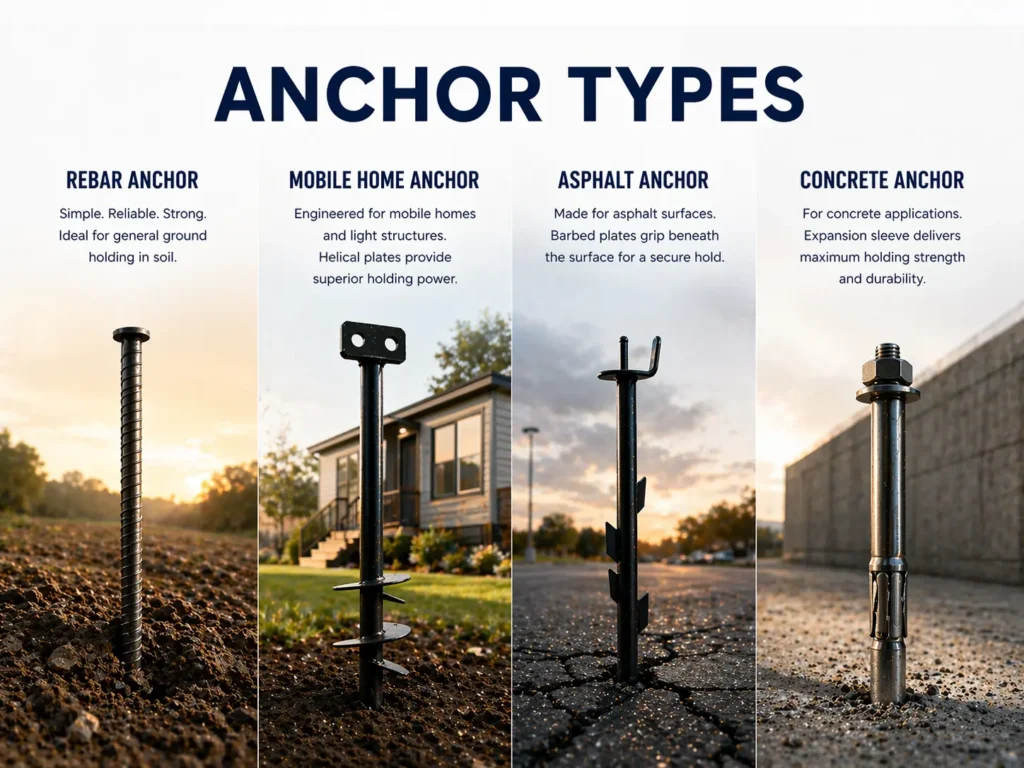
Doors, Windows, And Add-Ons
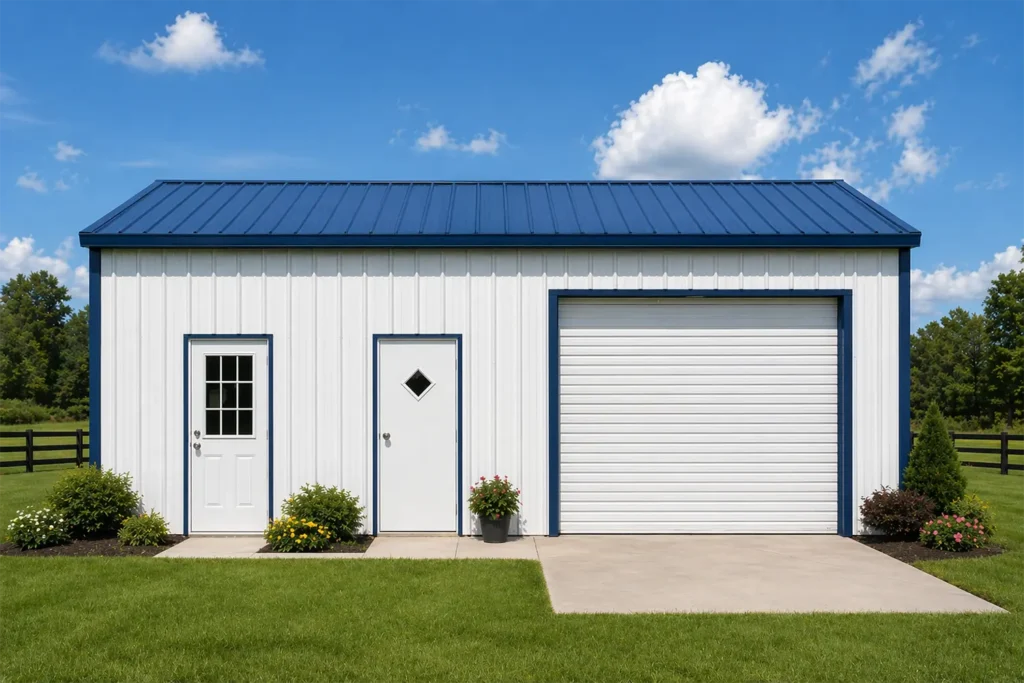
Dial in how your building functions day to day by choosing the right doors, windows, roll-up openings, and insulation. These options affect access, airflow, natural light, and overall comfort—so your layout works the way you actually plan to use the space.

Walk-In Doors

Choose a purpose-built entry door that’s made to fit and perform on a metal building.

Our diamond window and solid doors are USA-made FRP units with a UV-coated, pebble-textured surface, bonded to thick polyurethane foam for added rigidity and insulation, then pre-hung in a welded aluminum frame for a tight, secure install.

For a more traditional look, the 9-lite premium steel door adds natural light with single-pane glass and offers durable, rust-resistant performance with easy upkeep.

Common sizes include 32″ x 72″ and 36″ x 80″ for diamond doors, and 36″ x 80″ for the 9-lite steel door.
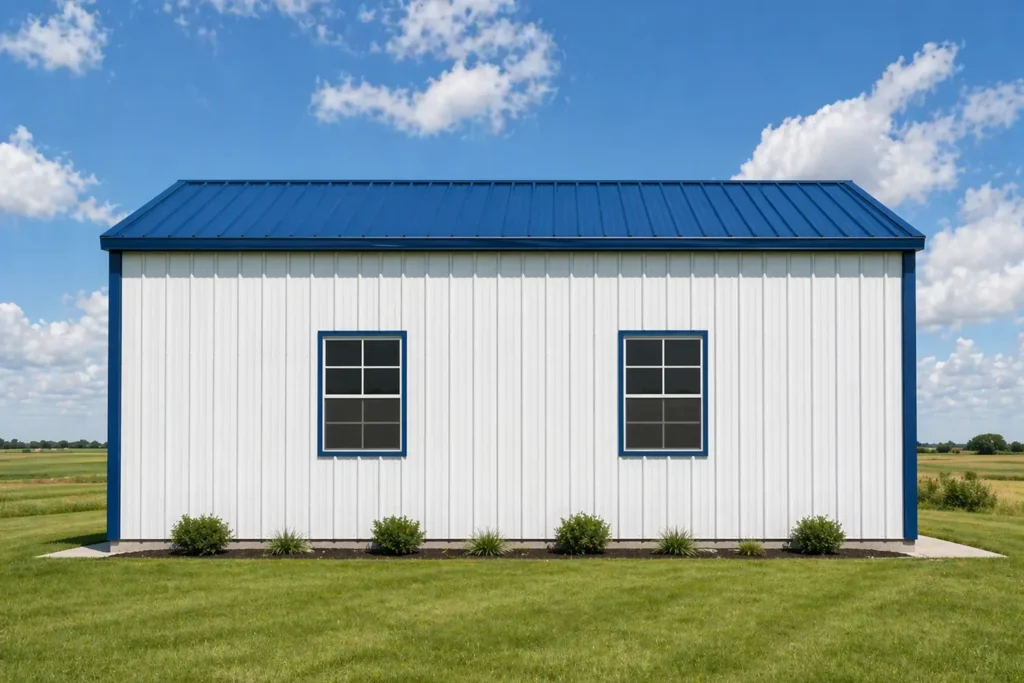
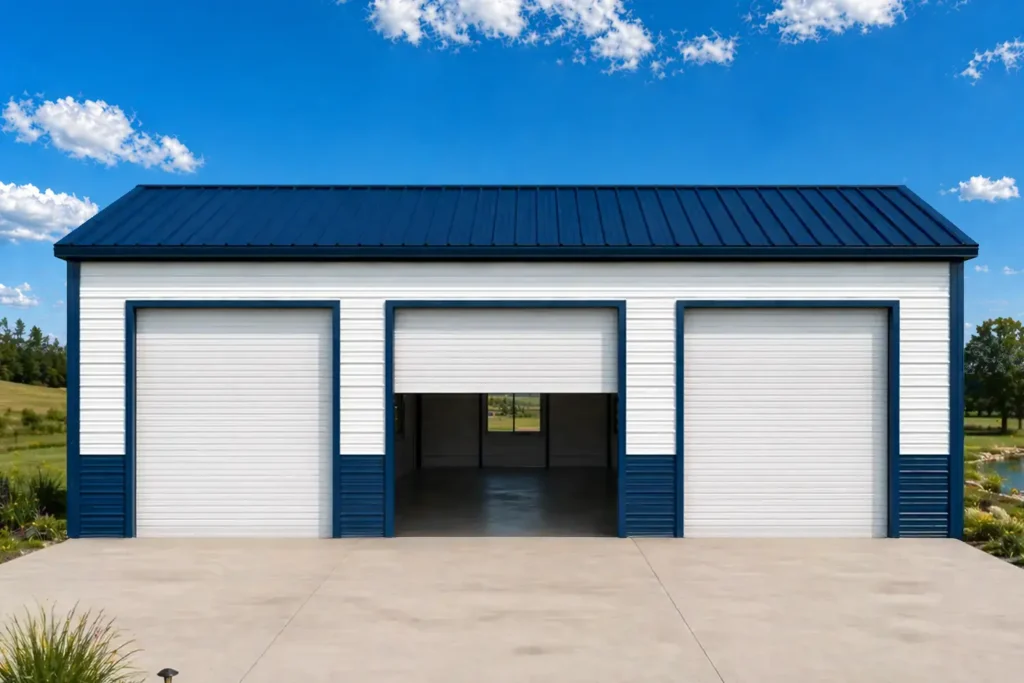
Metal Building Types
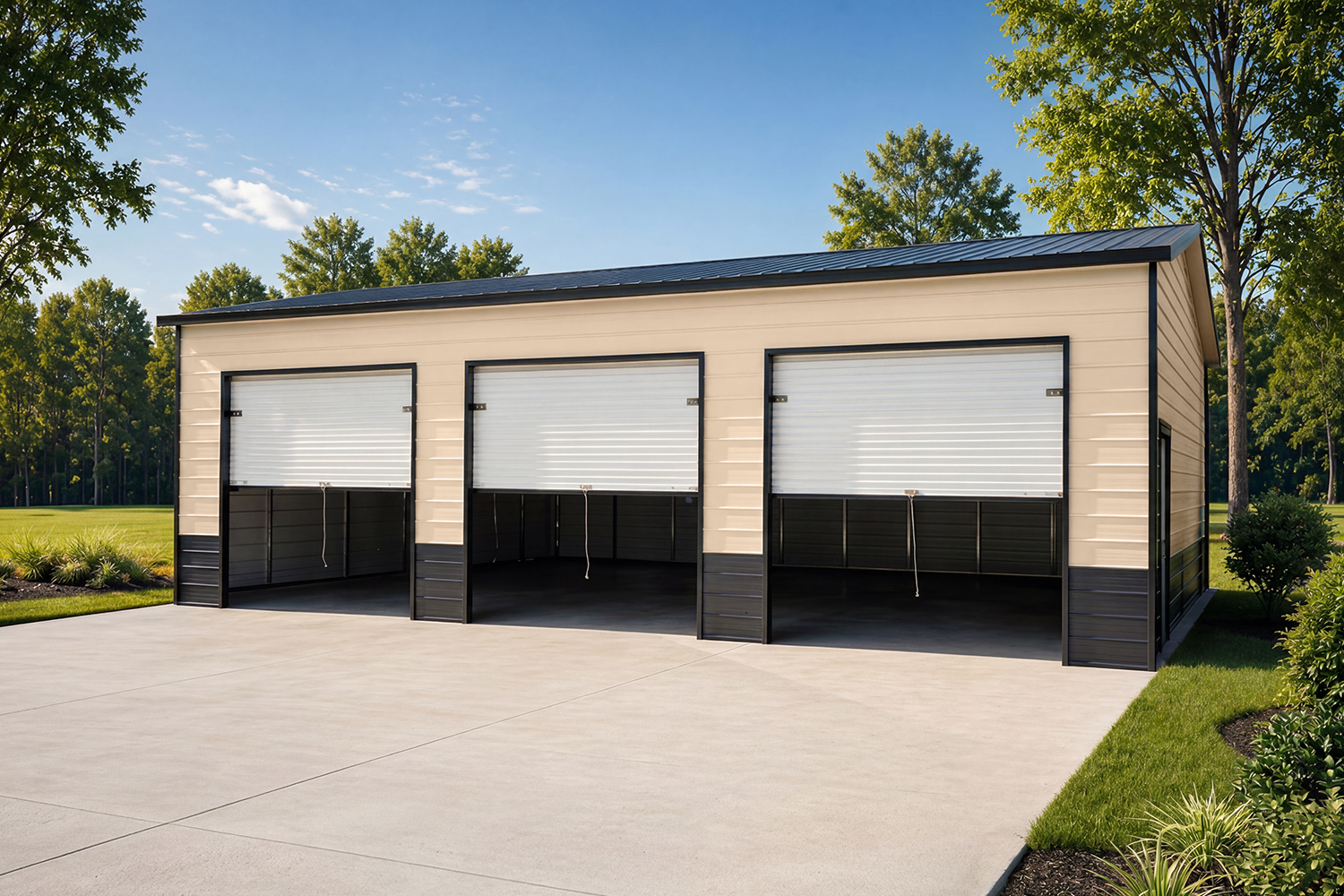
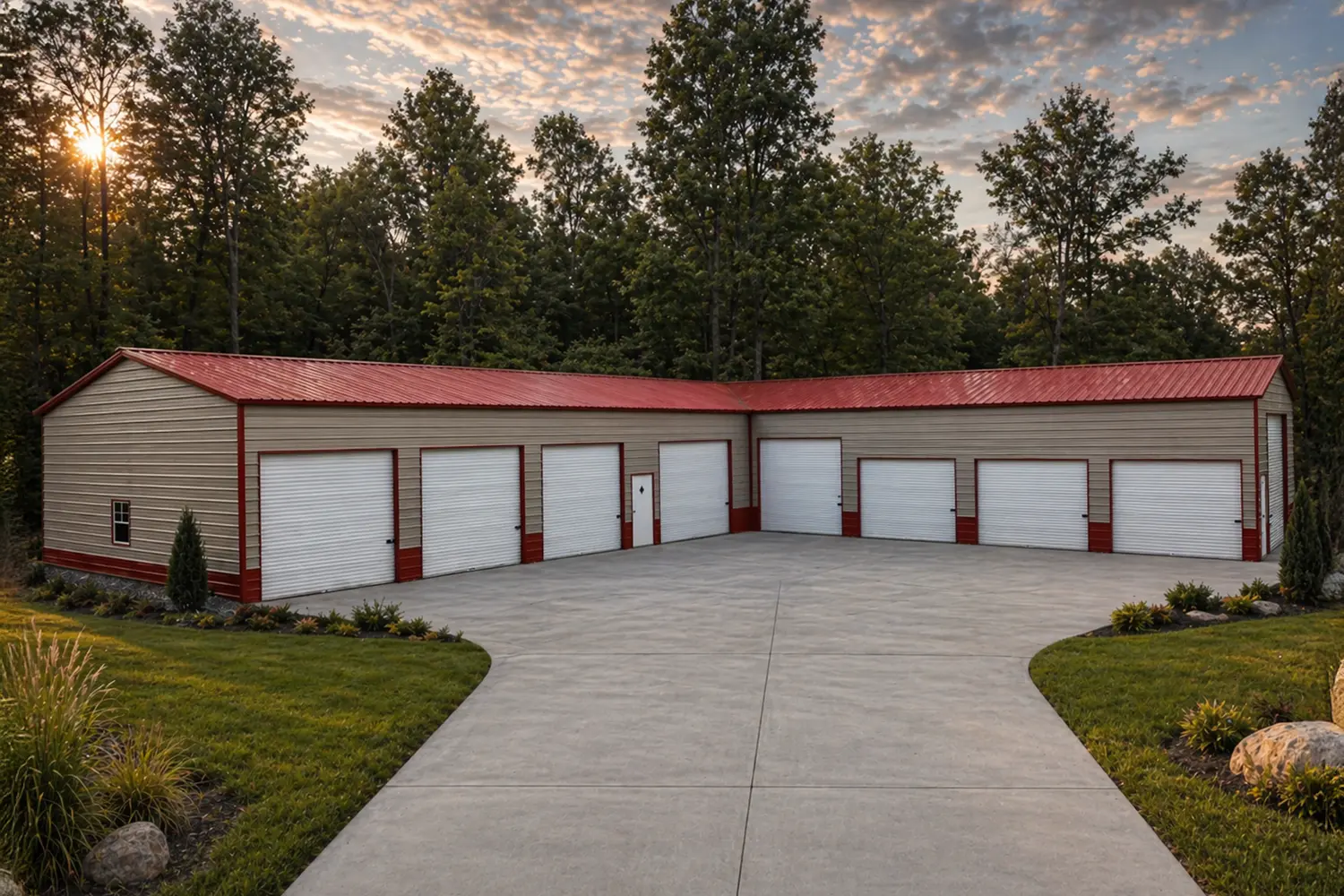
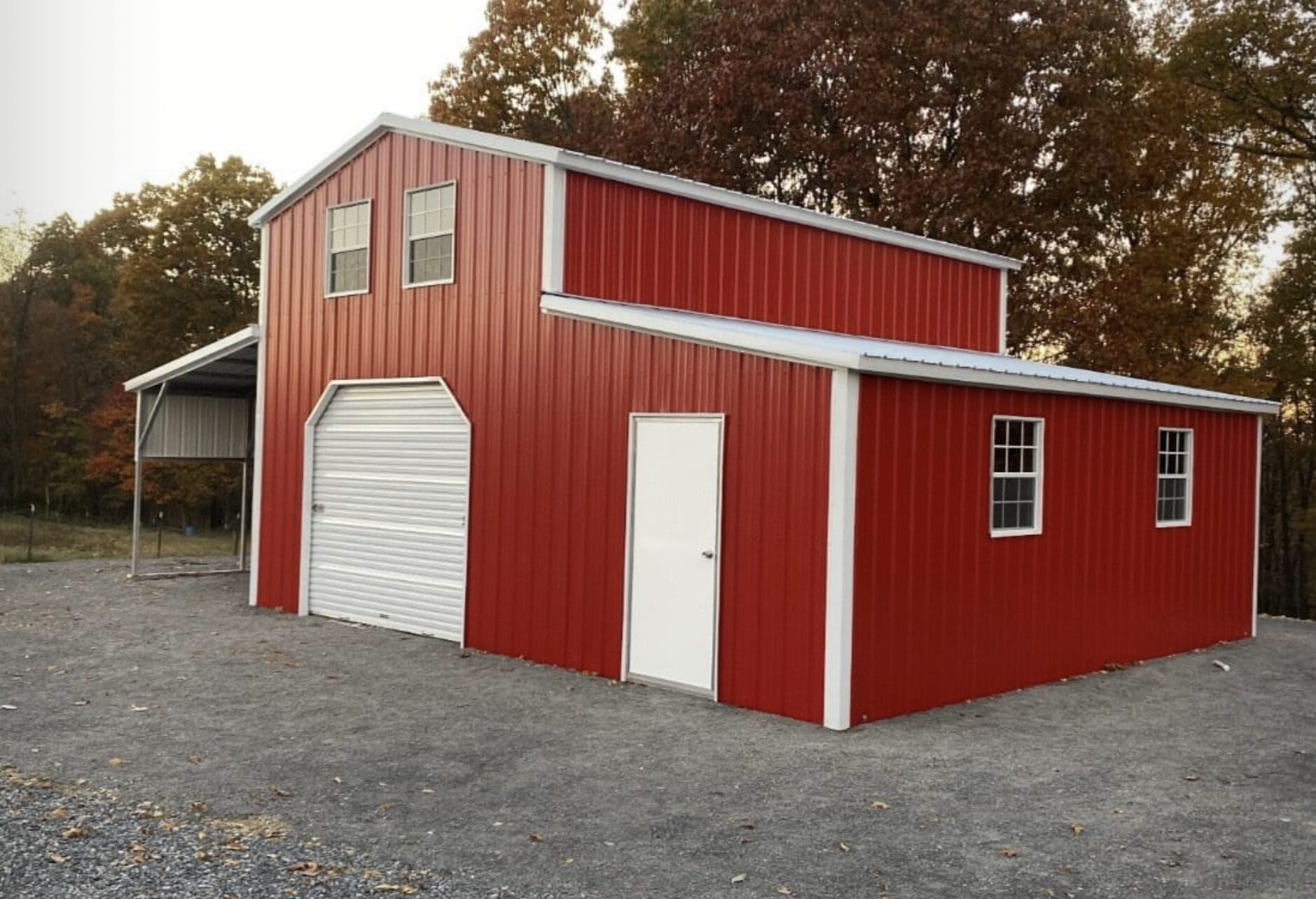
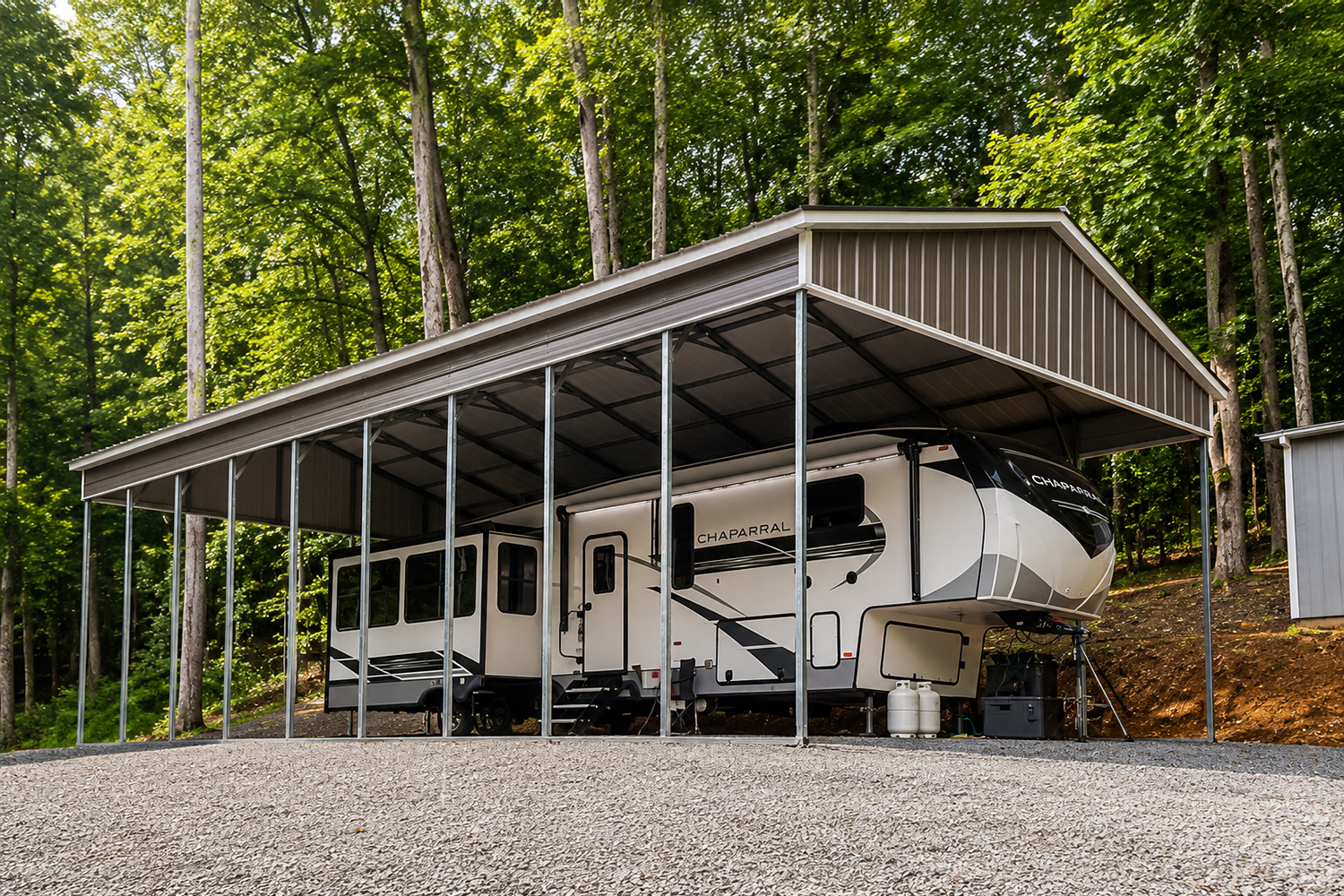
Metal building types are the different styles of steel structures available, such as garages, barns, carports, RV covers, and commercial buildings.

Roof style options

Roof style options refer to the different roof designs available for your metal building, such as regular, boxed eave, and vertical roofs, each offering a different look and level of performance.

Regular Style Roof

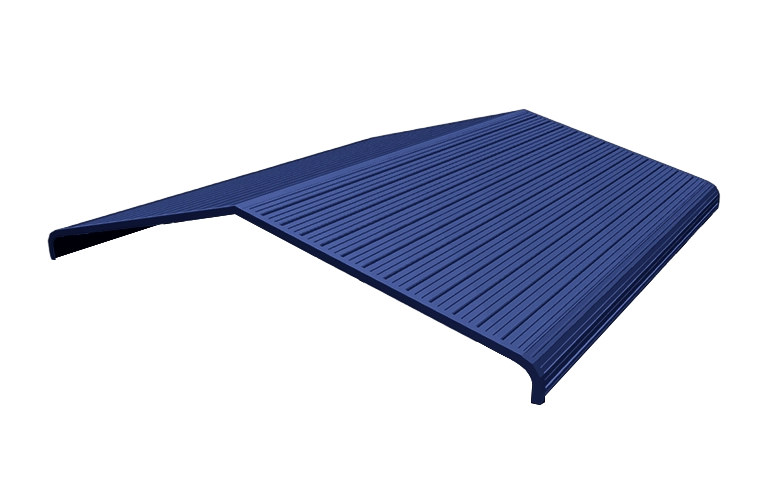
Classic and budget-friendly, the Regular Roof features a traditional rounded shape created by a bent bow along the edges.

The roof panels run horizontally and are finished with clean L-trim on the ends for a simple, familiar look.

This is typically the most economical roof option and is commonly recommended for steel buildings and carports up to about 36 feet long.

Vertical Style Roof

A vertical roof isn’t just a sharp look—it’s built for performance. With panels running from the peak down to the eaves, water and snow shed more easily, making it a smart choice for tougher weather.

Vertical roofs also include upgraded framing and finishing—like a sealed ridge cap, vertical edge trim, and added roof channels—making this the strongest roof style available. An A-Frame Vertical roof is typically recommended for steel buildings and carports over 36 feet long.

Horizontal Style Roof

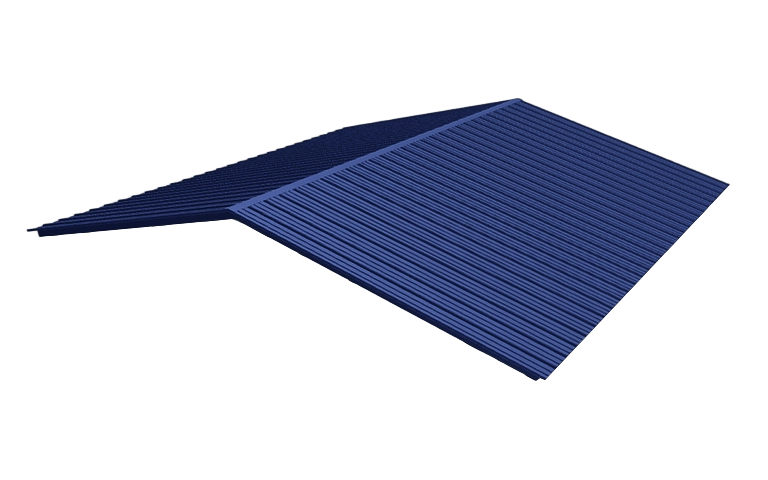
the Horizontal Roof (Horizontal A-Frame) uses roof panels that run side-to-side across the building, finished with neat trim for a polished look.

Because this layout typically requires less framing underneath, it’s a cost-friendly option that still looks sharp and performs well for many garages and carports.

It’s often recommended for buildings and carports up to about 36 feet long, while longer runs or heavier weather conditions may be better suited for a vertical roof upgrade.

Keep Up To Date With
Our Latest Deals.

Get first access to new deals, limited-time specials, and fresh inventory as soon as it's available. Subscribe and we'll send occasional updates.

Subscription Form

Get A Quote

Contact Form