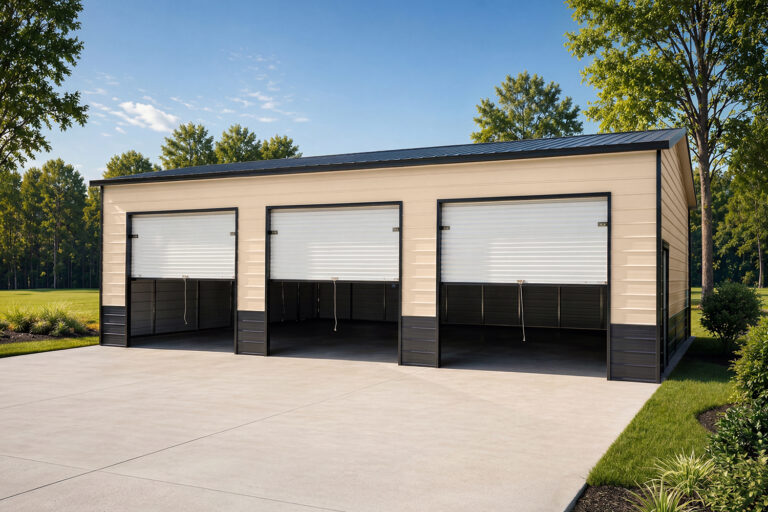
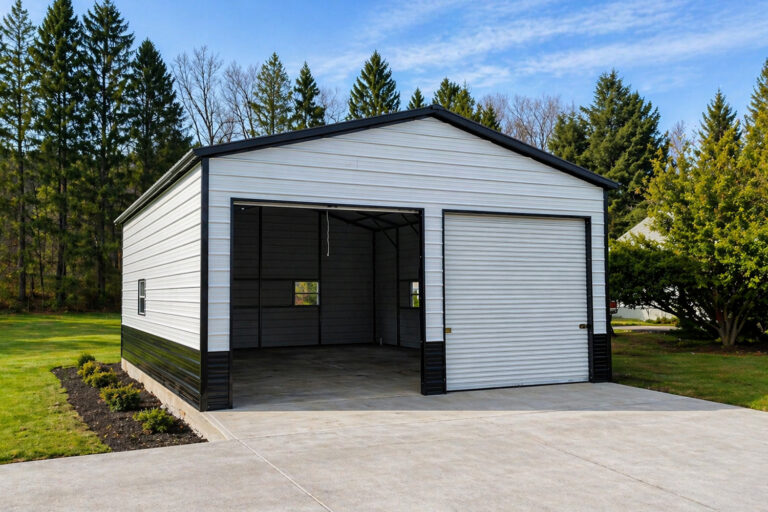
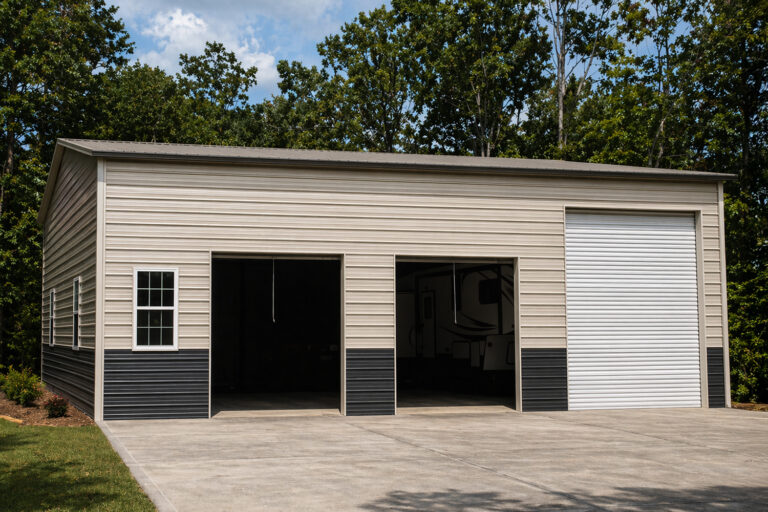
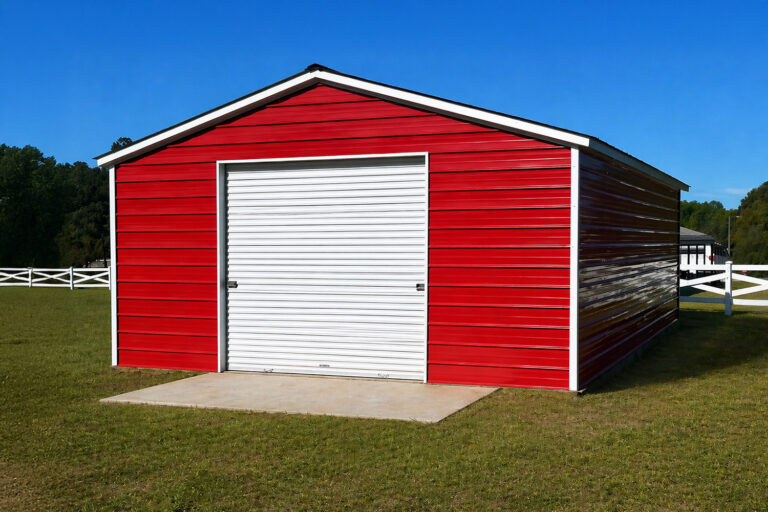
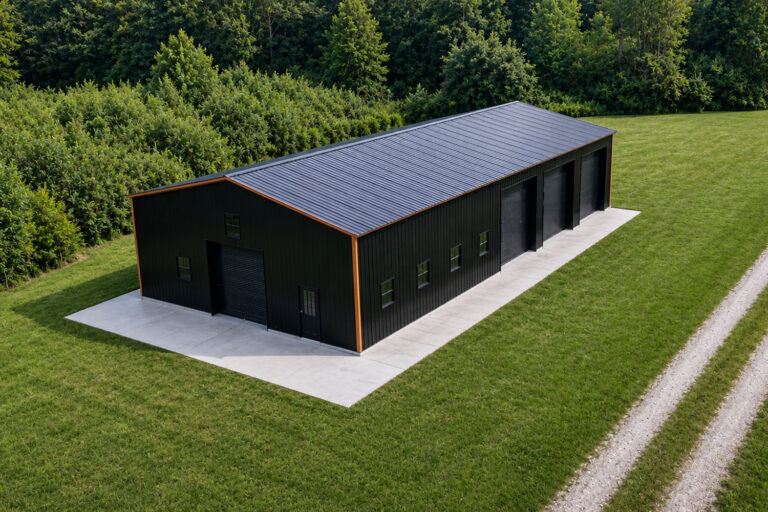
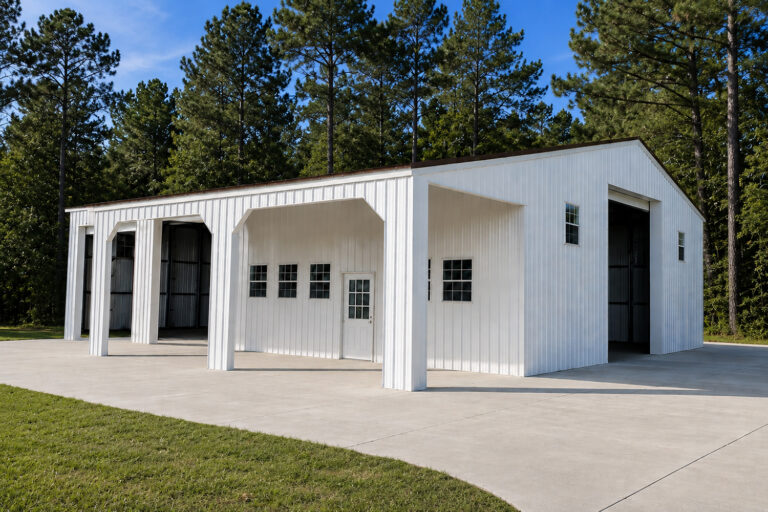
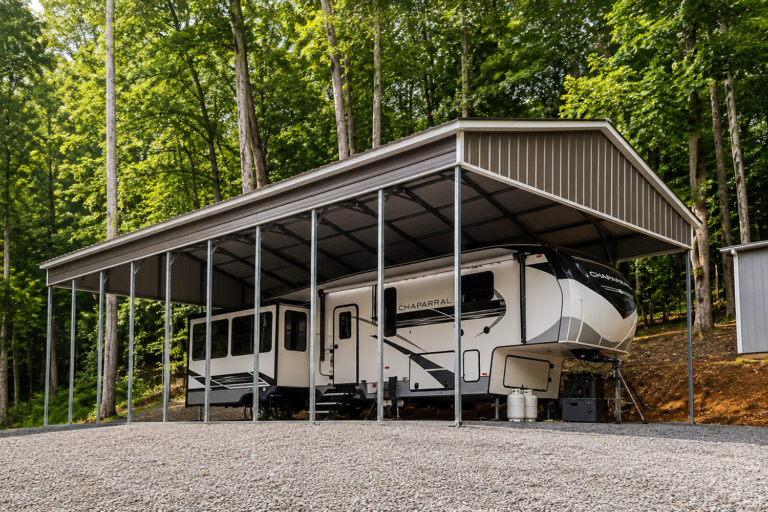
Choosing metal buildings in Tennessee requires planning for a state with heavy rainfall, humid summers, severe thunderstorms, tornado risk, hail, clay soils, hilly terrain, and occasional snow or ice in some areas. A building in West Tennessee may need more attention to storms, agricultural storage, and large equipment access, while a structure in Middle Tennessee may need to handle rolling terrain, drainage, suburban zoning, and heavy rain. In East Tennessee, slope, mountain runoff, snow, ice, and access can become just as important as the building size itself.
Blue Valley Steel helps property owners compare practical building options for residential, agricultural, ranch, recreational, and commercial storage needs. Whether you are planning metal garages, metal carports, metal barns, metal RV covers, or commercial metal buildings, the right structure should match your county, your property layout, your soil and drainage conditions, and your long-term use.
This guide explains how to choose metal buildings in Tennessee with practical guidance on rainfall, humidity, tornado risk, severe storms, hail, snow and ice in some areas, slope and drainage in hilly regions, clay soils, agriculture, cattle, hay, soybeans, poultry, equipment storage, RV covers, and permitting guidance for Davidson County, Shelby County, and Knox County.
Table of Contents
- Why Metal Buildings in Tennessee Need Site-Specific Planning
- Rainfall, Humidity, Tornadoes, Hail, Snow, Ice, and Clay Soil
- Product Type Comparison for Tennessee Properties
- Roof Style Recommendations for Metal Buildings in Tennessee
- Size and Layout Guidance
- Agriculture, Cattle, Hay, Soybeans, Poultry, and Equipment Storage
- Permit and Planning Guidance for Davidson, Shelby, and Knox County
- Final Buying Checklist
Why Metal Buildings in Tennessee Need Site-Specific Planning
Metal buildings in Tennessee should be chosen around the site first and the building size second. Tennessee’s terrain and weather vary widely from Memphis and the Mississippi River region to Nashville and the Highland Rim, then east toward Knoxville, the Cumberland Plateau, and the mountains. A flat rural tract, a suburban backyard, a sloped East Tennessee property, and a farm lane in Middle Tennessee all create different requirements for drainage, door placement, foundation preparation, and vehicle access.
For homeowners, a metal building can protect cars, trucks, boats, mowers, motorcycles, tools, and RVs. For farms, the same structure may store tractors, hay, feed, cattle supplies, poultry equipment, livestock tools, fencing materials, tobacco or crop handling supplies, and general maintenance equipment. For businesses, a metal building can support contractor storage, fleet parking, landscape equipment, repair work, or inventory protection.
The most successful metal buildings in Tennessee are not simply the largest structures that fit the available space. They are the buildings that handle the property’s water flow, meet local setbacks, provide enough height and door clearance, allow safe access, and protect what is stored inside. In Tennessee, that means accounting for humidity, storm runoff, clay soil, slope, wind exposure, and local code requirements before the pad is prepared.
Rainfall, Humidity, Tornadoes, Hail, Snow, Ice, and Clay Soil
Tennessee’s climate has direct consequences for building planning. The NOAA Tennessee State Climate Summary describes the state as having warm and humid summers, cool winters, abundant precipitation, extreme rainfall events, severe thunderstorms, flooding, tornadoes, drought, heat and cold waves, winter storms, and occasional remnants of hurricanes. For metal buildings in Tennessee, those conditions make roof style, drainage, ventilation, anchoring, and site preparation especially important.
Heavy Rainfall and Storm Runoff
Heavy rainfall is one of the biggest reasons to plan the building pad carefully. Tennessee storms can produce intense rain in a short period, and water can move quickly across clay soil, compacted driveways, rural lanes, and sloped yards. A strong metal building will still be difficult to use if it is placed where water collects around the slab, runs through the doorway, or washes out the approach.
Before installing metal buildings in Tennessee, study how water moves across the site after storms. Avoid low spots, natural drainage paths, ditch overflow areas, and slopes that direct runoff toward the building. A raised pad, compacted stone base, properly graded driveway, gutters, downspout extensions, and swales can help protect the structure and stored items.
Humidity and Condensation
Humidity affects enclosed garages, barns, RV covers with side panels, workshops, and commercial storage buildings. Warm, moist air can become trapped inside a building, especially when there is limited ventilation. This can create condensation, musty air, and uncomfortable working conditions.
For enclosed metal buildings in Tennessee, ventilation should be part of the design. Ridge vents, gable vents, windows, framed openings, roll-up doors, walk doors, and planned airflow can help reduce heat and moisture buildup. If the building will store tools, feed, tack, equipment, upholstery, electronics, or business inventory, insulation and ventilation may both be worth considering.
Tornado Risk and Severe Storms
Tennessee experiences severe thunderstorms and tornadoes, especially during active spring and fall storm patterns. A metal building should not be treated as a tornado shelter, but it can still be planned more intelligently for storm exposure. Anchoring, bracing, door placement, framing strength, and proper enclosure all matter.
Open-sided carports and RV covers need special attention because wind can push underneath the roof. Enclosed buildings should use properly installed doors, panels, and anchors. On open farms, hilltops, ridgelines, and wide rural lots, consider a stronger anchoring package and a vertical roof style. If the building protects valuable equipment, livestock supplies, vehicles, or business inventory, storm-aware planning is worth the extra attention.
Hail and Wind-Driven Rain
Hail can damage vehicles, RVs, roofs, siding, skylights, and exposed equipment. A covered structure can reduce direct hail exposure, especially for vehicles, tractors, campers, and boats. Wind-driven rain is also important because open buildings may protect from overhead rain while still allowing moisture to blow in from the side.
For metal buildings in Tennessee that will protect high-value items, consider the difference between open coverage and enclosed storage. A carport may be enough for basic shade and rain protection, while a garage or partially enclosed structure may be better for tools, equipment, and materials that need to stay dry.
Snow and Ice in Some Areas
Snow and ice are not the main concern in every part of Tennessee, but they do matter in some areas. Higher elevations, the Cumberland Plateau, northern Middle Tennessee, and parts of East Tennessee can experience winter storms, ice, and occasional snow accumulation. Ice can also affect driveways, doorways, and roof runoff even when snowfall is limited.
For metal buildings in Tennessee located in colder or higher-elevation areas, roof style and door placement should be reviewed carefully. A vertical roof helps shed rain, snow, and debris. Doorways should not be placed where roof runoff will freeze at the entrance. On sloped mountain or plateau properties, the driveway and apron should be planned for winter access.
Slope, Clay Soil, and Drainage
Tennessee has many areas with clay soils and rolling or hilly terrain. Clay can hold water and drain slowly, while slopes can push runoff toward the lowest point on the property. A building placed without a drainage plan can develop muddy access, standing water, and slab edge problems.
For metal buildings in Tennessee on clay soil or sloped land, site preparation is critical. The building pad should be stable, compacted, and graded away from the structure. If the site is steep, consider whether additional grading, retaining, culverts, or erosion control may be needed. Driveway access should be stable enough for trucks, trailers, tractors, RVs, and delivery vehicles.
Product Type Comparison for Tennessee Properties
Different building types solve different problems. The best option depends on whether you need enclosed security, open coverage, agricultural storage, RV protection, or commercial workspace. The table below compares common uses for metal buildings in Tennessee.
| Building Type |
Best Uses in Tennessee |
Planning Notes |
| Metal Garages |
Cars, trucks, tools, workshops, mowers, ATVs, small business storage, enclosed equipment protection |
Plan for humidity, ventilation, storm runoff, door clearance, setbacks, slab drainage, and daily access. |
| Metal Carports |
Vehicle shade, tractors, trailers, boats, farm equipment, mower storage, short-term coverage |
Open sides are convenient, but anchoring, wind exposure, and side panels should be considered. |
| Metal Barns |
Hay, feed, cattle supplies, poultry equipment, livestock tools, tractors, rural storage |
Focus on airflow, dry storage, wide doors, slope, drainage, and equipment movement. |
| Metal RV Covers |
Motorhomes, fifth wheels, campers, boats, trailers, and recreational storage |
Measure total height carefully and consider wind, slope, side panels, and driveway clearance. |
| Commercial Metal Buildings |
Fleet storage, contractor storage, farm business use, workshops, inventory, and equipment protection |
Expect more review for zoning, utilities, parking, fire access, stormwater, and business use. |
Metal Garages in Tennessee
Metal garages in Tennessee are a strong choice when enclosed protection is the priority. A garage can protect vehicles, motorcycles, tools, mowers, ATVs, UTVs, workbenches, shop equipment, and business materials from rain, humidity, storm debris, sun, and theft. In suburban areas, a garage can also help organize limited lot space by combining vehicle protection and storage.
When planning a garage, measure more than the vehicle. Include mirrors, door swing, shelving, toolboxes, workbenches, walking room, and future storage. If the garage will be used as a workshop, consider insulation, ventilation, lighting, and electrical service. If the site has clay soil, make sure the pad and driveway approach are prepared before installation.
Metal Carports in Tennessee
Metal carports in Tennessee are useful for quick-access coverage. They can protect daily drivers, tractors, landscape trailers, boats, mowers, and farm equipment from sun and rain. A carport is often more affordable than a fully enclosed building and works well when the main need is overhead protection.
Because Tennessee storms can bring strong wind and wind-driven rain, carports should be anchored carefully. On exposed lots, consider a vertical roof, closed ends, partial side panels, or a stronger wind-rated package. If the building protects expensive equipment, it may be worth upgrading from a basic open design.
Metal Barns in Tennessee
Metal barns in Tennessee can support hay storage, cattle supplies, poultry operation equipment, feed storage, tractors, fencing materials, tools, and livestock-related work. A barn should be planned around workflow. Hay needs dry storage and airflow. Equipment needs wide doors and stable access. Livestock supplies need organization and separation from fuel, chemicals, and machinery heat.
For farm properties, drainage is especially important. A barn placed at the bottom of a wet lane can become difficult to use during rainy seasons. Place the building where trucks, tractors, and trailers can enter without creating ruts or mud problems.
Metal RV Covers in Tennessee
Metal RV covers in Tennessee help protect motorhomes, fifth wheels, travel trailers, campers, boats, and utility trailers from sun, rain, tree debris, hail, and seasonal exposure. RV storage requires more height than standard vehicle storage, so measurements should include rooftop AC units, vents, ladders, antennas, and solar panels.
For sloped lots, account for the driveway angle and the height of the RV during entry. A cover that seems tall enough on level ground may not provide enough clearance on a steep approach. In open or storm-prone areas, strong anchoring and partial side panels may be useful.
Roof Style Recommendations for Metal Buildings in Tennessee
Roof style is one of the most important decisions for metal buildings in Tennessee. The roof must manage heavy rain, humidity, leaves, storm debris, hail, wind, and occasional snow or ice. The right roof style can reduce maintenance and help the structure perform better over time.
Vertical Roof Style for Metal Buildings in Tennessee
A vertical roof is the best all-around recommendation for most metal buildings in Tennessee. Vertical roof panels run from the ridge down toward the eaves, helping rain, leaves, pine needles, debris, and snow move off the roof more efficiently. This is valuable in a state with heavy rainfall, wooded lots, and storm debris.
Vertical roofing is recommended for larger garages, barns, RV covers, and commercial buildings. It is also a smart choice for hilly properties because the roof can move water away from the structure more efficiently when paired with proper gutters and grading. If the building is wide, tall, or protecting high-value equipment, vertical roofing is usually worth the upgrade.
A-Frame Horizontal Roof Style
An A-frame horizontal roof provides a traditional appearance and may work for smaller buildings in moderate-use situations. It can be suitable for basic garages, carports, and storage buildings where budget is a major factor. However, because the panel orientation is not as efficient for moving water and debris as a vertical roof, it may not be ideal for larger structures or wooded lots.
Regular Roof Style
A regular roof style can work for small, simple shelters where cost is the main priority. It may be useful for basic shade or light-duty storage. For many metal buildings in Tennessee, especially barns, RV covers, workshops, and buildings storing valuable equipment, a stronger roof style is usually the better long-term choice.
Size and Layout Guidance
The right size for metal buildings in Tennessee depends on the intended use, access route, vehicle or equipment dimensions, terrain, and future needs. Square footage matters, but door width, sidewall height, driveway angle, drainage, and interior workflow often matter more.
Start With the Largest Item
Measure the largest vehicle, tractor, trailer, RV, or implement that will use the building. Include mirrors, racks, mower decks, buckets, toolboxes, antennas, ladders, rooftop units, and attachments. Add space for walking, turning, shelving, workbenches, and future storage.
For farm and commercial use, plan around the busiest season. A building that works during the slow season may feel too small when tractors, trailers, feed, hay, and tools all need space at once.
Plan for Slope and Access
Many Tennessee properties are not flat. On sloped sites, a building may need grading, drainage work, gravel, retaining, or a different orientation. Driveway slope can also affect door clearance, trailer access, and RV storage.
For hilly lots, plan the building entrance so vehicles can approach safely. Avoid placing the building where runoff from an uphill slope will hit the wall or doorway. A side-entry or drive-through layout may work better than a standard front-entry design on some properties.
Account for Drainage and Clay Soil
Drainage should be planned before the building arrives. Clay soil can hold water and become slick after rain. Use a stable base, positive grading, and a durable approach path. If heavy equipment, trailers, or RVs will use the building, the driveway and apron should handle wet conditions without rutting.
Leave Room for Maintenance
Leave room around the structure for mowing, cleaning gutters, inspecting panels, managing runoff, and accessing doors. Avoid placing the building too close to trees, fences, ditches, or property lines. On farms and rural lots, leave enough space for trailers, tractors, and emergency access.
Agriculture, Cattle, Hay, Soybeans, Poultry, and Equipment Storage
Tennessee has a diverse agricultural economy, with cattle, soybeans, hay, corn, cotton, wheat, tobacco, poultry, goats, nursery crops, and mixed farm operations across the state. USDA/NASS reports major acreage in soybeans, hay, corn, wheat, and cotton, along with significant cattle inventory. UT Extension provides agriculture and natural resources support across Tennessee, including livestock, forage, poultry, crops, and farm management resources.
For agriculture, metal buildings in Tennessee can provide practical storage for tractors, hay equipment, feed, fencing materials, poultry supplies, livestock tools, cattle handling equipment, trailers, mowers, sprayers, and general farm maintenance equipment. A good farm building should improve workflow, keep materials dry, and protect equipment from weather exposure.
Cattle and Hay Storage
Cattle operations need dry, accessible storage for feed, mineral, fencing supplies, veterinary supplies, panels, tools, and equipment. Hay storage needs airflow and protection from roof leaks and ground moisture. A metal barn can serve both purposes when it is planned with enough space, good ventilation, and proper drainage.
Do not place hay storage in a low area where runoff or roof discharge can enter the building. If hay and machinery are stored together, separate the zones to improve safety and organization. Keep fuel, chemicals, and heat-producing equipment away from hay when possible.
Soybeans, Row Crops, and Farm Equipment
Soybean and row crop operations often need storage for tractors, planters, sprayers, wagons, seed handling equipment, trailers, and tools. Door width and sidewall height are critical. A building that is too narrow or too low may limit future equipment use.
For row crop equipment, consider wide overhead doors, high sidewalls, drive-through access, and a stable approach. If the building will double as a shop, plan lighting, electrical service, ventilation, and a floor that can handle equipment weight.
Poultry and Livestock Support
Poultry and livestock operations may need storage for feed-related supplies, maintenance parts, tools, protective gear, ventilation equipment, and cleaning supplies. A metal building can support those needs when the layout separates clean storage from wet, dirty, or chemical storage areas.
Plan access for service vehicles, feed trucks, trailers, and daily farm routines. Ventilation, biosecurity workflow, and drainage should be considered when the building supports poultry or livestock operations.
Permit and Planning Guidance for Davidson, Shelby, and Knox County
Permitting for metal buildings in Tennessee depends on whether the property is inside a city, town, metropolitan government, or unincorporated county area. The correct office may be a county building department, city codes department, zoning office, planning department, or development services office. Always confirm jurisdiction before ordering a structure.
Davidson County Planning Notes
Davidson County includes Metro Nashville, where detached accessory structures are reviewed through the Metro Nashville Department of Codes and Building Safety. Metro Nashville accessory structure guidance identifies uses such as garages, workshops, storage sheds, pole barns, and carports, and notes that zoning examiners review use, setbacks, footprint, and height restrictions based on the parcel’s zoning.
For metal buildings in Tennessee within Davidson County, confirm zoning before choosing a footprint. Check setbacks, easements, height, lot coverage, utilities, stormwater, and whether the structure will include electrical, plumbing, or mechanical work. Detached accessory structures cannot be placed over platted setbacks, side street setbacks, or utility easements, so the usable building area may be smaller than the open yard area.
Shelby County Planning Notes
Shelby County and Memphis use unified development standards for many zoning and accessory structure questions. Memphis and Shelby County accessory structure standards include requirements for side and rear setbacks, height, cumulative square footage, front yard placement, alley-related garage rules, and similar zoning controls depending on district and use.
For metal buildings in Tennessee within Shelby County, confirm whether the property is inside Memphis, another municipality, or an unincorporated area. Ask about accessory structure rules, driveway access, stormwater, setbacks, lot coverage, and whether the building is residential, agricultural, commercial, or industrial. If the project will support a business or include utilities, expect additional review.
Knox County Planning Notes
Knox County includes Knoxville, suburban areas, rural land, and hilly East Tennessee properties. Knoxville permit guidance notes that many projects require permit applications and review, while some one-story detached accessory structures under a certain size may be exempt from a building permit. Knoxville also identifies non-habitable accessory structures as a permit fee category and states that new construction generally requires construction drawings and a site plan.
For metal buildings in Tennessee within Knox County, confirm whether the property is inside Knoxville or under county jurisdiction. Check zoning, setbacks, slope, driveway access, stormwater, erosion control, and whether the building will need electrical, plumbing, or mechanical permits. In hilly areas, drainage and site preparation should be reviewed carefully before installation.
Permit and Planning Checklist
- Confirm whether the property is inside a city, town, metropolitan government, or unincorporated county jurisdiction.
- Ask whether the building is classified as a garage, carport, barn, accessory structure, agricultural building, commercial building, or storage building.
- Verify setbacks from property lines, roads, easements, utilities, septic systems, wells, streams, drainage ditches, and flood-prone areas.
- Check maximum height, lot coverage, footprint limits, accessory structure size limits, and placement rules.
- Ask whether a zoning permit, building permit, site plan, engineered drawing, foundation plan, or inspection is required.
- Confirm local wind load, anchoring, roof, and foundation requirements.
- Review slope, grading, clay soil, driveway access, and roof runoff before preparing the pad.
- Ask whether electrical, plumbing, mechanical, commercial use, or agricultural use requires additional permits.
- For East Tennessee or hilly properties, ask about erosion control, stormwater, and driveway slope requirements.
- Keep copies of approvals, stamped plans, inspection records, building specifications, and warranty documents.
Final Buying Checklist for Metal Buildings in Tennessee
Before purchasing metal buildings in Tennessee, use this checklist to make sure the building fits your property, weather exposure, storage needs, and local permit process.
- Define the main purpose: Decide whether the building is for vehicles, RVs, hay, cattle supplies, poultry equipment, soybeans, tools, commercial storage, workshop space, or mixed use.
- Measure carefully: Include vehicle height, tractor attachments, trailer width, RV rooftop units, mowers, shelves, workbenches, and walking clearance.
- Choose the right roof: Use a vertical roof for larger buildings, heavy rain areas, wooded lots, barns, RV covers, commercial storage, and high-value equipment protection.
- Plan for humidity: Include ventilation and consider insulation if the structure will be enclosed or used as a workshop, feed room, or tool storage area.
- Prepare for heavy rain: Grade the site so stormwater and roof runoff move away from doors, slabs, driveways, and stored materials.
- Account for slope: On hilly properties, plan the pad, approach, drainage, and retaining needs before choosing the final footprint.
- Handle clay soil correctly: Use a compacted base, stable driveway approach, and positive drainage before installation.
- Review storm exposure: Consider wind, hail, anchoring, bracing, side panels, and door placement on exposed sites.
- Check permits early: Contact the correct county, city, metro, or local building department before finalizing the structure.
- Plan for future growth: Add enough width, height, and door clearance for future vehicles, farm equipment, RVs, or business storage.
Blue Valley Steel offers flexible options for homeowners, farmers, livestock operations, poultry producers, RV owners, contractors, and businesses comparing metal buildings in Tennessee. From enclosed garages and open carports to barns, RV covers, and commercial storage buildings, the right structure should be planned around Tennessee’s rainfall, humidity, storms, hail, clay soils, hilly terrain, agricultural needs, and local permitting process. A well-planned building will be easier to use, easier to maintain, and better suited for the property where it is built.

 Sale
Sale