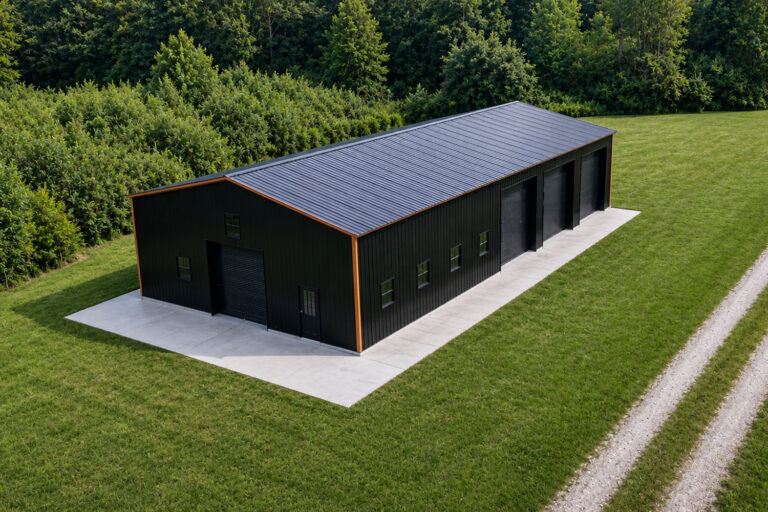
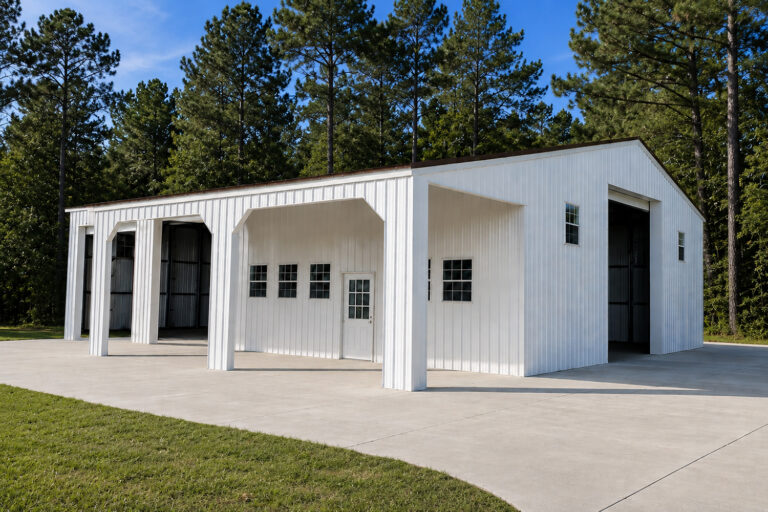
Choosing metal buildings in Pennsylvania requires planning for a state with cold winters, lake-effect snow in the northwest, heavy rain, flooding, hilly terrain, freeze-thaw cycles, and a strong agricultural economy. A building near Erie may need more attention to lake-effect snow and winter roof load, while a building near Pittsburgh may need careful slope and drainage planning. A structure in southeastern Pennsylvania may face smaller lot constraints, zoning rules, stormwater review, and dense suburban permitting requirements.
Blue Valley Steel helps property owners compare practical building options for residential, agricultural, and commercial storage needs. Whether you are planning metal garages, metal carports, metal barns, metal RV covers, or commercial metal buildings, the best structure should match your property layout, local snow exposure, drainage conditions, intended use, and permit requirements.
This guide explains how to choose metal buildings in Pennsylvania with practical guidance on snow load, lake-effect snow in northwest Pennsylvania, ice, freeze-thaw cycles, heavy rain, flooding, slope and drainage, dairy farms, hay, corn, equipment storage, garages, RV covers, and permitting guidance for Allegheny County, Montgomery County, and Lancaster County.
Table of Contents
- Why Metal Buildings in Pennsylvania Need Site-Specific Planning
- Snow, Lake-Effect Snow, Ice, Rain, Flooding, and Drainage
- Product Type Comparison for Pennsylvania Properties
- Roof Style Recommendations for Metal Buildings in Pennsylvania
- Size and Layout Guidance
- Dairy Farms, Hay, Corn, Livestock, and Equipment Storage
- Permit and Planning Guidance for Allegheny, Montgomery, and Lancaster County
- Final Buying Checklist
Why Metal Buildings in Pennsylvania Need Site-Specific Planning
Metal buildings in Pennsylvania should be planned around the region and the property. Pennsylvania includes the Lake Erie lowlands, the Allegheny Plateau, the Appalachian ridges, the central valleys, the Piedmont, the Philadelphia metro area, and major agricultural regions. These differences affect snow load, access, drainage, wind exposure, soil conditions, zoning, and building use.
In northwest Pennsylvania, lake-effect snow can create heavy winter accumulation. In central and western Pennsylvania, hillsides and sloped farms require careful building pad preparation. In southeastern Pennsylvania, dense development and smaller lots may require more attention to setbacks, impervious surface limits, stormwater rules, and municipal zoning. Rural properties may need buildings for hay, feed, tractors, livestock supplies, and equipment. Suburban property owners may need garages, carports, or RV covers that fit within strict accessory structure rules.
The best building is not always the largest building. The better choice is the structure that can be permitted, accessed, drained, anchored, and used reliably. Before selecting a size, think about the driveway approach, snow removal, door placement, slope, water movement, nearby trees, power access, and future storage needs. Those details determine whether metal buildings in Pennsylvania feel easy to use or frustrating after the first winter storm.
Snow, Lake-Effect Snow, Ice, Rain, Flooding, and Drainage
Pennsylvania’s climate creates several building design concerns. The NOAA Pennsylvania State Climate Summary explains that the state is affected by floods, tropical cyclone remnants, heat and cold waves, severe thunderstorms, snow and ice storms, and nor’easters. It also notes that lake-effect snow is a hazard in the northwestern part of the state and that extreme precipitation events have increased. For metal buildings in Pennsylvania, this makes roof style, pad elevation, drainage, and local load requirements very important.
Snow Load and Lake-Effect Snow
Snow load is one of the biggest concerns for metal buildings in Pennsylvania, especially in the northwest and higher-elevation areas. The Lake Erie region can receive heavy lake-effect snow, and mountain areas can see winter storms that add significant weight to roofs. Even in areas with more moderate snowfall, wet snow can be heavy and should be considered when choosing a building style.
A vertical roof is usually the best recommendation for snow-prone areas because the panels run from the ridge toward the eaves. This helps snow, rain, and debris move off the roof more efficiently. Wider garages, barns, RV covers, and equipment buildings should be reviewed carefully for local snow load requirements. Door placement also matters. Avoid placing main doors where sliding snow will pile up and block access.
Ice and Freeze-Thaw Cycles
Freeze-thaw cycles can create problems around building pads, doorways, and driveways. Snow melts during the day, water flows across the surface, temperatures drop at night, and ice forms around entrances. Over time, repeated freezing and thawing can contribute to heaving, soft spots, slab edge issues, and unsafe walking or driving areas.
For metal buildings in Pennsylvania, proper grading is essential. The pad should be level, compacted, and placed so water moves away from the structure. Downspouts, gravel aprons, swales, and driveway slope should be planned before the building is installed. This is especially important for garages, hay barns, workshops, and daily-use equipment buildings.
Heavy Rain and Flooding
Heavy rain is a major concern across Pennsylvania. Small streams, low areas, steep slopes, and compacted driveways can move water quickly during storms. Flooding can also occur when heavy rain combines with snowmelt. A strong building will still be difficult to use if it is placed where water collects.
Before choosing a building location, look at how water moves across the property. Avoid drainage paths, low spots, soft ground, and areas near creeks or flood-prone fields. If the building will store hay, feed, equipment, tools, vehicles, or business inventory, the floor area should stay dry during spring rain and winter thaw.
Slope and Drainage
Many Pennsylvania properties are not flat. Hillsides, rolling farms, wooded lots, and sloped driveways all affect placement. A sloped site may require grading, retaining, additional stone base, engineered drainage, or a different orientation. A building placed across a slope can collect water on the uphill side. A building placed below a slope can receive runoff during every heavy rain.
For metal buildings in Pennsylvania on sloped ground, site preparation should come first. Plan the finished grade, drainage outlets, driveway approach, and snow removal area before finalizing the footprint. If the project involves major grading or land disturbance, the local municipality may require additional review.
Wind, Storms, and Nor’easters
Pennsylvania can experience severe thunderstorms, wind damage, and nor’easters. Open fields, hilltops, lake-influenced areas, and exposed rural lots can increase wind pressure on a building. Open-sided carports and RV covers need strong anchoring because wind can push under the roof. Enclosed garages and barns need properly rated doors, bracing, and framing.
If your site is exposed, consider a stronger anchor package, vertical roofing, partial side panels, enclosed ends, and careful door placement. For larger commercial or agricultural buildings, it may be worth discussing engineered requirements early.
Product Type Comparison for Pennsylvania Properties
Different building types solve different problems. The best option depends on whether you need enclosed vehicle storage, open equipment coverage, agricultural storage, RV protection, or commercial workspace.
| Building Type |
Best Uses in Pennsylvania |
Planning Notes |
| Metal Garages |
Vehicles, tools, workshops, mowers, snow equipment, small tractors, enclosed storage |
Plan for snow load, door clearance, insulation, ventilation, setbacks, drainage, and winter access. |
| Metal Carports |
Cars, trucks, tractors, trailers, boats, plow equipment, short-term equipment coverage |
Open sides are convenient, but anchoring and snow-rated roofing matter in exposed or snowy areas. |
| Metal Barns |
Hay, feed, dairy supplies, livestock equipment, tractors, wagons, rural storage |
Focus on dry storage, airflow, wide openings, slope, drainage, and equipment movement. |
| Metal RV Covers |
Motorhomes, campers, fifth wheels, boats, trailers, seasonal recreational storage |
Measure total height carefully and choose a roof style that can handle snow, ice, and runoff. |
| Commercial Metal Buildings |
Fleet storage, contractor storage, farm business use, workshops, equipment storage |
Expect more review for zoning, parking, utilities, drainage, fire access, and business use. |
Metal Garages in Pennsylvania
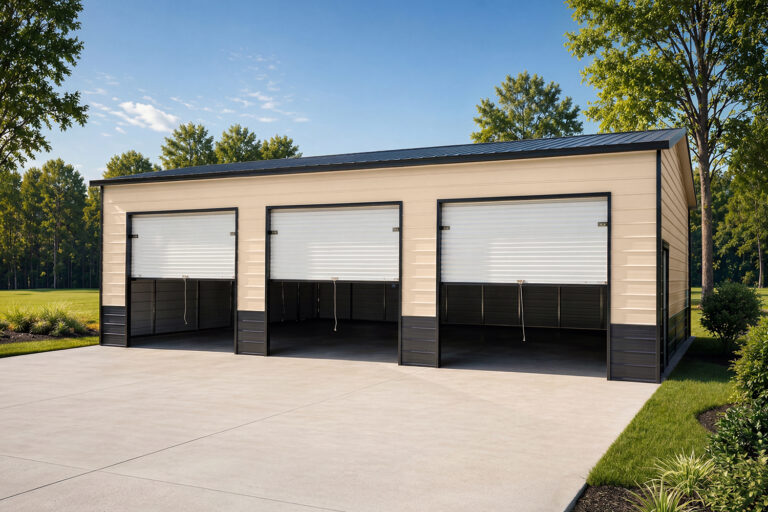
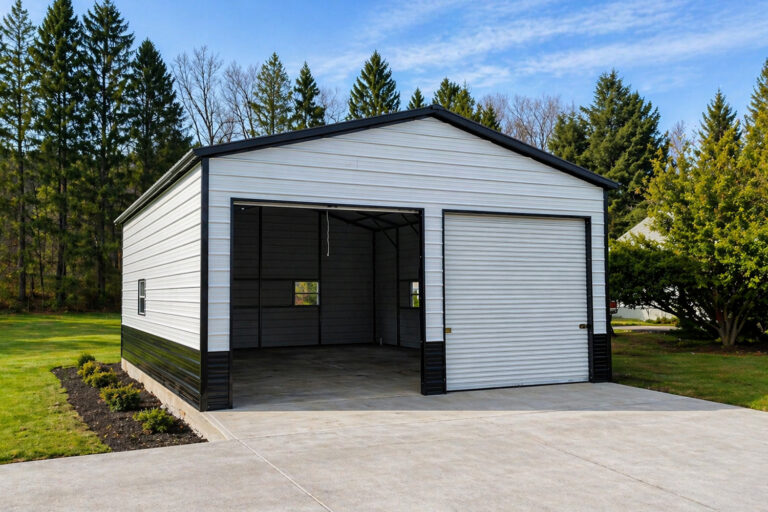
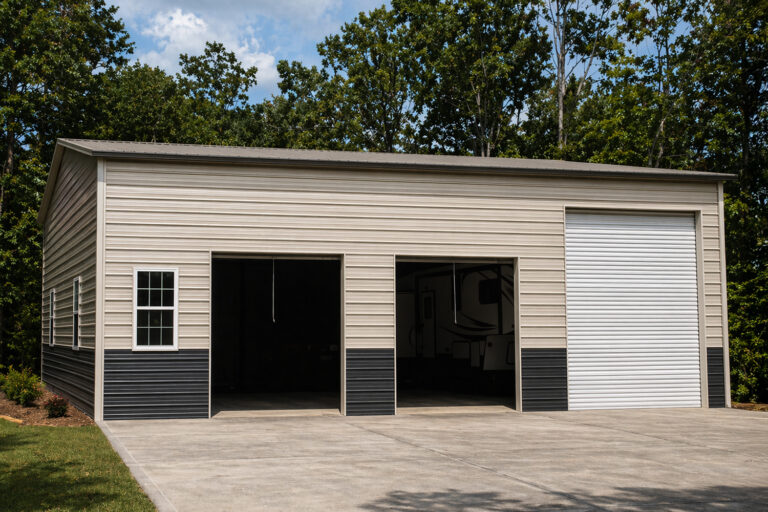
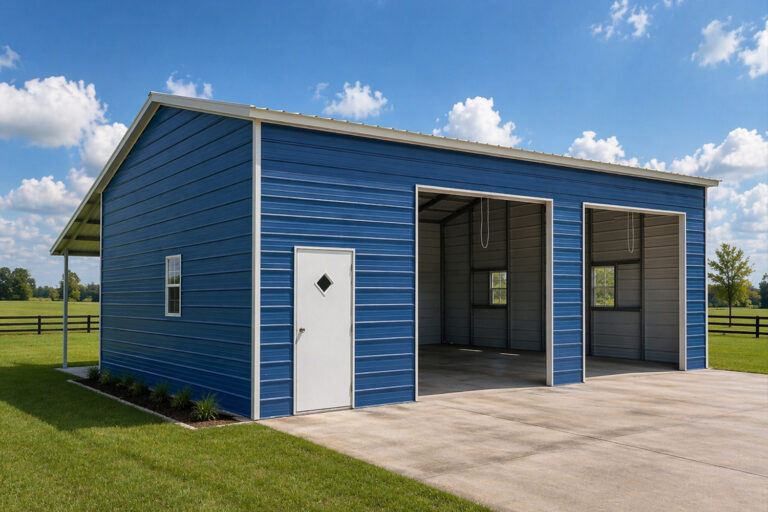
Metal garages in Pennsylvania are useful for homeowners, contractors, farmers, mechanics, and small business owners. A garage can protect vehicles, motorcycles, tools, lawn equipment, plows, ATVs, and workbenches from snow, rain, ice, wind, and theft. In colder regions, an enclosed garage can also make winter mornings easier by reducing snow and ice buildup on vehicles.
When planning a garage, measure more than the vehicle. Include mirrors, door swing, toolboxes, shelving, workbenches, and walking room. If the garage will be used year-round, consider insulation, ventilation, and electrical layout. If the garage will store snow equipment, make sure the entrance remains clear after plowing and roof shedding.
Metal Carports in Pennsylvania
Metal carports in Pennsylvania provide practical overhead coverage for vehicles, tractors, trailers, boats, and farm equipment. They are popular because they are accessible and cost-effective. A carport can keep snow, rain, and tree debris off vehicles while keeping the sides open for easy entry.
Open structures need careful planning in Pennsylvania’s wind and snow regions. A basic carport may be fine for light-duty use, but larger or exposed carports should be anchored well and matched to local weather. In areas with heavy snow, a vertical roof and stronger snow-rated design are usually the better choice.
Metal Barns in Pennsylvania
Metal barns in Pennsylvania can support dairy farms, hay storage, livestock supplies, feed storage, small tractors, wagons, and general rural use. A barn should be planned around workflow. Hay needs dry storage and airflow. Dairy support buildings need access for feed, tools, and maintenance equipment. Equipment buildings need wide doors, high sidewalls, and enough turning space.
Site drainage is critical. A barn placed in a wet area can create mud, spoil feed or hay, and make daily use difficult. If hay and machinery are stored in the same building, consider separate zones to reduce fire risk and improve organization.
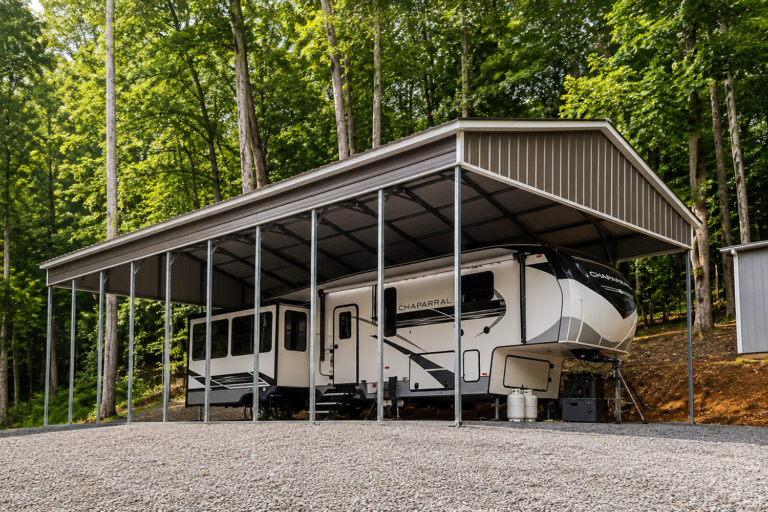
Metal RV Covers in Pennsylvania
Metal RV covers in Pennsylvania protect motorhomes, fifth wheels, campers, boats, and trailers from snow, ice, rain, UV exposure, and falling debris. RV covers need more height than standard carports, so measure the total height of the RV, including rooftop AC units, vents, ladders, antennas, and solar panels.
For snow-prone locations, a vertical roof is strongly recommended. Taller RV covers also catch more wind, so anchoring and bracing should be considered carefully. If the RV cover is on a smaller lot, verify local height and setback rules before choosing the structure.
Roof Style Recommendations for Metal Buildings in Pennsylvania
Roof style is one of the most important decisions for metal buildings in Pennsylvania. The roof has to handle snow, ice, rain, wind, leaves, and freeze-thaw cycles. A stronger roof style can reduce maintenance and improve long-term performance.
Vertical Roof Style for Metal Buildings in Pennsylvania
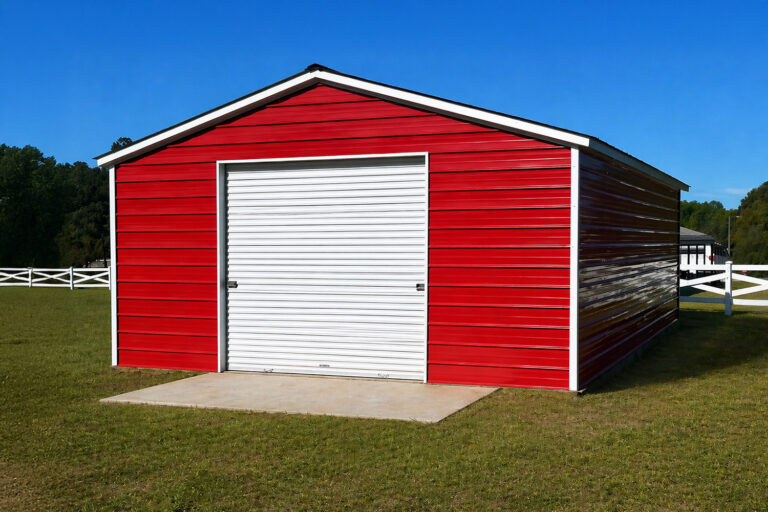
A vertical roof is the best all-around recommendation for most metal buildings in Pennsylvania. Vertical roof panels run from the ridge down toward the eaves, helping snow, water, and debris move off the roof efficiently. This is especially useful in northwest Pennsylvania, the mountains, and any property where heavy snow or frequent rain is a concern.
Vertical roofing is recommended for larger garages, barns, RV covers, and commercial buildings. It is also a strong choice for rural equipment storage because it reduces the risk of roof debris buildup and improves drainage during heavy rain.
A-Frame Horizontal Roof Style
An A-frame horizontal roof gives a traditional appearance and can work for smaller buildings in moderate conditions. It may be suitable for basic garages, carports, or storage structures where budget is a major concern. However, because the panel orientation is not as efficient for snow and rain shedding as a vertical roof, it may not be the best fit for larger buildings or snow-prone areas.
Regular Roof Style
A regular roof style can work for small, simple shelters where cost is the main priority. It may be useful for light-duty coverage or basic shade. For many metal buildings in Pennsylvania, especially barns, RV covers, workshops, and buildings storing valuable equipment, a stronger roof style is usually the better long-term decision.
Size and Layout Guidance
The right size for metal buildings in Pennsylvania depends on the use, site conditions, access, weather exposure, and future needs. Square footage matters, but door width, sidewall height, drainage, snow access, and interior workflow often matter more.
Start With the Largest Item
Measure the largest vehicle, tractor, RV, trailer, or implement that will use the building. Include mirrors, racks, mower decks, buckets, plows, toolboxes, ladders, rooftop AC units, and antennas. Add enough space for walking, turning, shelves, workbenches, and future equipment.
For agricultural use, plan around the busiest season. If tractors, wagons, hay equipment, and trucks all need access during the same week, the building should not be sized around offseason storage alone.
Plan Door Placement Around Snow and Drainage
Door placement can make or break a building in winter. Avoid placing main doors where snow slides from the roof, where plowed snow piles up, or where water collects during thaw. In hilly areas, avoid placing entrances directly below steep runoff paths.
For garages and equipment buildings, consider whether a front-entry, side-entry, or drive-through layout is most practical. A drive-through building can be helpful for tractors, trailers, and farm equipment if the property allows enough access on both sides.
Think About Smaller Lot Constraints
In suburban areas of Pennsylvania, smaller lots often create zoning challenges. Setbacks, lot coverage, impervious surface limits, easements, utility lines, stormwater rules, and HOA restrictions may reduce the usable building area. A compact building with the right door placement may be more practical than a larger structure that is difficult to permit.
Leave Room for Maintenance
Leave room around the structure for mowing, snow removal, gutter cleaning, inspections, and drainage work. Avoid placing the building too close to trees, fences, steep slopes, or property lines. If the building will be used daily, make sure the approach remains usable during rain, snow, and thaw.
Dairy Farms, Hay, Corn, Livestock, and Equipment Storage
Pennsylvania has a strong agricultural economy with dairy, hay, corn, livestock, poultry, mushrooms, apples, and mixed farm operations. USDA/NASS reports millions of acres in farm operations, significant dairy cow inventory, large cattle inventory, major hay and haylage production, corn grain, corn silage, soybeans, and other crops. Penn State Extension also provides forage and crop resources for hay, alfalfa, wheat, corn, pasture, grazing, silage, haylage, and baleage.
For farms, metal buildings in Pennsylvania can provide practical storage for tractors, wagons, balers, hay equipment, feed, bedding, tools, fencing supplies, dairy equipment, and livestock support materials. A well-planned building should protect expensive equipment and make daily work easier.
Dairy Farm Storage
Dairy farms often need dry, organized storage for feed-handling supplies, bedding, calf equipment, tools, maintenance parts, and machinery. A metal barn or equipment building can support those needs when it has wide doors, proper height, ventilation, and stable access.
If the building will support dairy operations, plan around truck access, feed movement, winter snow removal, and interior organization. Keep clean supplies separate from machinery, fuel, and high-dust areas.
Hay and Forage Storage
Hay storage needs dryness and airflow. A metal barn can protect hay from rain and snow, but the building pad must stay dry. If water moves into the floor area, hay quality can decline quickly. Ventilation is also important because trapped moisture can create problems.
For hay buildings, avoid low areas and slope runoff. Keep roof discharge away from stacked hay. If machinery and hay are stored together, leave separation and access paths so equipment does not damage bales or block airflow.
Corn and Equipment Storage
Corn and mixed-crop operations need space for tractors, planters, wagons, skid steers, seed handling equipment, sprayers, and maintenance tools. Door width and sidewall height are critical. A building that is too short or too narrow may limit future equipment purchases.
For equipment storage, consider wider doors, drive-through access, and enough interior space to service machinery. If the building will double as a shop, plan lighting, electrical service, ventilation, and a floor that can handle equipment weight.
Permit and Planning Guidance for Allegheny, Montgomery, and Lancaster County
Permitting for metal buildings in Pennsylvania usually depends on the local municipality. Counties may receive permit information for assessment or road-related issues, but cities, boroughs, and townships often administer zoning and building permits. Always contact the local municipality before ordering a structure.
Allegheny County Planning Notes
Allegheny County guidance explains that property owners, representatives, or contractors must file necessary permits in the municipality where the work is being performed. The county receives and reviews building, demolition, and occupancy permits from municipalities for assessment purposes. This means a project near Pittsburgh, Bethel Park, Monroeville, Penn Hills, or another municipality may have different local rules.
For metal buildings in Pennsylvania within Allegheny County, first identify the local municipality. Ask about zoning, setbacks, building permits, steep slope rules, stormwater, driveway access, and whether engineered drawings are required. In hilly areas, pad preparation and drainage are especially important.
Montgomery County Planning Notes
Montgomery County includes dense suburbs, townships, boroughs, older neighborhoods, and larger residential properties. Local municipalities typically handle zoning and building permits. Upper Dublin Township, for example, states that building plans and permit applications must be submitted and permits issued before work begins, and its code enforcement guidance lists accessory structures such as detached garages, utility sheds, and gazebos among projects requiring permits. Lower Merion Township notes that zoning review is required for outside work and that zoning applications require site plans.
For metal buildings in Pennsylvania within Montgomery County, confirm the municipality first. Then check setbacks, impervious coverage, stormwater, lot coverage, zoning permits, building permits, and utility work. Smaller lots may require careful placement even for basic garages or storage buildings.
Lancaster County Planning Notes
Lancaster County has a mix of farmland, townships, boroughs, rural homes, and suburban growth. Local municipalities handle many accessory structure and building permit questions. Manheim Township guidance says accessory structures over 400 square feet or attached to a residential building require a building permit, while structures 400 square feet or less and not attached require a zoning permit.
For metal buildings in Pennsylvania within Lancaster County, confirm whether the property is in a township, borough, or city jurisdiction. Farm properties should still check local zoning, agricultural use rules, setbacks, stormwater, and driveway access. Larger barns, commercial buildings, and equipment buildings may require plans, site drawings, and additional review.
Permit and Planning Checklist
- Confirm the local municipality responsible for zoning and building permits.
- Ask whether the structure is classified as a garage, carport, barn, accessory structure, agricultural building, commercial building, or storage building.
- Verify setbacks from property lines, roads, easements, utilities, septic systems, wells, streams, and flood-prone areas.
- Check maximum height, lot coverage, impervious surface limits, building size limits, and accessory structure placement rules.
- Ask whether a zoning permit, building permit, site plan, plot plan, engineered drawing, or stormwater review is required.
- Confirm local snow load, wind load, foundation, and anchoring requirements.
- Review slope, grading, driveway access, drainage, and roof runoff before preparing the pad.
- Ask whether electrical, plumbing, heating, commercial use, or agricultural use requires additional permits.
- For northwest Pennsylvania, review snow load and lake-effect snow considerations before choosing a roof style.
- Keep approved permits, site plans, inspection records, warranty documents, and building specifications for future records.
Final Buying Checklist for Metal Buildings in Pennsylvania
Before purchasing metal buildings in Pennsylvania, use this checklist to make sure the structure fits your property, weather exposure, storage needs, and local permit process.
- Define the main purpose: Decide whether the building is for vehicles, RVs, hay, dairy supplies, corn equipment, livestock tools, commercial storage, workshop space, or mixed use.
- Measure carefully: Include vehicle height, tractor attachments, trailer width, plows, RV rooftop units, shelves, workbenches, and walking clearance.
- Choose the right roof: Use a vertical roof for larger buildings, northwest snow areas, barns, RV covers, commercial storage, and high-value equipment protection.
- Plan for snow: Confirm snow load, roof style, door placement, and snow removal access before finalizing the layout.
- Prepare for ice: Grade the site so snowmelt and roof runoff move away from doors, slabs, and driveways.
- Review drainage: Avoid low spots, slope runoff, creek edges, and areas where heavy rain will collect around the building.
- Account for terrain: On sloped properties, plan the pad, access, and drainage before choosing the final footprint.
- Check permits early: Contact the local township, borough, city, or municipal office before ordering the structure.
- Think about access: Make sure vehicles, tractors, trailers, and RVs can enter, turn, and exit safely.
- Plan for future growth: Add enough width, height, and door clearance for future equipment, vehicles, or farm storage needs.
Blue Valley Steel offers flexible options for homeowners, farmers, dairy operations, contractors, RV owners, and businesses comparing metal buildings in Pennsylvania. From enclosed garages and open carports to barns, RV covers, and commercial storage buildings, the right structure should be planned around Pennsylvania’s snow, lake-effect weather, ice, heavy rain, flooding, slopes, agricultural needs, and local permitting process. A well-planned building will be easier to use, easier to maintain, and better suited for the property where it is built.

 Sale
Sale