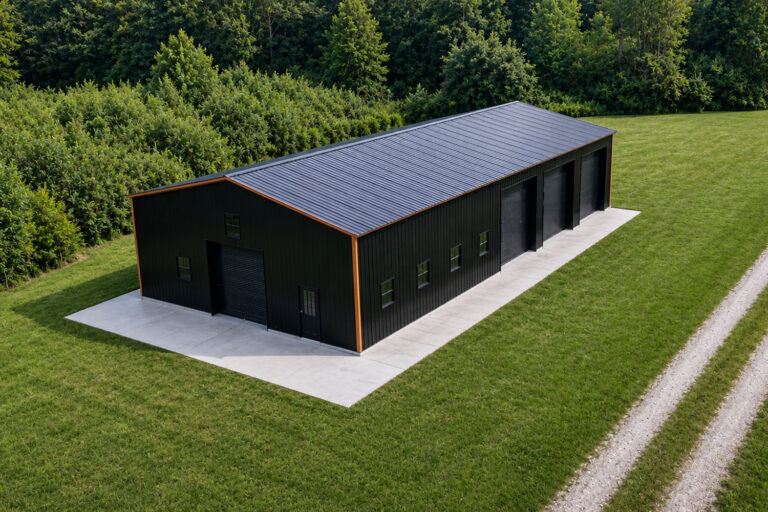
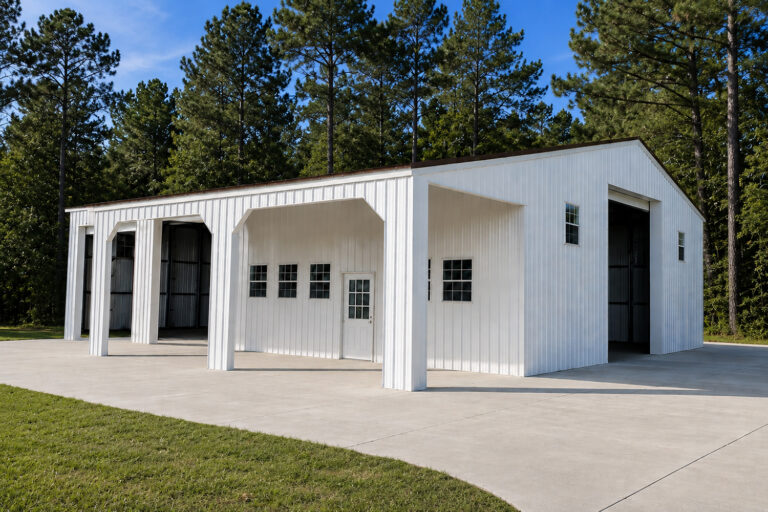
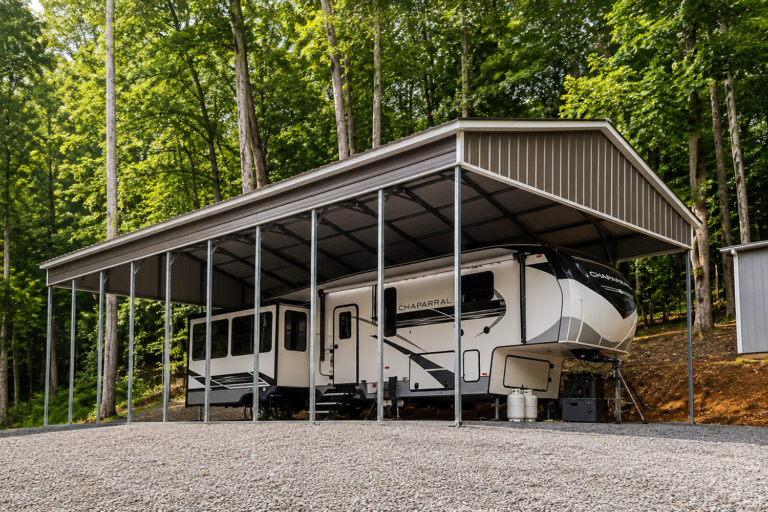
Choosing metal buildings in Oklahoma requires planning for one of the most demanding weather environments in the country. Oklahoma property owners deal with tornado risk, high winds, hail, severe thunderstorms, heat, drought, wildfire concerns, clay soil, sudden heavy rain, and long stretches of open exposure. A building used for ranch storage in western Oklahoma may need different planning than a garage in Oklahoma City, a farm equipment building near Tulsa, or an RV cover in Cleveland County.
Blue Valley Steel helps customers compare practical building options for residential, agricultural, ranch, and commercial storage needs. Whether you are planning metal garages, metal carports, metal barns, metal RV covers, or commercial metal buildings, the right structure should match your wind exposure, site drainage, local permit process, and long-term use.
This guide explains how to choose metal buildings in Oklahoma with practical guidance on tornado risk, high winds, hail, severe storms, drought, heat, wildfire risk, clay soil, drainage, cattle, wheat, hay, ranch storage, farm equipment buildings, RV covers, and permitting guidance for Oklahoma County, Tulsa County, and Cleveland County.
Table of Contents
- Why Metal Buildings in Oklahoma Need Storm-Aware Planning
- Tornadoes, High Winds, Hail, Drought, Heat, Wildfire, and Clay Soil
- Product Type Comparison for Oklahoma Properties
- Roof Style Recommendations for Metal Buildings in Oklahoma
- Size and Layout Guidance
- Cattle, Wheat, Hay, Ranch Storage, and Farm Equipment Buildings
- Permit and Planning Guidance for Oklahoma, Tulsa, and Cleveland County
- Final Buying Checklist
Why Metal Buildings in Oklahoma Need Storm-Aware Planning
Metal buildings in Oklahoma should be planned with wind, storms, soil, heat, and land use in mind. Oklahoma sits in the central Great Plains, where warm Gulf moisture can clash with colder and drier air masses to produce severe thunderstorms, tornadoes, hail, and damaging wind. The state also has a major agricultural and ranching economy, which means many buildings need to protect high-value equipment, livestock supplies, hay, feed, tools, and vehicles.
For homeowners, a metal building may protect cars, trucks, motorcycles, boats, lawn equipment, or RVs. For ranchers and farmers, the same type of structure may store tractors, hay equipment, stock trailers, fencing supplies, feed, mineral, wheat handling equipment, or cattle operation tools. For contractors and small businesses, a metal building may serve as a shop, fleet shelter, material storage area, or commercial workspace.
The best building choice is not only about square footage. In Oklahoma, the better questions are: How exposed is the site to wind? Is the building open-sided or enclosed? Will roof runoff drain away from the pad? Is the building placed away from low spots? Does the local jurisdiction require a permit? Will the structure need electrical, plumbing, commercial, or agricultural review? Answering these questions early helps metal buildings in Oklahoma perform better and avoid preventable site problems.
Tornadoes, High Winds, Hail, Drought, Heat, Wildfire, and Clay Soil
Oklahoma’s climate has a direct impact on building decisions. The NOAA Oklahoma State Climate Summary explains that the state transitions from humid conditions in the southeast to semiarid conditions in the west, experiences frequent severe thunderstorms, and has significant drought risk for its agricultural economy. For metal buildings in Oklahoma, this makes wind rating, anchoring, roof style, heat planning, and drainage especially important.
Tornado Risk and Severe Storms
Tornado risk is one of the first concerns people think about when comparing metal buildings in Oklahoma. A metal building is not a tornado shelter, and it should never be marketed as one. However, the building can still be planned more intelligently for storm exposure. Strong anchoring, correct bracing, quality framing, door placement, and site orientation all matter in a state where severe thunderstorms are common.
Open structures such as carports and RV covers need special attention because wind can push underneath the roof. Enclosed buildings need properly rated doors, secure panels, and thoughtful placement of large openings. If the building will protect valuable equipment, business inventory, ranch vehicles, or farm machinery, it is worth considering stronger framing and anchoring options rather than treating the structure as light-duty storage.
High Winds and Open Exposure
High wind exposure is common on Oklahoma farms, ranches, open residential lots, and rural commercial properties. Flat and open land can allow wind to hit a building with very little natural protection. Even when tornadoes are not present, straight-line winds from severe storms can damage poorly anchored or undersized structures.
For metal buildings in Oklahoma, consider the direction of prevailing winds, the location of doors, whether the building is open or enclosed, and how wind moves across nearby fields or driveways. Tall RV covers, wide carports, and open equipment shelters should be anchored carefully. Partial side panels or enclosed ends can help reduce wind-driven rain, dust, and debris.
Hail and Severe Thunderstorm Damage
Hail is another important factor. Oklahoma severe thunderstorms can produce large hail, which can damage vehicles, RVs, roofs, siding, skylights, and exposed equipment. A metal carport, garage, barn, or RV cover can reduce direct hail exposure, but the structure itself should be selected with storm durability in mind.
For high-value storage, enclosed metal garages and commercial metal buildings may provide better protection than open covers. For RVs and vehicles, a properly sized metal RV cover or carport can be a practical way to reduce the risk of direct hail damage.
Drought, Heat, and Sun Exposure
Drought and heat affect building use in several ways. Long dry periods can harden soil, increase dust, stress livestock operations, and raise wildfire risk. Hot summers can make enclosed buildings uncomfortable without ventilation. Sun exposure can damage vehicles, equipment, tires, paint, upholstery, plastic trim, and stored materials.
For metal buildings in Oklahoma used as workshops, garages, barns, or ranch storage, ventilation and shade value matter. Lighter exterior colors may help reduce heat gain compared with darker colors. Vents, windows, roll-up doors, walk doors, and planned airflow can make the structure more usable. If the building will be used during summer workdays, insulation may be worth considering.
Wildfire Risk
Wildfire risk can rise during drought, high wind, and low-humidity periods. Rural Oklahoma properties, pastureland, brushy areas, and locations near tall grass or timber need careful site management. A metal building is not a complete wildfire solution, but good placement and maintenance can reduce unnecessary risk.
Keep grass, brush, firewood, trash, and combustible clutter away from the building. Avoid storing hay directly beside fuel, chemicals, or equipment that produces heat. Keep access routes clear for emergency vehicles. For ranch storage buildings, consider separating hay, fuel, and machinery into zones instead of crowding everything into one corner.
Clay Soil, Heavy Rain, and Drainage
Clay soil is common across parts of Oklahoma. Clay can hold water, become slick during storms, shrink during drought, and crack during dry periods. Heavy rain can arrive suddenly during thunderstorms, and water can move fast across compacted yards, rural lanes, and sloped fields.
For metal buildings in Oklahoma, the pad should be placed where water will move away from the structure. Avoid low areas, drainage paths, and places where runoff from a driveway or field will collect at the doors. A compacted stone base, proper grading, gutters, downspout extensions, and stable driveway access can make the building much easier to use after storms.
Product Type Comparison for Oklahoma Properties
The best building type depends on whether the main priority is open shade, enclosed storage, ranch utility, equipment protection, RV clearance, or commercial workspace. The table below compares common options for metal buildings in Oklahoma.
| Building Type |
Best Uses in Oklahoma |
Planning Notes |
| Metal Garages |
Vehicles, tools, workshops, ATVs, ranch trucks, small business storage, enclosed equipment protection |
Plan for wind anchoring, door placement, ventilation, heat, dust, setbacks, and slab drainage. |
| Metal Carports |
Vehicle shade, tractors, trailers, farm equipment, ranch implements, mower storage, short-term coverage |
Open sides are convenient, but high winds make anchoring and orientation especially important. |
| Metal Barns |
Hay, feed, cattle supplies, tack, ranch tools, livestock equipment, farm machinery, rural storage |
Focus on airflow, dry storage, wide doors, safe access, wildfire spacing, and equipment workflow. |
| Metal RV Covers |
Motorhomes, fifth wheels, campers, boats, trailers, off-road vehicles, seasonal recreational storage |
Measure total height carefully and use strong anchoring for taller covers in open wind exposure. |
| Commercial Metal Buildings |
Fleet storage, contractor yards, agricultural business use, shop space, equipment storage, inventory protection |
Expect more review for zoning, parking, fire access, utilities, drainage, and business use. |
Metal Garages in Oklahoma
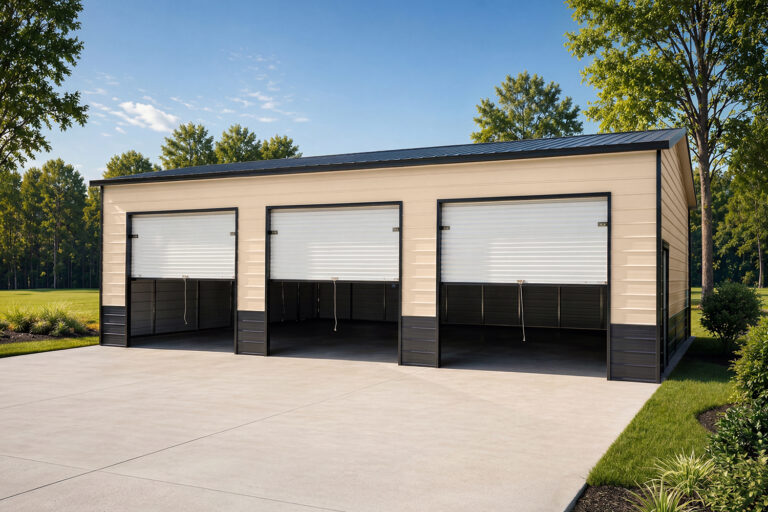
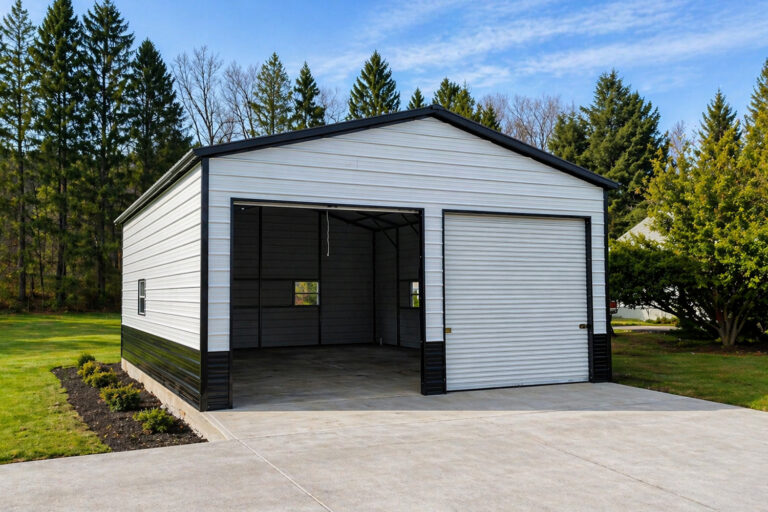
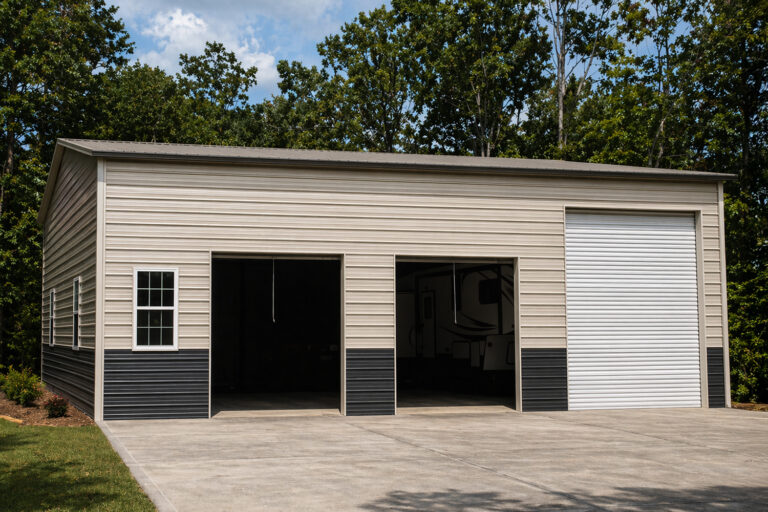
Metal garages in Oklahoma are a strong option when enclosed protection is needed. A garage can protect vehicles, motorcycles, tools, welders, compressors, ATVs, UTVs, tractors, and shop equipment from sun, hail, wind-driven rain, dust, and theft. In residential areas, an enclosed garage can also help keep outdoor storage organized and reduce clutter around the property.
When planning a garage, measure more than the vehicle. Include mirrors, toolboxes, shelves, workbenches, door swing, walking clearance, and future storage. If the garage will be used as a workshop, consider ventilation, insulation, electrical service, lighting, and dust control. For rural properties, plan the entrance so trucks and trailers can access the building without sharp turns or muddy approaches.
Metal Carports in Oklahoma
Metal carports in Oklahoma are useful for shade and quick access. They can protect daily drivers, tractors, trailers, boats, mowers, ranch trucks, and small implements from sun and hail. A carport is often more affordable than a fully enclosed building and can be a good choice when security is less important than overhead protection.
Because Oklahoma has high wind exposure, carports should be planned carefully. Anchoring is critical. On open lots, consider a vertical roof, stronger anchors, closed ends, or partial side panels. If the carport will protect valuable equipment or be placed in a wide-open area, it may be worth upgrading from a basic structure to a more durable configuration.
Metal Barns in Oklahoma
Metal barns in Oklahoma can support cattle operations, hay storage, feed storage, tack rooms, ranch equipment, tractors, livestock supplies, and farm tools. A barn should be planned around daily workflow. Hay needs dry, ventilated space. Cattle supplies need quick access. Equipment needs wide doors and stable ground. Feed and chemicals should be separated from fuel and machinery when possible.
For ranch properties, the best barn layout often includes wide openings, tall sidewalls, and a site that drains well. Avoid placing hay storage in low spots or areas where roof runoff will create mud. If the building is near animals, plan airflow and safe circulation.
Metal RV Covers in Oklahoma
Metal RV covers in Oklahoma help protect motorhomes, fifth wheels, travel trailers, boats, and campers from intense sun, hail, wind-driven rain, and seasonal exposure. RVs are especially vulnerable to UV damage on roof membranes, seals, tires, graphics, and interior materials.
Measure the RV at the highest point, including rooftop AC units, vents, antennas, ladders, and solar panels. Also account for driveway slope and turning space. Taller RV covers catch more wind, so anchoring and bracing should be a major part of the decision. In exposed areas, partial enclosure may help reduce dust and storm exposure.
Roof Style Recommendations for Metal Buildings in Oklahoma
Roof style is one of the most important decisions for metal buildings in Oklahoma. The roof must manage high wind, hail, heavy rain, heat, sun, and dust. While budget matters, a stronger roof style can make the building more useful and easier to maintain over time.
Vertical Roof Style for Metal Buildings in Oklahoma
A vertical roof is the best all-around recommendation for most metal buildings in Oklahoma. Vertical roof panels run from the ridge down toward the eaves, helping rain, dust, debris, and occasional winter precipitation move off the roof more efficiently. This is especially helpful during severe thunderstorms when intense rain can fall quickly.
Vertical roofing is recommended for larger garages, barns, RV covers, and commercial buildings. It is also a strong choice for ranch and farm equipment storage because it supports better long-term drainage and a more finished structure. If the building is wide, tall, exposed to wind, or protecting high-value equipment, vertical roofing is usually worth the upgrade.
A-Frame Horizontal Roof Style
An A-frame horizontal roof gives a traditional appearance and can work well for smaller buildings in moderate-use situations. It may be suitable for basic garages, carports, or storage structures where budget is a priority. However, because the roof panel orientation is not as efficient for runoff as a vertical roof, it may not be the best choice for larger buildings or exposed sites.
For Oklahoma storms, consider how the roof will shed water, how it will handle wind, and whether debris will collect on the surface. A horizontal roof may be acceptable for small shelters, but larger metal buildings in Oklahoma usually benefit from vertical roofing.
Regular Roof Style
A regular roof style can work for small, simple shelters where cost is the main concern. It may be useful for light-duty coverage, shade, and basic storage. However, it is not always the best long-term option for high-value equipment, large RVs, ranch barns, or commercial storage buildings.
For properties exposed to strong wind, hail, and severe storms, buyers should compare the cost savings of a regular roof against the value of better drainage, strength, and long-term usability.
Size and Layout Guidance
The right size for metal buildings in Oklahoma depends on the use, site access, vehicle or equipment dimensions, wind exposure, and future growth. Square footage matters, but door width, sidewall height, turning space, and pad drainage often matter more.
Start With the Largest Item
Measure the largest item that will use the building. For a garage, include mirrors, toolboxes, racks, and door swing. For a farm equipment building, include tractor attachments, mower decks, loaders, trailers, hay equipment, and turning room. For an RV cover, include rooftop AC units, vents, antennas, ladders, solar panels, and the slope of the approach.
A building that technically fits the equipment but has narrow doors or poor access will become frustrating. Add enough width and height for future use. Ranch and farm equipment tends to grow over time, so undersizing the building can limit its usefulness.
Plan Around Wind and Doors
Door placement matters in windy areas. Large doors facing the strongest wind direction can be harder to use and may increase stress on the building. If possible, place large openings where they are protected by the site layout, terrain, or other structures. For drive-through equipment buildings, make sure both door openings are practical for daily use.
Plan Drainage Before the Building Arrives
Drainage should be solved before installation. In Oklahoma, dry soil can become slick and unstable after heavy storms. Place the building where water moves away from the pad. Use a stable base and avoid low spots. If the site is near a pond, creek, drainage ditch, or flood-prone area, verify local rules before preparing the pad.
Allow Room for Maintenance
Leave room around the building for mowing, cleaning, inspections, panel maintenance, and runoff management. Do not place the structure so close to fences, trees, ditches, or property lines that it becomes hard to access. For rural properties, also leave room for trailers, tractors, and emergency vehicles.
Cattle, Wheat, Hay, Ranch Storage, and Farm Equipment Buildings
Oklahoma has a major agricultural and ranching economy. USDA/NASS reports a large cattle inventory, millions of acres in farm operations, major winter wheat acreage, significant hay production, hog inventory, and other crops including cotton, corn, soybeans, sorghum, peanuts, and canola. Oklahoma State Extension also highlights the impact of drought on cattle and wheat producers, which reinforces the importance of resilient farm and ranch infrastructure.
For agricultural users, metal buildings in Oklahoma can provide practical storage for tractors, hay equipment, stock trailers, fencing supplies, feed, mineral, tools, sprayers, wheat handling equipment, and ranch vehicles. A good farm building should improve daily workflow while protecting expensive equipment from sun, hail, wind, and rain.
Cattle and Ranch Storage
Cattle operations need accessible, durable storage. A metal barn or equipment building can store feed, mineral, medicine, tack, fencing supplies, panels, water system parts, tools, and ranch vehicles. If the building supports daily cattle work, wide doors and drive-through access may save time.
For ranch storage, plan around dust, wind, wildfire risk, and traffic flow. Keep fuel, chemicals, hay, and equipment organized and separated where possible. Make sure trailers and feed trucks can reach the building without getting stuck after rain.
Wheat and Farm Equipment Buildings
Oklahoma is known for winter wheat production, and wheat operations often need storage for tractors, drills, combines, headers, seed, tools, and maintenance supplies. Door width and interior clearance are critical. A building that is too narrow may not fit modern implements or allow safe equipment movement.
For wheat and mixed crop operations, consider wide doors, high sidewalls, drive-through access, and enough interior room for seasonal work. If the building will store seed or chemicals, separate those materials from general equipment and work areas.
Hay Storage
Hay storage needs dryness, airflow, and fire awareness. A metal barn can protect hay from rain and sun, but the building must be placed where runoff will not move into the storage area. If the building is open-sided, orient it to reduce wind-driven rain where possible.
Store hay away from fuel, chemicals, and heat-producing equipment. Maintain airflow and keep the area around the building clear of tall grass and brush, especially during drought and wildfire conditions.
Permit and Planning Guidance for Oklahoma, Tulsa, and Cleveland County
Permitting for metal buildings in Oklahoma depends on whether the property is inside a city, town, or unincorporated county area. Cities often manage building permits, zoning, inspections, contractor registration, and trade permits. Counties and rural jurisdictions may have different requirements. Always confirm the correct permitting authority before ordering a building.
Oklahoma County Planning Notes
Many Oklahoma County properties fall within Oklahoma City or another municipality, so the local city process may apply. Oklahoma City states that permits are required when constructing, altering, repairing, enlarging, moving, or demolishing a primary or accessory structure. The city also requires licensed and registered contractors for electrical, plumbing, mechanical, roofing, elevator, driveway, boiler, residential building, and fire specialist work where applicable.
For metal buildings in Oklahoma within Oklahoma County, confirm whether the property is in Oklahoma City, Edmond, Midwest City, Del City, Bethany, or another local jurisdiction. Check zoning, setbacks, building height, lot coverage, driveway access, stormwater, and whether the structure is considered a carport, garage, accessory building, agricultural building, or commercial building.
Tulsa County Planning Notes
Tulsa County properties may fall within the City of Tulsa or other municipalities. The City of Tulsa states that Development Services issues permits for property within city limits and that a building permit is typically required when building, remodeling, moving, or repairing structural elements or changing occupancy. Tulsa also identifies accessory use permits for carports and garages, and notes that some improvements not requiring a building permit may still require zoning clearance.
For metal buildings in Oklahoma within Tulsa County, start by identifying the local jurisdiction. If the property is in Tulsa city limits, review zoning clearance, accessory building rules, carport or garage requirements, building permit requirements, and trade permits. If the project is commercial or multi-use, expect more review for occupancy, fire access, utilities, parking, and site plan issues.
Cleveland County Planning Notes
Cleveland County includes Norman, Moore, Noble, and rural areas, so permitting depends on jurisdiction. The City of Norman provides an accessory structure construction permit application that lists submittal items such as a site plan, building elevation, soil profile, foundation plan, floor plan, property deed, right-of-way application, and additional items when applicable.
For metal buildings in Oklahoma within Cleveland County, confirm whether the project is reviewed by Norman, Moore, Noble, or the county. Accessory structures, garages, carports, shops, and storage buildings may require zoning review, building permits, site plans, foundation details, and final inspections. If the property is rural, also consider driveway access, drainage, floodplain issues, and wind exposure.
Permit and Planning Checklist
- Confirm whether the property is inside a city, town, or unincorporated county area.
- Ask whether the structure is classified as a garage, carport, barn, accessory structure, agricultural building, commercial building, or storage building.
- Verify setbacks from property lines, roads, easements, utilities, septic systems, wells, drainage areas, and flood-prone locations.
- Check maximum building height, lot coverage, building size limits, and accessory structure placement rules.
- Ask whether a zoning clearance, building permit, engineered drawing, site plan, foundation plan, or inspection is required.
- Confirm local wind load, anchoring, foundation, and roof requirements.
- Review drainage, clay soil, driveway access, and storm runoff before preparing the pad.
- Ask whether electrical, plumbing, mechanical, commercial use, or agricultural use requires additional permits.
- For open structures, confirm carport-specific rules and whether side panels or enclosure changes affect permitting.
- Keep copies of approved permits, stamped plans, inspection records, warranty information, and site documents.
Final Buying Checklist for Metal Buildings in Oklahoma
Before purchasing metal buildings in Oklahoma, use this checklist to compare your site, weather exposure, storage needs, and permit requirements.
- Define the main purpose: Decide whether the building is for vehicles, RVs, cattle supplies, hay, wheat equipment, tractors, tools, ranch storage, commercial inventory, or mixed use.
- Measure carefully: Include vehicle height, tractor attachments, trailer width, RV rooftop units, toolboxes, shelves, workbenches, and walking clearance.
- Choose the right roof: Use a vertical roof for larger buildings, exposed sites, barns, RV covers, commercial storage, and high-value equipment protection.
- Plan for wind: Review anchoring, bracing, door placement, side panels, and whether the site is exposed to open-field winds.
- Prepare for hail: Consider enclosed storage or covered parking for vehicles, RVs, equipment, and tools that are expensive to repair.
- Account for heat: Plan shade, ventilation, lighter colors, and insulation if the building will be used during hot months.
- Review wildfire risk: Maintain defensible space, clear brush, separate hay from fuel, and keep access routes open.
- Handle clay soil correctly: Use a stable base, positive drainage, and a durable driveway approach before installation.
- Check permits early: Contact the correct city, town, county, or local building department before finalizing the footprint.
- Plan for future growth: Add enough width, height, and door clearance for future equipment, ranch needs, or business storage.
Blue Valley Steel offers flexible options for homeowners, ranchers, farmers, RV owners, contractors, and businesses comparing metal buildings in Oklahoma. From enclosed garages and open carports to barns, RV covers, and commercial storage buildings, the right structure should be planned around Oklahoma’s tornado risk, high winds, hail, heat, drought, wildfire concerns, clay soil, agricultural needs, and local permitting process. A well-planned building will be easier to use, easier to maintain, and better suited for the property where it is built.

 Sale
Sale