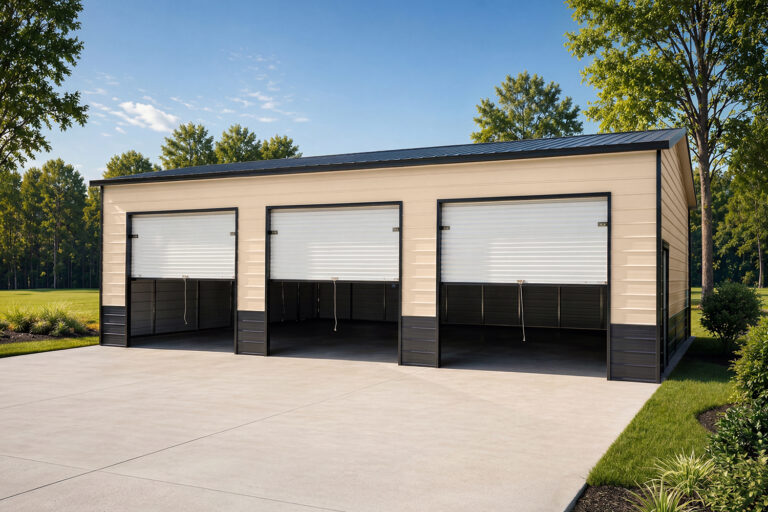
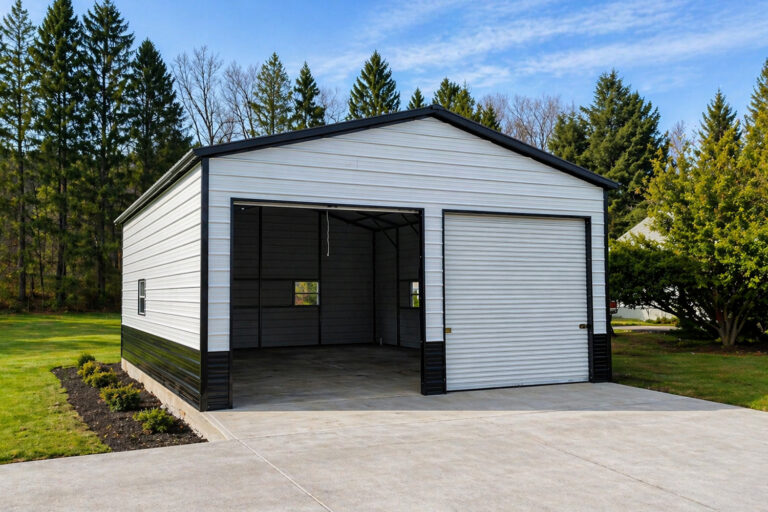
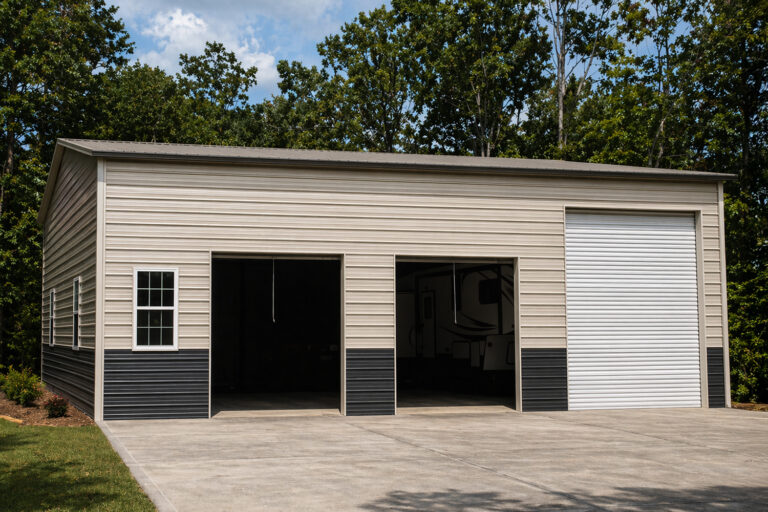
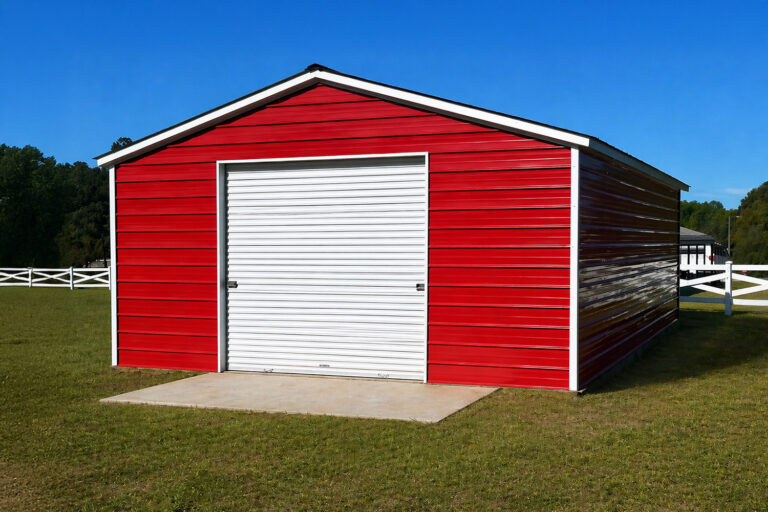
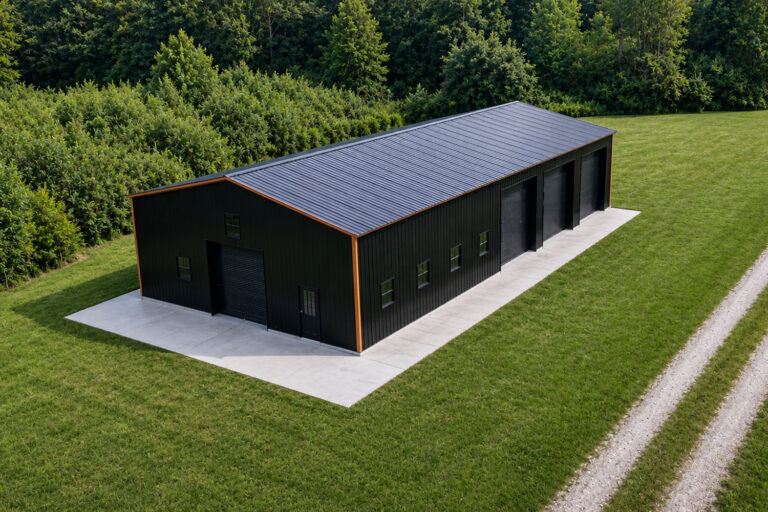
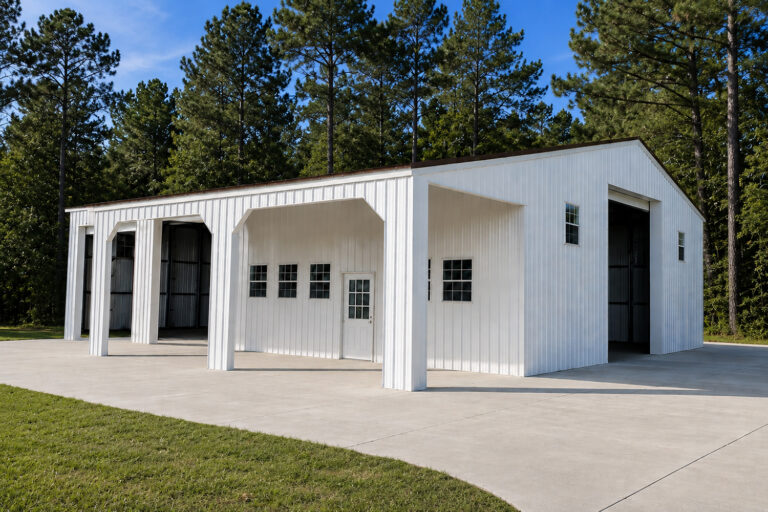
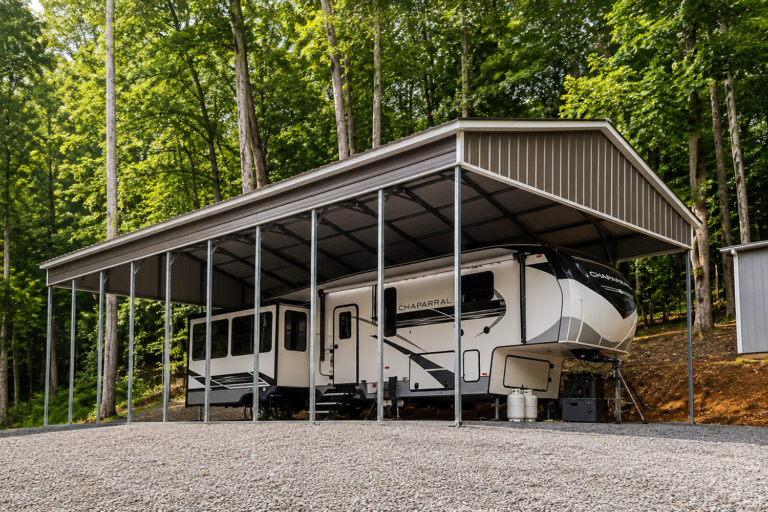
Choosing metal buildings in North Carolina requires planning for one of the most varied building environments in the Southeast. A structure in the mountains may need to account for snow, slope, frost, and drainage. A building in the Piedmont may need to handle red clay soil, heavy rain, humidity, and storm runoff. A structure in eastern or coastal North Carolina may need more attention to hurricanes, tropical storms, flooding, wind exposure, and moisture control.
Blue Valley Steel helps customers compare practical building options for residential, farm, commercial, and recreational storage needs. Whether you are planning metal garages, metal carports, metal barns, metal RV covers, or commercial metal buildings, the best layout should match your region, soil conditions, local permitting rules, and long-term use.
This guide explains how to choose metal buildings in North Carolina with practical guidance on humidity, heavy rainfall, hurricane and tropical storm risk in eastern and coastal areas, mountain snow and slope considerations in western North Carolina, clay soil drainage, poultry, hogs, cattle, tobacco, hay, equipment storage, RV covers, and permitting guidance for Mecklenburg County, Wake County, and Guilford County.
Table of Contents
- Why Metal Buildings in North Carolina Need Regional Planning
- Humidity, Heavy Rain, Hurricanes, Mountain Snow, and Clay Soil
- Product Type Comparison for North Carolina Properties
- Roof Style Recommendations for Metal Buildings in North Carolina
- Size and Layout Guidance
- Agriculture, Poultry, Hogs, Cattle, Tobacco, Hay, and Equipment Storage
- Permit and Planning Guidance for Mecklenburg, Wake, and Guilford County
- Final Buying Checklist
Why Metal Buildings in North Carolina Need Regional Planning
Metal buildings in North Carolina should not be planned the same way in every part of the state. North Carolina stretches from the Atlantic coast to the Appalachian Mountains, and that geographic range affects weather, drainage, soil, wind exposure, and site preparation. A building near Wilmington or the Outer Banks may need stronger attention to tropical weather, flooding, and salt-air moisture. A building near Charlotte, Greensboro, or Raleigh may need careful planning around clay soil, runoff, suburban lot coverage, setbacks, and accessory structure rules. A building near Asheville or Boone may need to account for slope, mountain snow, gravel access, and steeper drainage patterns.
For homeowners, a metal building can protect cars, trucks, mowers, boats, motorcycles, tools, and RVs. For farms, the same type of structure may store hay, feed, tractors, poultry equipment, hog operation supplies, cattle equipment, tobacco handling materials, or general farm tools. For businesses, a metal building may function as a fleet shelter, contractor storage bay, workshop, landscape equipment building, or commercial warehouse-style structure.
The right building starts with the site. Look at how water moves across the property, where the driveway enters, where large doors can face, how much space local setbacks allow, and whether the building will be open, partially enclosed, or fully enclosed. These details matter because metal buildings in North Carolina often need to handle both daily humidity and sudden severe weather.
Humidity, Heavy Rain, Hurricanes, Mountain Snow, and Clay Soil
North Carolina has a humid climate with substantial regional variation between the coast, Piedmont, and mountains. For a helpful statewide overview, the NOAA North Carolina State Climate Summary explains the state’s humid climate, Atlantic hurricane exposure, heavy rainfall events, mountain influence, coastal flooding concerns, and changing precipitation patterns. For metal buildings in North Carolina, those factors point to the importance of roof style, drainage, anchoring, ventilation, and careful site placement.
Humidity and Moisture Control
Humidity affects nearly every enclosed structure in North Carolina. A building that traps warm, moist air can develop condensation, musty smells, and uncomfortable interior conditions. This matters for garages, barns, RV covers with enclosed sides, workshops, and equipment storage buildings. If the structure will hold tools, feed, tack, upholstery, vehicles, or electrical equipment, airflow should be part of the design.
For enclosed metal buildings in North Carolina, consider ventilation through ridge vents, gable vents, windows, framed openings, or planned door placement. Insulation can also help reduce condensation and temperature swings. On farms, ventilation is even more important where feed, hay, animals, or equipment are stored together.
Heavy Rainfall and Storm Runoff
Heavy rain is one of the biggest reasons to plan the building pad carefully. North Carolina can receive intense rain from thunderstorms, tropical storms, hurricanes, and slow-moving weather systems. If a metal building is placed in a low spot, roof runoff and yard drainage can pool around the base, wash out gravel, soften clay soil, and push water toward doors.
Before ordering a structure, watch how water drains after a storm. The pad should be slightly raised or graded so water moves away from the building. Door openings should not face a natural drainage path. If the property has a long gravel driveway, slope, ditch, creek, or compacted clay yard, drainage should be solved before the building arrives.
Hurricane and Tropical Storm Risk in Eastern and Coastal North Carolina
Eastern and coastal North Carolina face hurricane and tropical storm risk. Wind, wind-driven rain, storm surge, river flooding, and saturated soils can all affect a building site. Coastal communities and low-lying inland counties may also have floodplain rules, elevation requirements, wind-borne debris considerations, and stricter local review.
For coastal metal buildings in North Carolina, anchoring and enclosure choices matter. Open-sided carports and RV covers should be designed with uplift in mind because wind can push underneath the roof. Enclosed garages and barns should use properly rated doors and bracing for the location. In flood-prone areas, buyers should confirm elevation and local floodplain requirements before choosing the final building location.
Mountain Snow, Slope, and Western North Carolina Conditions
Western North Carolina has a different set of challenges. Mountain properties may see colder temperatures, occasional heavy snow, ice, steep driveways, sloped pads, and fast-moving runoff. A site that looks dry in summer may become difficult during winter freeze-thaw cycles or spring rain.
For mountain metal buildings in North Carolina, roof pitch, roof style, snow sliding areas, and access should be reviewed carefully. A vertical roof is often preferred for snow and rain shedding. Door placement should avoid areas where snow or runoff will pile up. On sloped sites, proper grading and pad preparation are critical because water can move quickly toward the structure if the site is not shaped correctly.
Clay Soil Drainage
Clay soil is common across much of the Piedmont and other parts of North Carolina. Clay can hold water, compact tightly, and drain slowly. That creates problems when a heavy building, concrete slab, or gravel pad is installed without proper base preparation. Poor drainage can lead to mud, standing water, slab edge erosion, and difficult vehicle access.
For metal buildings in North Carolina on clay soil, invest in site preparation. A compacted stone base, proper grading, ditching, swales, gutters, and downspout routing can make the building easier to use. If heavy equipment, tractors, trailers, or RVs will be stored inside, the approach path should be stable enough to handle repeated use during wet weather.
Product Type Comparison for North Carolina Properties
The best building type depends on whether the main goal is shade, enclosed security, agricultural storage, RV protection, or commercial workspace. The comparison below helps match common uses to the right type of metal buildings in North Carolina.
| Building Type |
Best Uses in North Carolina |
Planning Notes |
| Metal Garages |
Cars, trucks, tools, workshops, ATVs, mowers, small business storage, enclosed equipment protection |
Plan for humidity, ventilation, door clearance, driveway access, setbacks, slab drainage, and local permits. |
| Metal Carports |
Vehicle shade, tractors, trailers, boats, farm equipment, mower storage, short-term covered parking |
Open sides are convenient, but wind anchoring and roof style matter in storms and exposed locations. |
| Metal Barns |
Hay, feed, cattle supplies, poultry operation support, hog farm equipment, tobacco handling, rural storage |
Focus on ventilation, dry storage, wide openings, drainage, animal-safe workflow, and equipment access. |
| Metal RV Covers |
Motorhomes, campers, fifth wheels, travel trailers, boats, seasonal recreational storage |
Measure total height including AC units and antennas; consider wind exposure and side panels. |
| Commercial Metal Buildings |
Fleet storage, contractor yards, landscape equipment, farm business space, inventory storage, workshops |
Expect more review for zoning, parking, fire access, utilities, stormwater, and business use. |
Metal Garages in North Carolina
Metal garages in North Carolina are a strong choice when enclosed protection matters. A garage can protect vehicles, motorcycles, tools, mowers, ATVs, farm supplies, and workbenches from rain, humidity, sun, pollen, and storm debris. In suburban areas, a garage may also help organize limited lot space by combining parking and storage into one structure.
When planning a garage, measure more than the vehicle. Include mirrors, toolboxes, shelving, door swing, walking room, and workspace. If the garage will be used during hot or humid months, consider insulation and ventilation. If the building will be placed on clay soil, make sure the slab or gravel base drains properly.
Metal Carports in North Carolina
Metal carports in North Carolina are useful for open coverage and quick access. They work well for vehicles, tractors, landscape trailers, boats, farm equipment, and daily-use storage. Carports are popular because they provide shade and rain protection without fully enclosing the structure.
However, open structures must be planned for wind. In eastern North Carolina, coastal counties, open fields, and storm-prone areas, anchoring should be taken seriously. Partial side panels or closed ends can help reduce wind-driven rain and sun exposure. A vertical roof is often worth considering for larger carports or structures in high-rain areas.
Metal Barns in North Carolina
Metal barns in North Carolina can support hay storage, cattle supplies, poultry farm equipment, hog operation materials, tobacco handling, tractors, trailers, and general farm storage. Barn planning should start with workflow. A barn used for hay needs dry storage and airflow. A barn used for equipment needs wide doors and turning room. A building used near animals needs ventilation, safe access, and easy cleaning.
For farms, avoid placing the barn where water from fields or drive lanes will collect. Keep hay and feed storage separated from fuel, chemicals, and machinery heat. If the building supports poultry, hogs, or cattle, plan access for trucks, feed deliveries, maintenance equipment, and emergency vehicles.
Metal RV Covers in North Carolina
Metal RV covers in North Carolina help protect campers, motorhomes, fifth wheels, travel trailers, boats, and off-road vehicles from UV exposure, rain, leaves, branches, and storm debris. RV storage requires more height than standard vehicle storage, so measure carefully.
Include rooftop AC units, vents, antennas, ladders, solar panels, and the slope of the driveway approach. In hurricane-prone or open areas, taller RV covers should have strong anchoring and may benefit from partial enclosure. In mountain areas, roof style and snow shedding should also be considered.
Roof Style Recommendations for Metal Buildings in North Carolina
Roof style is one of the most important choices for metal buildings in North Carolina. The roof has to handle heavy rain, humidity, falling leaves, storm debris, occasional snow, and wind. The right roof style can reduce maintenance and help the building perform better over time.
Vertical Roof Style for Metal Buildings in North Carolina
A vertical roof is the best all-around recommendation for most larger metal buildings in North Carolina. Vertical roof panels run from the ridge down toward the eaves, which helps rain, leaves, pine needles, and snow move off the roof more efficiently. This matters in a state where heavy rain can arrive quickly and where moisture can linger in shaded areas.
Vertical roofing is especially recommended for garages, barns, RV covers, and commercial buildings. It is a strong choice for mountain areas with snow, eastern areas with tropical rain, and larger buildings where long-term drainage matters.
A-Frame Horizontal Roof Style
An A-frame horizontal roof gives a traditional appearance and may work for smaller buildings in moderate conditions. It can be a practical option for basic garages, carports, and storage buildings. However, because the panel orientation is not as efficient as a vertical roof for shedding rain and debris, it may not be ideal for larger buildings, wooded lots, or high-rain areas.
Regular Roof Style
A regular roof style can work for small, simple shelters where budget is the main concern. It may be suitable for basic shade and light storage. For many metal buildings in North Carolina, especially buildings that protect valuable vehicles, tractors, RVs, hay, feed, or business equipment, a stronger roof style is usually the better long-term choice.
Size and Layout Guidance
The right size for metal buildings in North Carolina depends on the use, site, access, and future growth. Square footage matters, but door size, sidewall height, driveway approach, drainage, and interior workflow are often more important.
Start With the Largest Item
Measure the largest item that will use the building. For a garage, include mirrors, racks, bumpers, and door swing. For an RV cover, include rooftop AC units, antennas, vents, and the driveway slope. For a farm building, measure tractors, implements, trailers, feed equipment, hay wagons, and maintenance space.
A building that is large enough inside but difficult to enter will be frustrating. Door placement should match how vehicles or equipment approach the structure. If trailers need to back in, leave enough straight-line access. If tractors need to pass through, consider drive-through doors.
Plan Around Rain and Clay Soil
Site layout should account for water first. In North Carolina, a slightly larger building in a poor drainage area is usually worse than a smaller building on a better pad. Place the structure where water naturally moves away from the building. If the site has clay soil, use a stable base and avoid placing the structure at the bottom of a slope.
Think About Ventilation and Heat
Humid summers can make enclosed buildings hot and damp. If the structure will be used as a workshop, animal support area, feed room, or tool storage building, plan airflow. Taller sidewalls, vents, windows, overhead doors, and insulation can make the building more useful.
Leave Room for Maintenance
Do not place the building so close to fences, trees, ditches, or property lines that it becomes hard to maintain. Leave room for mowing, cleaning gutters, inspecting panels, managing runoff, and accessing doors. In wooded areas, consider falling limbs and leaf buildup when choosing the location.
Agriculture, Poultry, Hogs, Cattle, Tobacco, Hay, and Equipment Storage
North Carolina has a large and diverse agricultural economy. USDA/NASS reports millions of acres in farm operations, major hog inventory, significant turkey production, cattle inventory, tobacco production, hay production, sweet potatoes, soybeans, corn, cotton, peanuts, and other crops. NC State Extension also provides poultry and livestock resources for producers across the state.
For agriculture, metal buildings in North Carolina can provide practical storage for tractors, implements, feed, bedding, hay, fencing supplies, trailers, tobacco handling materials, poultry equipment, hog operation supplies, and cattle-related tools. A good farm building should improve workflow, protect equipment, and keep materials dry.
Poultry and Hog Operation Support
Poultry and hog operations often require organized storage for maintenance equipment, feed-related supplies, ventilation parts, tools, protective gear, and cleaning supplies. A metal building can support these needs as long as the layout separates clean storage from dirty or wet areas.
For these operations, ventilation, biosecurity workflow, and access are important. Do not place general storage where it interferes with service vehicles, feed trucks, or daily farm routines. If chemicals, fuel, or equipment are stored inside, keep them separated from feed or animal-care materials.
Cattle, Hay, and Feed Storage
Cattle operations and hay producers need dry, accessible storage. A metal barn can protect hay from rain and sun, but the pad must stay dry. Ventilation matters because trapped moisture can reduce hay quality. If hay and equipment are stored in the same building, separate the areas to reduce fire and contamination risks.
For cattle support, plan wide openings, trailer access, feed storage, fencing supplies, and easy movement around the building. If the structure will serve multiple uses, leave enough space for future needs rather than filling every square foot on day one.
Tobacco, Equipment, and General Farm Use
Tobacco, row crop, and mixed-use farms need storage for tractors, sprayers, trailers, curing or handling supplies, tools, and seasonal materials. A commercial or agricultural metal building can help keep equipment organized and protected from rain and humidity.
When planning metal buildings in North Carolina for farm use, think through how the building will be used during the busiest season, not just during storage months. The best layout allows equipment to move quickly, keeps high-use items near the door, and protects materials that are most vulnerable to moisture.
Permit and Planning Guidance for Mecklenburg, Wake, and Guilford County
Permitting for metal buildings in North Carolina depends on the county, city, town, zoning district, building size, utilities, foundation, and use. In many cases, a city or town may handle zoning and building permits even when the property is inside a county. Always confirm the correct jurisdiction before ordering the structure.
Mecklenburg County Planning Notes
Mecklenburg County Code Enforcement states that permits are required for residential work on one- and two-family dwellings and townhomes involving new construction, reconstruction, alteration, repair, movement, removal, or demolition of a building, and also for electrical, mechanical, and plumbing work. Accessory structures in the Charlotte-Mecklenburg area may also require zoning review, and local forms define accessory structures as subordinate structures on the same lot as the principal structure.
For metal buildings in North Carolina within Mecklenburg County, confirm whether the property is inside Charlotte, another municipality, or unincorporated county jurisdiction. Check setbacks, lot coverage, building height, driveway access, stormwater, and whether the structure is residential, agricultural, or commercial. Detached garages, carports, barns, and storage buildings may require different submittals depending on size and use.
Wake County Planning Notes
Wake County contains Raleigh, Cary, Apex, Wake Forest, and other municipalities, so permitting often depends on the local jurisdiction. Raleigh guidance states that accessory structures include detached garages, carports, storage sheds, gazebos, greenhouses, and pool houses. It also explains that a permit is required regardless of size, with smaller structures generally receiving zoning permits and structures exceeding 12 feet in any direction requiring building permits.
For Wake County-area metal buildings, confirm whether the project is reviewed by the county, Raleigh, Wake Forest, Cary, Apex, or another local municipality. Ask about setbacks, impervious surface limits, watershed rules, driveway expansions, utilities, and whether the building needs a zoning permit or building permit. Smaller lots and suburban neighborhoods often require careful placement before construction begins.
Guilford County Planning Notes
Guilford County permit guidance explains that accessory buildings or structures are located on the same lot as a primary residential dwelling and are used for a different purpose. The county notes that an accessory building with any dimension greater than 12 feet must comply with the North Carolina Residential Code, and that pre-engineered metal buildings are not prescriptive in the code and must have plans sealed by a North Carolina registered design professional.
For metal buildings in North Carolina within Guilford County, this is especially important. Buyers should be prepared to provide plot plans, construction plans, zoning or development clearance where applicable, and engineered plans when required. Additional approvals may be needed for zoning, setbacks, watershed rules, soil erosion, well and septic, or environmental health review.
Permit and Planning Checklist
- Confirm whether the property is under county, city, town, or extra-territorial jurisdiction review.
- Ask whether the structure is classified as a garage, carport, barn, accessory structure, agricultural building, commercial building, or storage building.
- Verify setbacks from property lines, roads, easements, septic systems, wells, utilities, wetlands, streams, and flood-prone areas.
- Check whether a zoning permit, building permit, engineered drawings, plot plan, site plan, or development clearance is required.
- Ask whether electrical, plumbing, mechanical, or commercial use requires separate permits.
- Review stormwater, impervious surface, watershed, and drainage rules before preparing the pad.
- Confirm whether the building needs a concrete slab, footings, anchors, or sealed foundation details.
- For coastal and eastern properties, ask about floodplain, wind, and hurricane-related requirements.
- For western properties, ask about slope, driveway access, snow load, and erosion control.
- Keep permit approvals, stamped plans, inspection reports, warranties, and site documents for future records.
Final Buying Checklist for Metal Buildings in North Carolina
Before purchasing metal buildings in North Carolina, use this checklist to make sure the structure fits your property, weather exposure, storage needs, and local permit requirements.
- Define the main purpose: Decide whether the building is for vehicles, RVs, farm equipment, hay, poultry operation support, hog operation supplies, cattle equipment, tobacco materials, workshop space, or commercial storage.
- Measure carefully: Include vehicle height, tractor attachments, trailer width, RV rooftop units, shelves, workbenches, and walking clearance.
- Choose the right roof: Use a vertical roof for larger buildings, heavy rain areas, mountain snow areas, barns, RV covers, and commercial storage.
- Plan for humidity: Include ventilation and consider insulation if the building will be enclosed or used as a workshop, feed room, or tool storage area.
- Prepare for heavy rain: Grade the site so water moves away from the building, doors, slab, and driveway approach.
- Account for clay soil: Use a stable base and avoid low areas where water collects after storms.
- Review hurricane risk: In eastern and coastal areas, ask about wind ratings, anchoring, floodplain rules, and enclosure options.
- Consider mountain conditions: In western North Carolina, review slope, snow, ice, drainage, and driveway access.
- Check permits early: Contact the correct county, city, or town office before finalizing the footprint.
- Plan for future use: Add enough width, height, and door clearance for future vehicles, equipment, or farm needs.
Blue Valley Steel offers flexible building options for homeowners, farmers, RV owners, contractors, and businesses comparing metal buildings in North Carolina. From enclosed garages and open carports to barns, RV covers, and commercial storage buildings, the right structure should be matched to North Carolina’s humidity, rainfall, storm risk, mountain conditions, clay soil, agricultural needs, and local permitting process. A well-planned building will be easier to use, easier to maintain, and better suited for the property where it is built.

 Sale
Sale