Choosing metal buildings in New Mexico takes a different kind of planning than choosing a building in a wetter or lower-elevation state. New Mexico has intense sun, strong UV exposure, a dry climate, monsoon storms, flash flooding, dust, high wind, wildfire risk, and major elevation differences from desert valleys to mountain communities. A metal garage in Albuquerque may need different site planning than a ranch barn near Las Cruces, a storage building in Santa Fe County, or an RV cover in a high-elevation northern area.
Blue Valley Steel helps customers compare practical building options for residential, ranch, agricultural, and commercial storage needs. Whether you are planning metal garages, metal carports, metal barns, metal RV covers, or commercial metal buildings, the right design should match your site, climate exposure, county requirements, and long-term use.
This guide explains how to compare metal buildings in New Mexico with a practical look at heat, sun, wind, dust, monsoon drainage, wildfire defensible space, snow in northern and high-elevation areas, ranch storage, cattle, hay, chile and agricultural use, RV storage, and permitting guidance for Bernalillo County, Doña Ana County, and Santa Fe County.
Table of Contents
- Why Metal Buildings in New Mexico Need Climate-Specific Planning
- Sun, Wind, Monsoon Storms, Wildfire, and Elevation Differences
- Product Type Comparison for New Mexico Properties
- Roof Style Recommendations for Metal Buildings in New Mexico
- Size and Layout Guidance
- Ranch Storage, Cattle, Hay, Chile, and Agricultural Use
- Permit and Planning Guidance for Bernalillo, Doña Ana, and Santa Fe County
- Final Buying Checklist
Why Metal Buildings in New Mexico Need Climate-Specific Planning
Metal buildings in New Mexico are useful because they can provide dependable coverage in a state where sun, dust, wind, and sudden storms can be hard on vehicles, livestock equipment, RVs, tools, hay, and commercial inventory. A well-planned building can reduce weather exposure, organize a ranch or farm operation, and create a protected space for work or storage. The key is choosing a structure that fits the land instead of just choosing the largest footprint that will fit the budget.
New Mexico has a wide range of environments. Lower desert areas can bring long stretches of heat and sun. Mountain and northern areas can experience snow, freezing temperatures, and greater roof load concerns. Open plains and ranch properties often face stronger wind exposure. Arroyos, washes, and low points can become dangerous during monsoon rain. Forested and rural edge properties may need serious wildfire planning. These conditions make site preparation, roof style, anchoring, ventilation, and drainage especially important.
New Mexico also has strong agricultural and ranching needs. Cattle operations, hay production, chile farms, dairy support, equipment storage, and rural workshops all benefit from durable covered space. The same building type can serve very different users: a carport may protect a daily driver in town, a tractor on a farm, or a side-by-side on a ranch. A barn may store hay, shelter tack, or support cattle and feed handling. A garage may function as a workshop, equipment bay, or enclosed storage unit for high-value tools.
Sun, Wind, Monsoon Storms, Wildfire, and Elevation Differences
New Mexico’s climate should shape the way buyers compare metal buildings in New Mexico. The state is generally arid to semi-arid, but weather hazards are not limited to drought. Sudden monsoon storms can bring intense rain, flash flooding, and fast runoff. Open locations can experience high wind and blowing dust. Northern and high-elevation areas can receive snow and ice. Wildfire risk can be a major issue in forested, grassland, and rural transition areas. For a useful overview of statewide climate patterns, the NOAA New Mexico State Climate Summary is a helpful authoritative resource.
Extreme Sun and UV Exposure
Extreme sun is one of the biggest reasons property owners consider metal buildings in New Mexico. Vehicles, tractors, RVs, trailers, tires, paint, upholstery, plastic trim, rubber seals, and stored materials can wear faster when exposed to intense UV. Covered storage can help reduce direct sun exposure and keep equipment more usable throughout the year.
For open storage, metal carports and metal RV covers are popular because they create shade while keeping access simple. For higher-value equipment, enclosed garages or partially enclosed storage buildings may provide better protection from dust, wind-driven rain, and theft. Lighter roof and wall colors may also help reduce heat gain compared with darker colors, especially on buildings used as workshops or livestock support spaces.
Dry Climate, Heat, and Ventilation
The dry climate can be helpful for reducing some moisture problems, but it also creates planning challenges. Heat buildup inside an enclosed metal building can be uncomfortable and hard on stored goods. Ventilation is important for garages, barns, workshops, and agricultural buildings. Ridge vents, gable vents, windows, roll-up doors, walk doors, and planned airflow can help reduce trapped heat.
If the building will be used as a workshop, tack room, feed room, or commercial storage area, insulation and ventilation should be considered early. Insulation can help moderate interior temperature swings, while ventilation helps remove hot air. For animal-related use, do not rely on shade alone. Airflow, water access, safe footing, and heat stress planning matter.
Monsoon Storms and Flash Flooding
Monsoon season can turn a dry site into a drainage problem quickly. Heavy rainfall may arrive in short bursts, and water can move fast through arroyos, washes, roadside ditches, compacted driveways, and low areas. For metal buildings in New Mexico, the building pad should be placed where runoff will move around the structure instead of through it.
Before ordering a building, watch how water flows across the property during storms or review the site with someone familiar with local drainage. Avoid placing the structure at the bottom of a slope, in a wash, or where driveway runoff collects. A slightly raised pad, compacted base, proper grading, and roof runoff management can protect the foundation area and keep stored equipment dry.
High Wind and Dust
High wind is a major concern on open ranch land, desert lots, mesa properties, and exposed rural sites. Wind can lift open-sided shelters, push dust into enclosed buildings, and place extra stress on doors, panels, anchors, and framing. For metal buildings in New Mexico, anchoring should not be treated as an afterthought.
Open carports and RV covers need strong anchoring because wind can move under the roof. Taller buildings need careful planning because the sidewall height creates more surface area for wind pressure. Large roll-up doors should be placed with prevailing wind in mind when possible. If a site is exposed, partial side panels, closed ends, vertical roofing, and stronger anchoring may be worth considering.
Wildfire Risk and Defensible Space
Wildfire risk matters across many parts of New Mexico. Dry grass, brush, timber, high wind, and low humidity can create dangerous conditions. A metal building is not a complete wildfire solution, but it can be part of a smarter storage and site plan. The area around the building should be kept clear of tall grass, brush piles, firewood stacks, and combustible clutter.
For rural properties, ranches, and forest-edge homes, plan defensible space around the building. Keep access routes open for emergency vehicles. Avoid storing hay, fuel, chemicals, or flammable materials against the exterior wall. If the building will be used for ranch or agricultural storage, separate high-value equipment, hay, and fuel storage when possible.
Elevation Differences and Northern Snow
Elevation is one of the most important differences across New Mexico. Lower southern areas may focus more on sun, dust, heat, and monsoon drainage. Northern and mountain areas may need to plan for snow, ice, colder temperatures, and freeze-thaw cycles. A building near Santa Fe or higher mountain communities may need a stronger roof package than a similar-size structure in a warmer valley.
For snow-prone areas, vertical roof styles are usually recommended because they shed snow and water more efficiently. Door placement also matters. Avoid placing main doors where sliding snow or roof runoff will create ice at the entrance. Plan the driveway and apron so snowmelt drains away from the building instead of refreezing at the threshold.
Product Type Comparison for Metal Buildings in New Mexico
Different building types solve different problems. The best choice depends on whether you need open shade, enclosed security, tall RV clearance, ranch utility, agricultural storage, or commercial working space. The comparison below can help match metal buildings in New Mexico to the most common property needs.
| Building Type |
Best Uses in New Mexico |
Planning Notes |
| Metal Garages |
Vehicles, tools, workshops, ranch equipment, small business storage, enclosed protection |
Plan for ventilation, dust control, door clearance, wind anchoring, and heat management. |
| Metal Carports |
Vehicle shade, tractor coverage, trailers, hay handling areas, temporary equipment staging |
Great for sun protection, but exposed locations need strong anchoring and wind-aware placement. |
| Metal Barns |
Ranch storage, cattle support, hay, tack, feed, small livestock equipment, agricultural supplies |
Focus on airflow, dry storage, door width, animal-safe layout, and separation from fuel or chemicals. |
| Metal RV Covers |
Motorhomes, campers, fifth wheels, boats, travel trailers, off-road vehicles |
Measure total height including AC units and antennas; consider side panels for dust and sun angle. |
| Commercial Metal Buildings |
Fleet storage, contractor yards, agricultural processing support, shop space, equipment storage |
Expect more review for zoning, access, utilities, drainage, fire access, and business use. |
Metal Garages in New Mexico
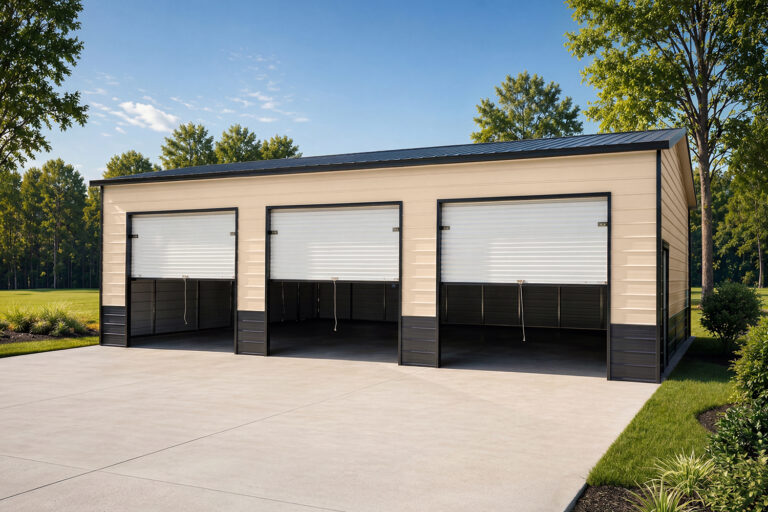
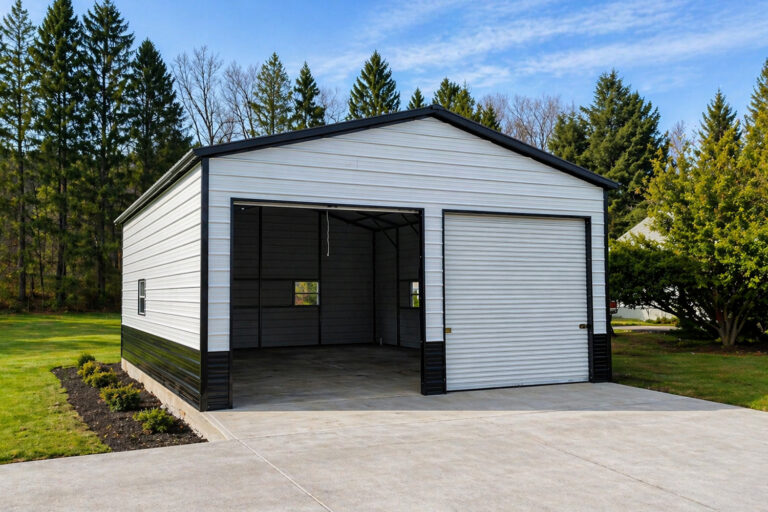
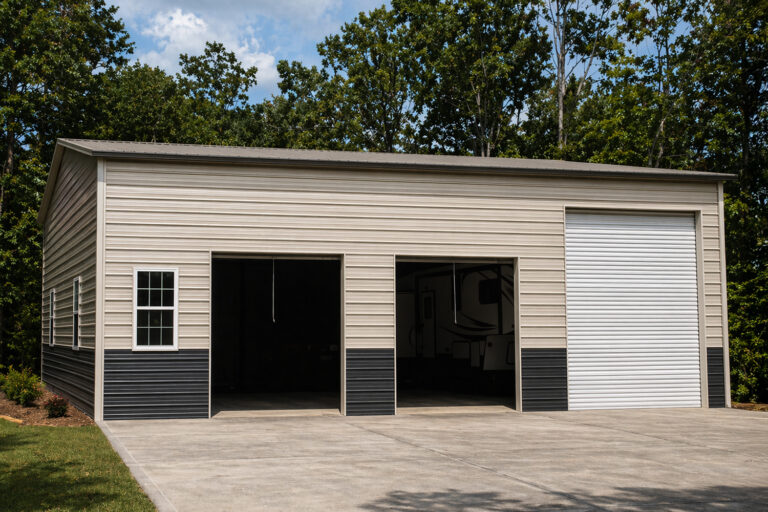
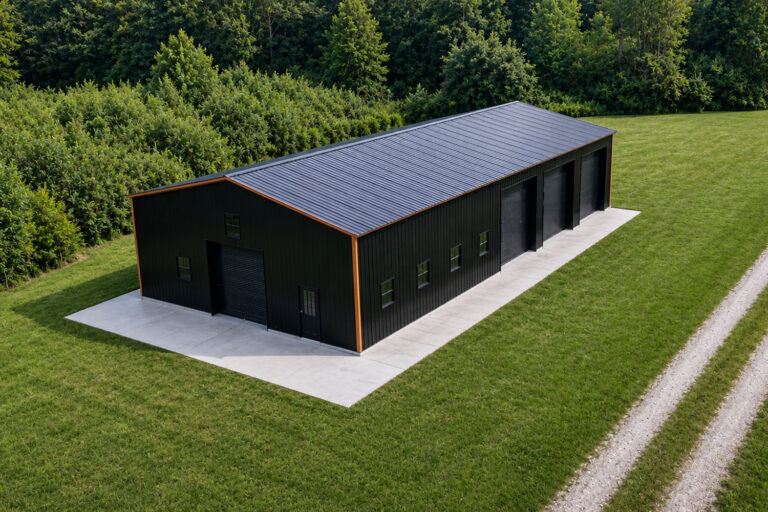
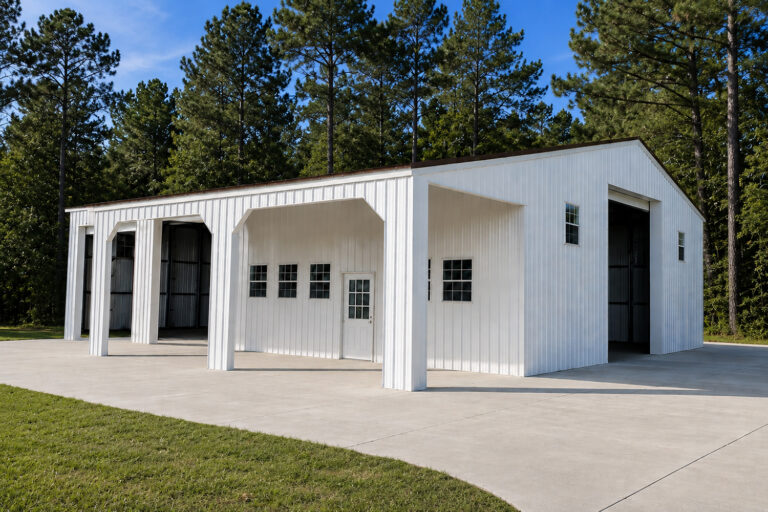
Metal garages in New Mexico are a strong choice when enclosed protection is the priority. A garage can protect vehicles, tools, ATVs, motorcycles, compact tractors, welders, generators, and seasonal equipment from sun, dust, wind, and theft. For many properties, a garage is more useful than an open shelter because it creates a secure workspace and storage area.
When planning a garage, start with door size and interior clearance. A building that fits the vehicle but does not leave room for toolboxes, shelves, workbenches, or walking space will feel cramped. If the garage will be used during summer, ventilation and insulation should be considered. If it will be used in a northern or high-elevation area, snow load and roof style become more important.
Metal Carports in New Mexico
Metal carports in New Mexico are popular because they provide practical shade without fully enclosing the structure. They are useful for daily drivers, tractors, ranch trucks, small trailers, hay wagons, and farm implements. On residential properties, a carport can reduce sun damage and keep vehicles cooler. On ranches and farms, it can create a quick-access covered area for frequently used equipment.
Because carports are open, they must be planned for wind. Anchoring, roof style, and orientation are important. On dusty or exposed sites, partial side panels can block some wind-driven dust and sun angle. For taller or wider carports, a vertical roof is usually a stronger long-term option.
Metal Barns in New Mexico
Metal barns in New Mexico can support ranch storage, hay storage, feed handling, tack storage, equipment parking, and livestock-related work. A barn should be designed around daily workflow. If the building will support cattle or horses, airflow and safe access are important. If it will store hay, moisture control and fire separation should be part of the plan.
Door placement matters on ranch properties. Wide openings can make it easier to move tractors, trailers, and hay equipment, but large openings also affect wind exposure. If the barn will be used for both equipment and feed, consider separate zones so fuel, chemicals, dust, and machinery do not mix with feed or animal supplies.
Metal RV Covers in New Mexico
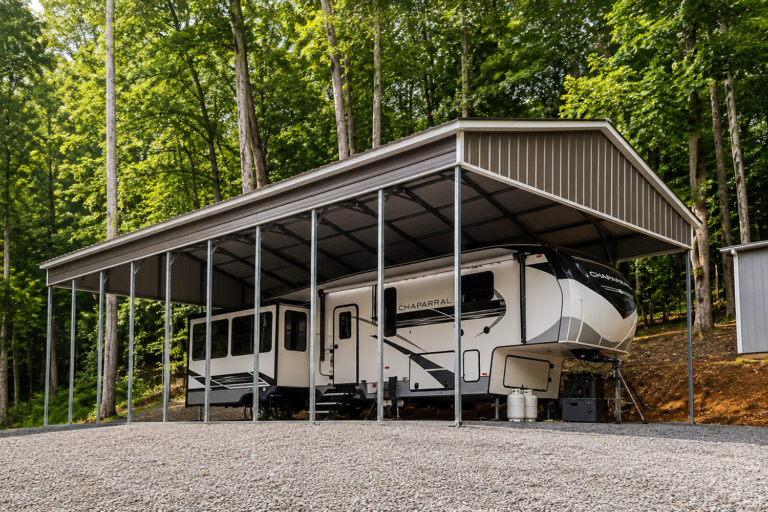
Metal RV covers in New Mexico are useful because RVs and campers are vulnerable to sun exposure. UV can damage roof membranes, seals, decals, tires, and interior materials. A properly sized RV cover can extend the useful life of the vehicle and make seasonal storage easier.
Measure the RV at its highest point, including rooftop AC units, vents, antennas, solar panels, and ladders. Also measure the driveway approach because a sloped entry can reduce effective clearance. In windy areas, taller RV covers need strong anchoring. In dusty areas, side panels or partial enclosure may be worth considering.
Roof Style Recommendations for Metal Buildings in New Mexico
Roof style is one of the most important choices for metal buildings in New Mexico. The roof has to handle sun, wind, dust, sudden rain, and in some areas snow. A budget roof may work for a small shade shelter, but larger buildings and high-value storage usually deserve a stronger roof style.
Vertical Roof Style for Metal Buildings in New Mexico
A vertical roof is the best all-around recommendation for most larger metal buildings in New Mexico. Vertical roof panels run from the ridge toward the eaves, which helps water, dust, and snow move off the roof more efficiently. This is especially useful during monsoon storms, when rain may fall quickly and runoff needs a clear path away from the building.
Vertical roofs are also recommended for RV covers, barns, garages, and commercial buildings in exposed areas. They are a strong choice for northern and high-elevation properties where snow is a concern. If the building is wide, tall, or intended for long-term storage, a vertical roof is usually worth the upgrade.
A-Frame Horizontal Roof Style
An A-frame horizontal roof gives a more traditional roof profile and can work well for moderate-size buildings. It may be suitable for smaller garages, carports, and storage buildings in areas with less snow exposure. However, because the panel orientation is not as efficient for drainage as a vertical roof, buyers should consider the site carefully before choosing it for larger buildings.
In dusty areas, horizontal roof panels may hold more debris. In monsoon-prone locations, roof runoff and panel seams should be considered. For a building that stores valuable equipment or will remain in service for many years, compare the long-term value of upgrading to vertical roofing.
Regular Roof Style
A regular roof style can be useful for small, basic shade structures where cost is the main concern. It may work for simple residential coverage or short-term storage needs. However, many metal buildings in New Mexico benefit from a stronger roof style because of wind, dust, monsoon rain, and snow in some regions.
For tall RV covers, large barns, wide garages, and exposed ranch storage buildings, a regular roof may not be the best long-term fit. If the building protects expensive vehicles, equipment, or agricultural supplies, a stronger roof package is usually easier to justify.
Size and Layout Guidance for Metal Buildings in New Mexico
The best size for metal buildings in New Mexico depends on the equipment, vehicles, livestock needs, site access, and long-term plans. Many buyers focus on square footage, but door clearance, turning radius, sidewall height, ventilation, and drainage can be just as important.
Start With What You Need to Store
Measure every vehicle, trailer, tractor, RV, implement, or piece of equipment that will use the building. Include mirrors, buckets, racks, antennas, rooftop units, toolboxes, and attachments. Then add clearance for walking, opening doors, loading materials, and future storage. A building that is technically large enough on paper may still be frustrating if the doors are too narrow or the approach is too tight.
For garages and workshops, plan space for workbenches, shelves, air compressors, welders, tool storage, and electrical panels. For ranch use, plan for feed, tack, fencing supplies, water tanks, and seasonal equipment. For RV covers, plan both height and side clearance.
Plan for Heat and Airflow
Heat management should be part of the layout. Tall sidewalls, vents, windows, and door placement can improve airflow. If the building will be used for work, animals, feed, or temperature-sensitive supplies, insulation may improve comfort and reduce interior heat swings.
For barns and agricultural buildings, airflow should not be blocked by poor interior layout. Leave space between stored hay, equipment, and walls where needed. Avoid creating dead-air corners where heat, dust, or moisture can collect.
Think About Drainage Before the Building Arrives
Drainage is critical in a state where long dry periods can be interrupted by intense rain. The building pad should be slightly elevated or graded so water moves away from the structure. Roof runoff should not dump into doorways, animal areas, or low storage zones. Driveways and approaches should be shaped so water does not wash out the entrance.
If the site is near an arroyo, wash, flood-prone road, or low drainage area, review local rules before placing the building. In some areas, grading, floodplain development, or drainage review may be required.
Ranch Storage, Cattle, Hay, Chile, and Agricultural Use
New Mexico agriculture includes cattle, dairy, hay, chile, pecans, cotton, corn, wheat, and other crops. USDA/NASS data shows that cattle, hay, and chile remain important parts of the state’s agricultural profile. NMSU Extension also provides resources for ranchers, farmers, forage producers, chile growers, and agricultural businesses throughout the state.
For ranch and farm users, metal buildings in New Mexico can support many practical needs. A ranch may need covered parking for tractors, hay handling equipment, stock trailers, panels, feeders, side-by-sides, and water system parts. A hay producer may need dry storage and airflow. A chile or crop operation may need equipment coverage, packaging support, chemical storage separation, irrigation part storage, or seasonal workspace.
Cattle and Ranch Storage
Cattle operations often need buildings that are simple, strong, and easy to access. A metal barn or equipment building can store feed, tools, fencing supplies, mineral, veterinary supplies, and ranch vehicles. If the building supports daily cattle work, door placement and drive-through access can save time.
For ranch storage, think about dust, wind, and fire safety. Keep combustible materials organized, and avoid storing hay directly beside fuel or machinery. If the building is in a wildfire-prone area, maintain defensible space and keep access routes clear.
Hay and Forage Storage
Hay needs dry, ventilated storage. A metal barn can help protect hay from sun and rain, but the layout should allow airflow and reduce moisture buildup. Store hay away from ignition sources, machinery heat, and electrical hazards. If the building has enclosed walls, include ventilation so heat does not build up excessively.
In monsoon-prone areas, site drainage is just as important as the barn roof. A good hay building should keep water away from the slab or floor area. If the building is open-sided, orient it to reduce wind-driven rain where possible.
Chile and Agricultural Equipment Use
Chile and specialty crop operations may need covered storage for tractors, harvest equipment, irrigation supplies, packaging materials, sprayers, trailers, and seasonal supplies. A commercial or agricultural metal building can help organize the operation and reduce weather exposure.
For crop operations, separate chemical storage from feed, tools, and general workspace. If employees or customers will access the building, review zoning, fire access, parking, and commercial use requirements early.
Permit and Planning Guidance for Bernalillo, Doña Ana, and Santa Fe County
Permitting for metal buildings in New Mexico depends on location, size, use, zoning, utilities, and whether the property is inside a city, town, village, or unincorporated county area. Always confirm requirements with the local authority before ordering the structure. A small accessory building, ranch structure, garage, commercial building, or RV cover may be treated differently depending on the jurisdiction.
Bernalillo County Planning Notes
Bernalillo County includes Albuquerque-area development, rural properties, East Mountain lots, and unincorporated areas with different site conditions. For metal buildings in New Mexico within Bernalillo County, start by confirming whether the property is inside the City of Albuquerque, another municipality, or unincorporated county jurisdiction. The permitting office can affect the application process.
Detached accessory structures, garages, workshops, storage buildings, and carports commonly require zoning review and may require building permits depending on size and use. Small detached storage buildings may qualify for limited exemptions under residential construction guidance, but zoning approval, setbacks, easements, drainage, and utility restrictions can still apply. Do not assume that a small building is automatically allowed in the desired location.
For exposed East Mountain or rural sites, also consider slope, drainage, wildfire risk, driveway access, and snow or wind exposure. If the building will be used for a business, agricultural support, or commercial storage, ask about use approval and any additional site plan requirements.
Doña Ana County Planning Notes
Doña Ana County includes Las Cruces-area development, agricultural land, desert properties, and rural residential lots. The county’s Building Services Division provides information for residential and commercial construction, electrical, plumbing, mechanical, and mobile home installation permits. Doña Ana County permit resources also reference site plan, grading and drainage, on-lot ponding, elevation certificate, and driveway access documents.
For metal buildings in New Mexico within Doña Ana County, drainage and wind exposure should be reviewed carefully. The county’s desert environment, monsoon runoff, and open land conditions make pad placement and anchoring important. If a building will include utilities, separate electrical, plumbing, or mechanical permits may be required. If the property has floodplain concerns, drainage issues, or driveway access changes, gather those requirements before finalizing the building location.
Santa Fe County Planning Notes
Santa Fe County has detailed development and accessory structure rules. The county states that development permits are required for construction, additions, grading, floodplain development, utilities, road or driveway work, and other listed activities. Accessory structures may be allowed on residential property, but the principal residence generally must be completed first unless development approval has been granted for both structures.
Santa Fe County also notes that accessory structures cannot contain kitchens or cooking facilities. Residential accessory structure resources explain that accessory structures are described in the county land development code and that agricultural accessory structures may be allowed where the principal use is agriculture, grazing, or ranching. For metal buildings in New Mexico within Santa Fe County, confirm zoning, driveway access, grading, floodplain issues, fire review, and whether engineered drainage or slope analysis is required.
Permit and Planning Checklist
- Confirm whether the property is inside a municipality or unincorporated county jurisdiction.
- Verify zoning before choosing a building size, height, or placement.
- Check setbacks from property lines, roads, easements, septic systems, utilities, arroyos, and drainage channels.
- Ask whether the structure is considered an accessory building, agricultural building, garage, carport, commercial structure, or storage building.
- Confirm whether a building permit is required for the size and use of the structure.
- Ask whether separate electrical, plumbing, mechanical, driveway, grading, or floodplain permits are needed.
- Review wind, snow, wildfire, and drainage conditions before preparing the pad.
- Confirm whether engineered drawings, sealed plans, or foundation details are required.
- Plan access for delivery, construction, emergency vehicles, trailers, tractors, and RVs.
- Keep permit approvals, inspection records, plans, and warranty information for future property records.
Final Buying Checklist for Metal Buildings in New Mexico
Before purchasing metal buildings in New Mexico, use this checklist to compare your site, building style, weather exposure, and long-term needs.
- Define the main use: Decide whether the building is for vehicles, ranch equipment, hay, cattle support, chile or agricultural use, RV storage, workshop space, or commercial storage.
- Measure carefully: Include vehicle height, trailer width, rooftop RV units, tractor attachments, implements, shelving, and walking clearance.
- Choose the right roof: Use a vertical roof for larger buildings, high-value storage, snow-prone areas, and monsoon drainage.
- Plan for sun exposure: Consider shade value, lighter colors, ventilation, and insulation for buildings used during hot weather.
- Account for wind: Review anchoring, bracing, door placement, and whether side panels are needed on exposed sites.
- Prepare for dust: Consider partial or full enclosure if dust-sensitive equipment, tools, or inventory will be stored inside.
- Review wildfire risk: Maintain defensible space, clear brush, separate fuel and hay, and keep access routes open.
- Check drainage: Avoid washes, arroyos, low spots, and areas where roof runoff will collect around the building.
- Plan for elevation: Northern and higher-elevation sites may need stronger snow load planning than lower desert areas.
- Verify permits early: Contact the correct county, city, or state office before finalizing the building footprint.
Blue Valley Steel offers flexible building options for homeowners, ranchers, farmers, RV owners, contractors, and businesses comparing metal buildings in New Mexico. From enclosed garages and open carports to barns, RV covers, and commercial storage buildings, the right structure should be matched to New Mexico’s sun, wind, dust, monsoon storms, wildfire risk, elevation differences, and local permitting process. A better-planned building will be easier to use, easier to maintain, and better suited for the land it sits on.

 Sale
Sale