Choosing metal buildings in New Jersey requires more than picking a size and roof color. New Jersey has a dense mix of coastal communities, suburban neighborhoods, rural farms, equine properties, nursery operations, and small commercial lots, which means every building decision should account for weather exposure, zoning, drainage, access, and long-term use. A structure near the shore may need more attention to salt-air exposure, wind, and flooding, while a property in northern or western New Jersey may need stronger planning around snow, ice, freeze-thaw cycles, and sloped drainage.
Blue Valley Steel helps customers compare practical building options for residential, agricultural, and commercial storage needs. Whether you are planning metal garages, metal carports, metal barns, metal RV covers, or commercial metal buildings, the best layout should match your property, your county or municipal requirements, and the weather conditions your building will face year after year.
This New Jersey guide is designed as a practical planning resource. It covers snow load, coastal storms, nor’easters, salt air near the shore, heavy rain, flooding, smaller lot constraints, zoning and setbacks, agriculture, nurseries, equine use, equipment storage, RV covers, and permitting guidance for Bergen County, Ocean County, and Monmouth County.
Table of Contents
Why Metal Buildings in New Jersey Need Careful Planning
Metal buildings in New Jersey are useful because they can serve many roles on limited land. A single structure may protect vehicles, store lawn and landscape equipment, shelter an RV, support a horse property, house nursery supplies, or create a dry workspace for a small business. The challenge is that New Jersey properties often have tighter setbacks, more zoning oversight, varied soil and drainage conditions, and a wide range of weather exposure depending on location.
Northern and inland areas can see colder winters, more snow, and repeated freeze-thaw conditions. Coastal communities face moisture, wind, salt air, tidal flooding, and storm surge concerns. Central and southern agricultural areas may need buildings sized for tractors, hay, feed, landscape materials, nursery stock, or livestock-related equipment. Suburban lots in places like Bergen County and Monmouth County may have strict accessory structure rules, while shore properties in Ocean County may need additional floodplain, elevation, or wind review.
The best approach is to plan the building from the property outward. Start with the site, drainage, access path, setbacks, overhead clearance, and intended use. Then choose the roof style, sidewall height, door placement, enclosure level, and foundation preparation. This helps your building work with the land instead of fighting it.
New Jersey Climate Factors for Metal Buildings in New Jersey
New Jersey’s climate creates several important design considerations. According to the NOAA National Centers for Environmental Information New Jersey State Climate Summary, the state has cold and occasionally snowy winters, warm and humid summers, frequent precipitation, coastal storm exposure, and a coastline vulnerable to flooding and sea level rise. For anyone comparing metal buildings in New Jersey, that means roof strength, drainage, corrosion resistance, and wind exposure should all be part of the buying decision.
Snow Load and Winter Ice
Snow load is not the same across the entire state. Northwestern New Jersey and higher elevation areas generally require more attention to snow accumulation than warmer coastal areas. However, even central and southern properties can receive heavy wet snow during major winter storms or nor’easters. Wet snow can be heavier than dry powder, and ice accumulation can add stress to roof systems, gutters, doors, and nearby drainage areas.
For metal buildings in New Jersey, snow planning usually points toward stronger roof framing, proper roof pitch, and a roof style that allows snow and water to move off the building efficiently. A vertical roof is often the strongest recommendation for larger garages, barns, workshops, equipment buildings, and RV covers because the panel orientation helps direct water and snow toward the eaves. On taller structures, pay attention to where snow may slide and pile up near doors, walkways, animal areas, or parking spaces.
Nor’easters, Coastal Storms, and Heavy Rain
Nor’easters can bring strong wind, heavy rain, snow, coastal flooding, and beach erosion. These storms matter for property owners across New Jersey, but they are especially important along the shore and in low-lying coastal communities. If your site is near a bay, tidal waterway, marsh, or barrier island, drainage and flood elevation may be just as important as the building itself.
Heavy rain also affects inland properties. A metal building should not be placed in a low spot where roof runoff and yard drainage collect around the slab. Site grading should move water away from the foundation, doors, and stored equipment. If the building will hold vehicles, tools, feed, hay, nursery materials, or business inventory, the pad should be planned so water does not pool against the sidewalls after repeated storms.
Salt Air Near the Shore
Salt air is a serious consideration for metal buildings near the Jersey Shore. Properties in Ocean County, Monmouth County, Cape May County, Atlantic County, and other coastal areas may experience more corrosion pressure than inland properties. Salt spray, wind-driven moisture, and humid air can shorten the life of exposed metal components if the building is not planned properly.
For coastal metal buildings in New Jersey, consider upgraded panel finishes, proper trim, good drainage around the base, and routine rinsing or maintenance where salt buildup is common. Avoid trapping moisture against panels, doors, anchors, or base rails. Enclosed buildings near the shore should also include ventilation planning so humid air does not stay trapped inside.
Wind Exposure and Open Lots
Wind exposure varies by site. Coastal lots, open farm fields, hilltop properties, and wide suburban lots can all experience stronger wind loads than protected wooded locations. Open-sided structures such as carports and RV covers need especially careful anchoring because wind can push under the roof and create uplift. Enclosed buildings also need proper anchoring, bracing, and door placement.
If your location is exposed, choose a building package that is designed for your local wind requirements. Large roll-up doors, wide openings, and tall sidewalls should be reviewed carefully because they change how wind pressure affects the structure. For high-value storage, enclosed sides and ends may be worth considering instead of a fully open shelter.
Freeze-Thaw Cycles and Drainage
Freeze-thaw cycles can damage poorly prepared sites. Water that collects around a building can freeze, expand, soften the soil, and create uneven movement over time. This is especially important around concrete pads, gravel approaches, door openings, and drive lanes. Before ordering a building, look at how water moves across the property during storms and during snowmelt.
A good site plan for metal buildings in New Jersey should include a level pad, compacted base, positive drainage away from the structure, and enough clearance around the building for maintenance. If the lot is tight, it may be tempting to place the building close to the lowest or least-used area of the yard, but that can create water problems later.
Product Type Comparison for Metal Buildings in New Jersey
Different building types solve different problems. The right choice depends on whether you need open coverage, enclosed security, agricultural space, RV height, commercial storage, or a combination layout.
| Building Type |
Best Uses in New Jersey |
Planning Notes |
| Metal Garages |
Vehicles, tools, ATVs, small business storage, workshops, suburban accessory buildings |
Check setbacks, driveway access, door swing or roll-up door clearance, snow load, and ventilation. |
| Metal Carports |
Cars, trucks, tractors, landscape equipment, boat storage, short-term farm coverage |
Open sides are convenient, but wind exposure and anchoring are important on coastal and open lots. |
| Metal Barns |
Hay, feed, tack, livestock support, horse properties, farm equipment, rural storage |
Plan sidewall height, ventilation, door placement, animal workflow, and dry storage zones. |
| Metal RV Covers |
Motorhomes, travel trailers, boats, tall equipment, seasonal recreational storage |
Measure total height including roof accessories, antennas, AC units, and the slope of the approach. |
| Commercial Metal Buildings |
Contractor storage, landscape supply, nursery operations, fleet storage, small business facilities |
Expect more review for parking, site drainage, fire access, ADA access, utilities, and zoning use. |
Metal Garages in New Jersey
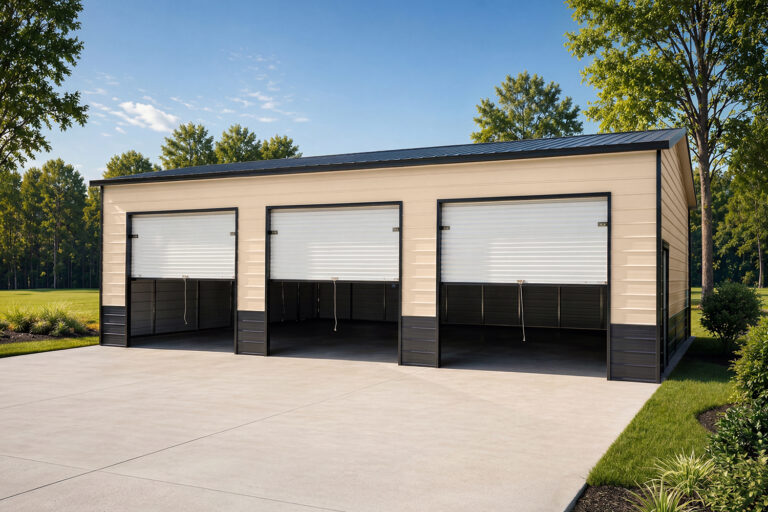
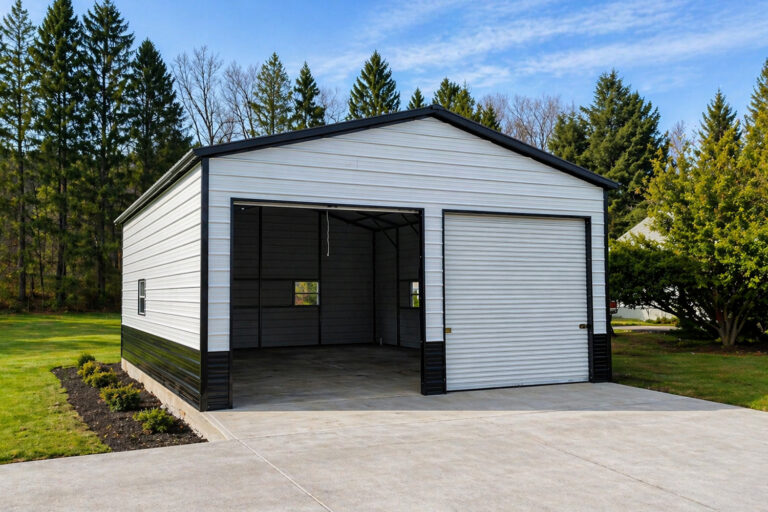
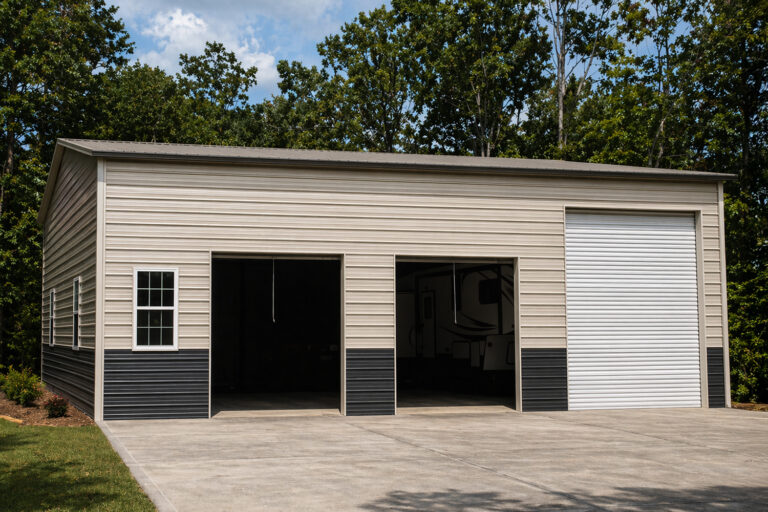
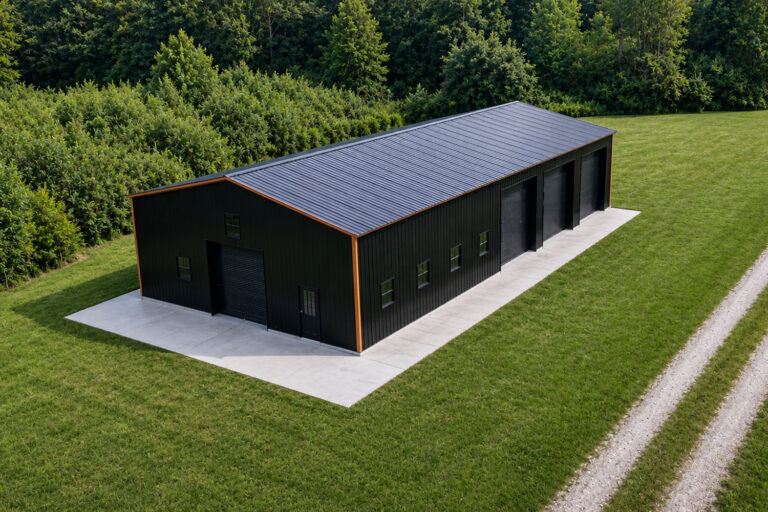
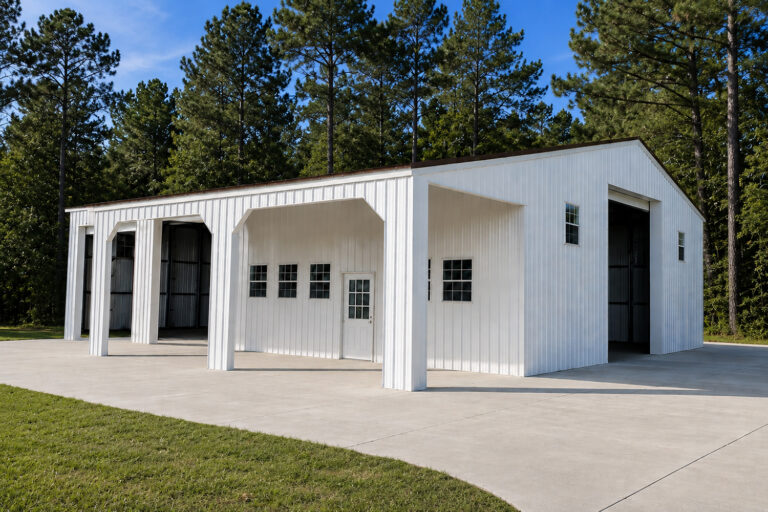
Metal garages in New Jersey are a strong option for homeowners, contractors, collectors, and small businesses that need enclosed protection. A garage protects against rain, snow, pollen, salt air, falling debris, and theft. In suburban areas, the biggest planning issues are usually setbacks, lot coverage, building height, driveway layout, and whether the garage is considered an accessory structure.
For a simple vehicle garage, start by measuring the vehicles and adding space for doors, shelving, tools, and walking room. For a workshop, plan electrical access, lighting, insulation, and ventilation early. If you are storing lawn equipment, motorcycles, snow blowers, or tools, a wider building may be more useful than a narrow building with limited side clearance.
Metal Carports in New Jersey
Metal carports in New Jersey work well for quick weather protection, especially when full enclosure is not required. They can protect vehicles from sun, rain, snow, and tree debris while keeping the layout open and accessible. Carports are common for residential parking, farm lanes, equipment staging, landscape trailers, and boat storage.
Because carports are open, wind exposure matters. On shore properties or open inland lots, consider stronger anchoring, partial side panels, closed ends, or a vertical roof. A carport placed too close to a property line may also create zoning issues, so confirm your local setback rules before finalizing the footprint.
Metal Barns in New Jersey
Metal barns in New Jersey can support horse properties, hay storage, feed storage, livestock equipment, tractors, and general farm operations. New Jersey has a strong equine community, nursery industry, and diverse agricultural base, so a barn may need to serve multiple purposes throughout the year.
For equine or livestock-related use, prioritize ventilation, dry footing, safe access, and interior layout. For hay or feed, moisture control is critical. A building used for hay should allow airflow and keep roof runoff away from stored material. If the barn will support nursery or landscape work, consider wide doors, covered loading areas, and a layout that separates dry storage from soil, mulch, irrigation parts, or chemical storage.
Metal RV Covers in New Jersey
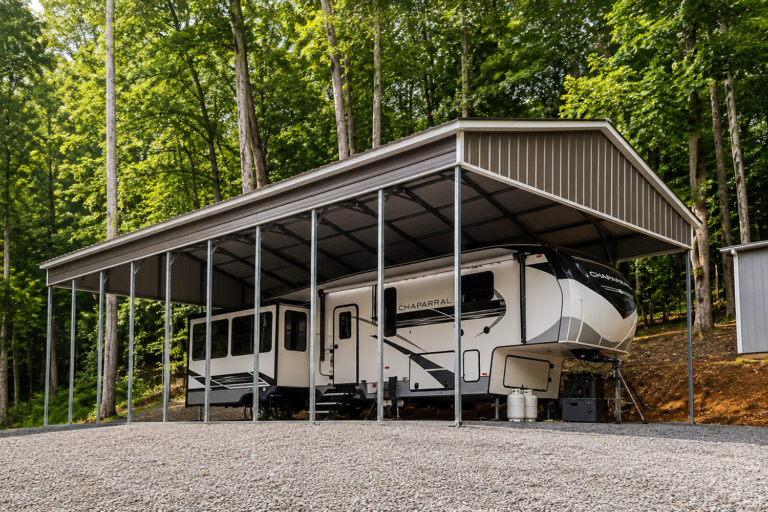
Metal RV covers in New Jersey help protect motorhomes, campers, boats, and trailers from UV exposure, snow, rain, branches, and coastal moisture. RV storage requires more height than standard vehicle storage, so measure carefully. Include rooftop AC units, ladder racks, satellite domes, antennas, and the slope of the driveway approach.
For taller RV covers, a vertical roof is usually the better long-term choice. If the RV cover is near the shore, partial enclosure may help reduce wind-driven rain and salt exposure. If the cover is on a smaller residential lot, verify that the height and placement comply with local zoning rules before committing to the design.
Roof Style Recommendations for Metal Buildings in New Jersey
Roof style is one of the most important choices for metal buildings in New Jersey. The roof has to manage snow, rain, wind, and long-term moisture exposure. While budget matters, the lowest-cost roof is not always the best value in a state with nor’easters, heavy rain, coastal wind, and winter ice.
Vertical Roof Style
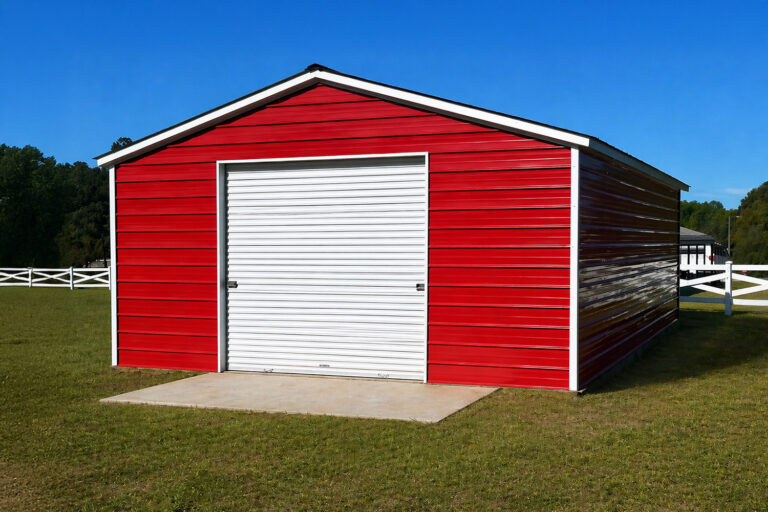
A vertical roof is the preferred option for most larger buildings. The panels run from the ridge toward the eaves, which helps water, snow, and debris move off the roof more efficiently. This is especially useful for garages, barns, RV covers, and commercial buildings that need long-term performance in varied weather.
For New Jersey properties with snow exposure, heavy rain, or salt-air moisture, vertical roofing is usually the best recommendation. It is also a smart choice for wider buildings because it handles drainage better across the roof surface.
A-Frame Horizontal Roof Style
An A-frame horizontal roof provides a traditional roof shape at a more budget-friendly level. It can work for smaller buildings, carports, and moderate-use storage structures. However, because the roof panel orientation does not drain as efficiently as vertical roofing, it may not be ideal for larger buildings or properties with heavy snow, repeated leaf buildup, or strong coastal moisture.
Regular Roof Style
A regular roof style may be suitable for small, basic shelters where budget is the main priority. For many metal buildings in New Jersey, especially near the shore or in snow-prone areas, a regular roof should be considered carefully. It may not be the best choice for tall RV covers, large garages, barns, or structures storing valuable equipment.
Size and Layout Guidance for Metal Buildings in New Jersey
The right size depends on what you are storing and how the building sits on the property. New Jersey lots can be tight, especially in suburban and coastal areas, so the layout should balance usable space with zoning rules, access, setbacks, and drainage.
Small Lot Planning
For smaller lots, measure the usable building envelope before choosing a structure. The available space may be smaller than the open yard area once setbacks, easements, septic areas, utilities, driveways, wetlands buffers, and drainage paths are considered. A compact garage with the right doors may be more useful than a larger building that creates permit or access problems.
Place doors where vehicles can enter without sharp turns. Leave room for snow removal, mowing, maintenance, and roof runoff. If the building will be near a fence or property line, confirm whether local zoning allows the height and placement you want.
Garage and Workshop Sizing
A one-car garage may work for a single vehicle and limited storage, but many customers quickly outgrow it. A two-car or three-car garage provides more flexibility for tools, bikes, mowers, seasonal equipment, and workspace. If the building will function as a workshop, add space around the perimeter for benches, shelving, electrical panels, and safe walking clearance.
When planning metal garages in New Jersey, consider winter use. If you want to work inside during colder months, insulation, ventilation, and condensation control should be part of the design conversation. If the garage will hold plows, salt spreaders, or landscaping equipment, use a layout that allows wet equipment to dry without soaking stored materials.
RV and Boat Storage Sizing
RV and boat storage needs height, width, and approach clearance. A building may technically be tall enough, but the driveway slope can change the clearance required when entering. Measure the highest point of the RV or boat trailer and add a safety margin. For wider trailers, allow enough side clearance to open doors and access storage compartments.
For metal RV covers in New Jersey, taller sidewalls and a vertical roof are usually worth considering. Coastal areas may benefit from enclosed sides or partially enclosed ends to reduce wind-driven rain and salt exposure.
Farm and Equipment Layouts
Farm and equipment buildings need more than square footage. They need workflow. Place the structure where trucks, tractors, trailers, and delivery vehicles can turn safely. Plan wide openings for equipment and separate clean storage from muddy or high-traffic zones. If hay, feed, or nursery stock will be stored inside, drainage and ventilation should be priorities.
Agriculture, Nurseries, Equine Use, and Equipment Storage
New Jersey is known as the Garden State for a reason. The state includes vegetable farms, hay production, nurseries, turf operations, vineyards, orchards, equine properties, and livestock operations. Rutgers Cooperative Extension notes that New Jersey produces many fruits and vegetables and has strong horticulture, nursery, turf, and equine sectors.
For agricultural users, metal buildings in New Jersey can provide practical storage for tractors, implements, hay, feed, irrigation equipment, trailers, nursery supplies, fencing materials, and seasonal inventory. A farm building may not need the same finish as a residential garage, but it needs strong access, good ventilation, dry storage, and space to move equipment safely.
Nursery and Landscape Operations
Nursery and landscape businesses often need a mix of covered storage and open access. A metal building can protect fertilizer, tools, irrigation parts, mowers, compact tractors, sprayers, and seasonal materials. If the building will support a business, check zoning use, parking, commercial vehicle storage rules, and stormwater requirements before choosing a size.
Equine and Horse Property Use
Equine properties may use metal barns for tack, hay, feed, small equipment, grooming areas, or run-in shelter support. A full horse barn layout should be planned carefully around ventilation, safe circulation, stall needs, footing, and manure management. For simple storage, a metal barn can be a durable way to keep hay and equipment dry while freeing up space around the farm.
Equipment Storage
Equipment storage should be sized around the largest machine, not the average machine. Measure tractors, loaders, trailers, mowers, attachments, and trucks with mirrors, buckets, racks, or implements attached. Door width and height are often more important than total square footage. A building that is large enough inside but difficult to enter will become frustrating quickly.
Permit and Planning Guidance for Bergen, Ocean, and Monmouth County
Permitting for metal buildings in New Jersey is usually handled at the municipal level under the New Jersey Uniform Construction Code, with zoning review also handled by the local municipality. County involvement may apply when a project affects county roads, drainage facilities, subdivisions, development review, floodplain areas, or appeals. Before ordering a building, contact the local zoning office and construction office for the municipality where the property is located.
Bergen County Planning Notes
Bergen County is densely developed, and many properties have limited lot space, strict setbacks, and neighborhood-specific zoning requirements. The county planning process may become relevant when a project affects county roads, drainage, site plans, or subdivisions. For a residential garage, carport, or accessory building, start with your municipal zoning office to confirm whether the structure is allowed, where it can be placed, how tall it can be, and whether lot coverage limits apply.
For larger metal buildings in New Jersey within Bergen County, especially commercial or multi-use structures, expect more detailed review. You may need a site plan, drainage information, driveway access details, and engineered drawings. Do not assume a structure is allowed just because there is open space on the lot.
Ocean County Planning Notes
Ocean County includes many shore communities, barrier island areas, bayfront properties, and low-lying neighborhoods where flood risk and coastal exposure are major planning concerns. Municipal construction permits are still the starting point, but flood elevation, stormwater, driveway access, and coastal-area rules may add extra steps.
For properties near the shore, confirm whether the site is in a flood hazard area before planning the building. A carport, garage, RV cover, or storage building may need special placement, elevation, anchoring, or documentation. If the project touches a county road, driveway opening, or drainage facility, county review may also be required.
Monmouth County Planning Notes
Monmouth County includes coastal towns, suburban communities, equine properties, farms, and commercial corridors. That mix means requirements can vary widely by municipality. A small residential accessory building in one town may have different setback, height, and lot coverage rules than a similar building in another town.
For Monmouth County properties, verify zoning first. Then check whether the project needs construction permits, grading review, drainage review, driveway approval, or county road coordination. Larger garages, barns, commercial storage buildings, and RV covers should be planned with access and stormwater in mind.
Permit and Planning Checklist
- Confirm the property’s zoning district and allowed accessory uses.
- Ask whether the building type is permitted by right or requires zoning approval, variance, or site plan review.
- Verify front, side, rear, and corner lot setbacks before choosing the footprint.
- Check maximum height, lot coverage, impervious surface limits, and distance from the principal structure.
- Confirm whether a concrete slab, footings, anchors, or engineered drawings are required.
- Review floodplain or coastal requirements if the property is near the shore, bay, river, wetland, or low-lying area.
- Ask whether electrical, plumbing, mechanical, or commercial use will trigger additional permits.
- Confirm driveway access, fire access, and turning space for larger buildings.
- Check whether county road, drainage, or site plan review applies.
- Keep all approvals, stamped plans, permit cards, and inspection records for future property documentation.
Final Buying Checklist for Metal Buildings in New Jersey
Before purchasing metal buildings in New Jersey, use this checklist to make sure the structure fits the property, the climate, and the local rules.
- Define the main purpose: Decide whether the building is for vehicles, RVs, boats, horses, nursery supplies, farm equipment, tools, business inventory, or mixed-use storage.
- Measure everything: Include vehicle height, door clearance, trailer width, equipment attachments, shelving, walking paths, and future storage needs.
- Choose the right roof: Use a vertical roof for larger buildings, snow-prone areas, coastal moisture, and long-term drainage performance.
- Plan for wind: Consider exposure from open fields, coastal lots, hilltops, and wide driveways. Ask about anchoring and bracing options.
- Protect against moisture: Grade the site away from the building and avoid low spots where water collects.
- Account for salt air: Coastal properties should consider upgraded finishes, regular maintenance, and ventilation.
- Check zoning early: Confirm setbacks, height limits, lot coverage, use restrictions, and permit requirements before finalizing the order.
- Think about access: Make sure vehicles, trailers, tractors, and delivery trucks can enter, turn, and exit safely.
- Plan the foundation: Match the base or slab to the building use, soil, drainage, and local inspection requirements.
- Build for future use: If your needs may grow, choose enough width, height, and door space now instead of undersizing the structure.
Blue Valley Steel offers flexible options for homeowners, farmers, equine properties, nursery operations, contractors, and small businesses comparing metal buildings in New Jersey. From enclosed garages and open carports to barns, RV covers, and commercial storage buildings, the right structure should be planned around New Jersey’s weather, property constraints, and local approval process. When you match the building style to the site, you get a more useful structure that can protect your vehicles, equipment, animals, and storage needs for years to come.

 Sale
Sale