Shop metal buildings in Mississippi including garages, carports, barns, RV covers and commercial steel buildings. Learn how Mississippi humidity, heavy rain, hurricanes, tornado risk, clay soil, farm storage needs, site prep and local planning rules can affect the right building choice.
Metal buildings in Mississippi are a practical choice for homeowners, farmers, ranchers, contractors, RV owners and business owners who need dependable protection for vehicles, tools, equipment, livestock supplies, trailers and commercial storage. Mississippi weather can include heat, humidity, heavy rain, severe thunderstorms, tornado-producing storms, hurricane impacts, flooding and coastal corrosion concerns, so choosing the right metal building means planning around more than size alone.
From Jackson and the Gulf Coast to north Mississippi, the Delta, the Pine Belt and rural farm properties across the state, metal buildings in Mississippi should be planned around the property, local weather and intended use. A simple carport may work well for open vehicle coverage, while a fully enclosed garage, barn, RV cover or commercial building may be better for long-term storage, agricultural use or business needs.
Metal Buildings in Mississippi by Building Type
Different metal buildings in Mississippi solve different storage and property needs. Some buyers need simple overhead protection from sun and rain. Others need enclosed storage for tools, tractors, livestock supplies, business inventory, RVs or equipment. Before choosing a size, start with the main purpose of the structure.
Metal Garages in Mississippi
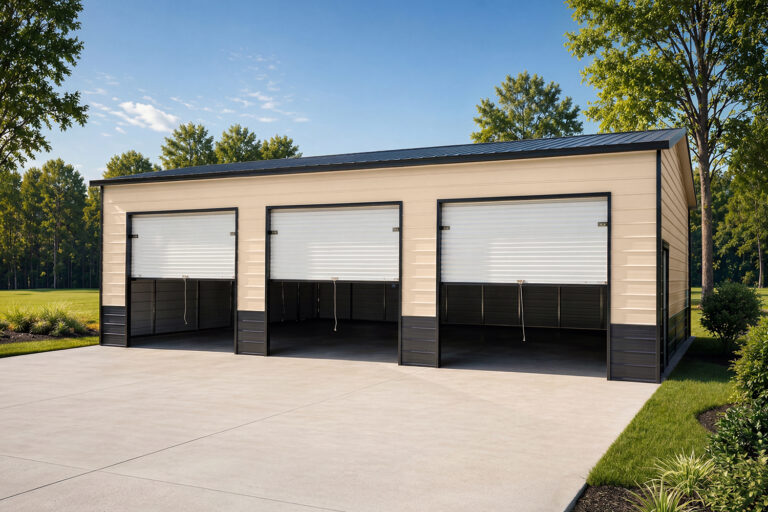
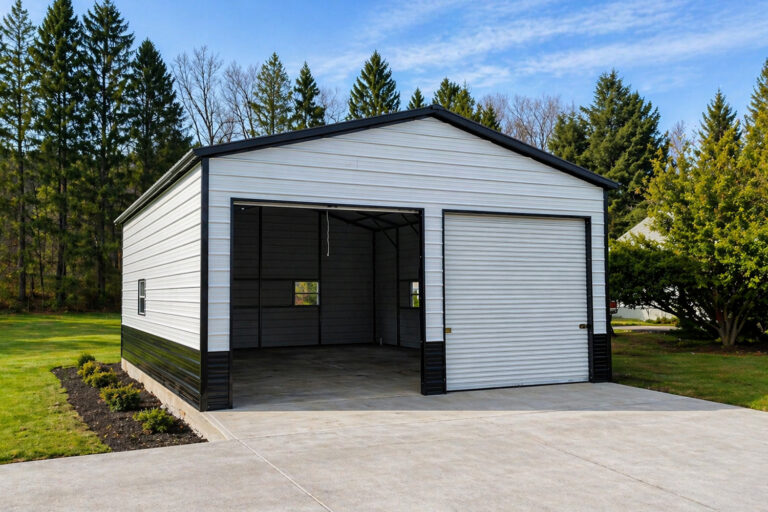
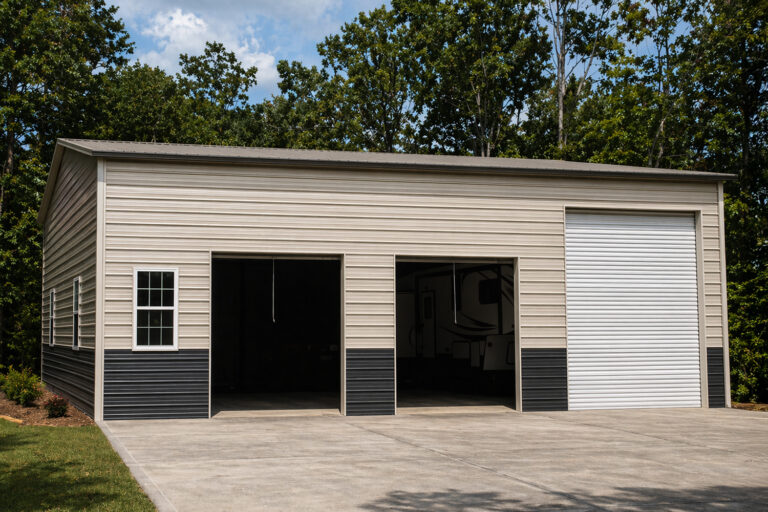
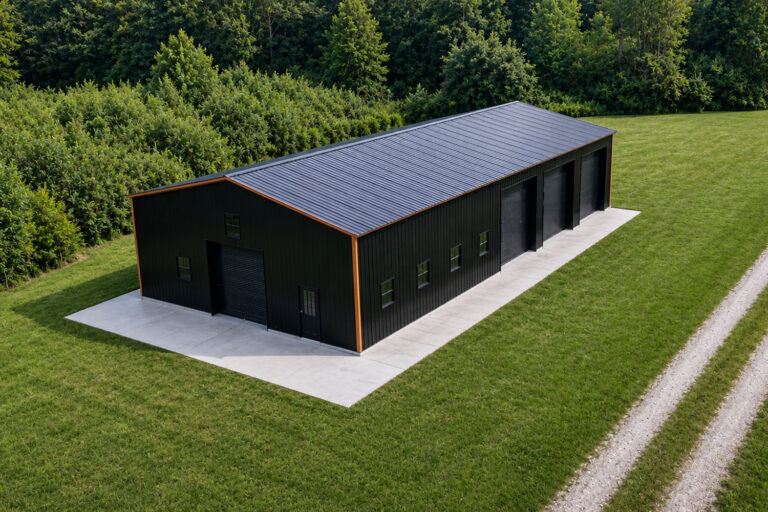
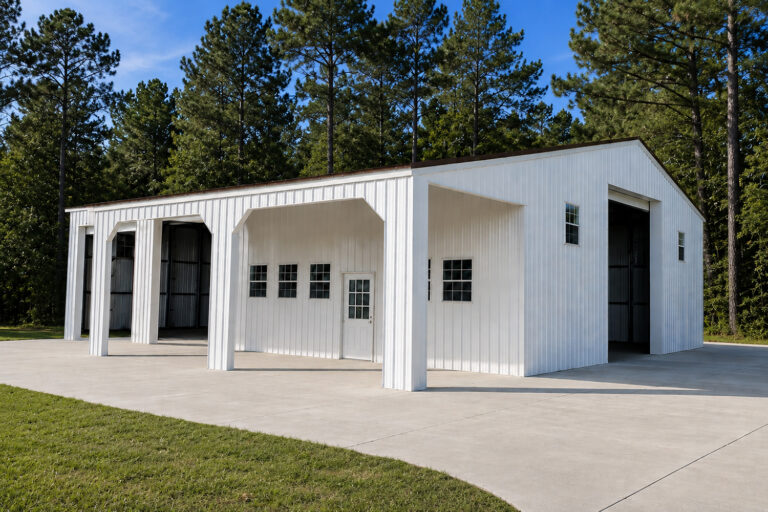
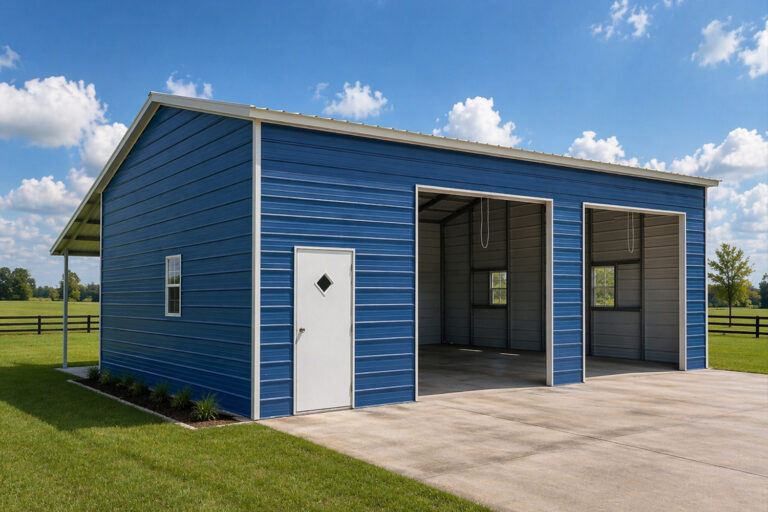
Metal garages in Mississippi are a strong option for vehicle storage, workshops, tool protection, equipment storage and small business use. A fully enclosed garage can help protect cars, trucks, motorcycles, ATVs, mowers, tools and stored items from heavy rain, humidity, sun exposure, wind-driven debris and severe weather.
When planning a metal garage, think about more than the number of vehicles. Mississippi buyers should also consider door height, wall height, interior clearance, workbench space, storage shelves, ventilation, drainage, flood exposure and driveway access. A two-car garage may handle basic parking, but a wider or longer building may be better if the space will also be used for tools, equipment, storage or a workshop.
Metal Carports in Mississippi
Metal carports in Mississippi are useful for open-air protection. They can cover cars, trucks, tractors, trailers, boats, lawn equipment, firewood and farm tools without requiring a fully enclosed structure.
Carports are helpful in Mississippi because they provide shade from intense sun and overhead protection from frequent rain. A basic open carport may be enough for simple vehicle coverage, while a partially enclosed carport can add more protection from wind-driven rain. Site placement and anchoring matter because a carport should be easy to access, properly secured and should not sit in a low area where stormwater collects.
Metal Barns in Mississippi
Metal barns in Mississippi are commonly used on farms, ranches, acreage properties and rural homesites. They can provide space for hay, feed, tractors, livestock supplies, implements, trailers, poultry supplies, cattle equipment and general agricultural storage.
Mississippi barns often need larger door openings, taller sidewalls and open interior space for farm equipment. If the building will be used around animals, ventilation and shade should be planned early. If the barn will store hay, feed, timber-related tools, poultry supplies or machinery, moisture control, roof strength and easy vehicle access are important.
Metal RV Covers in Mississippi
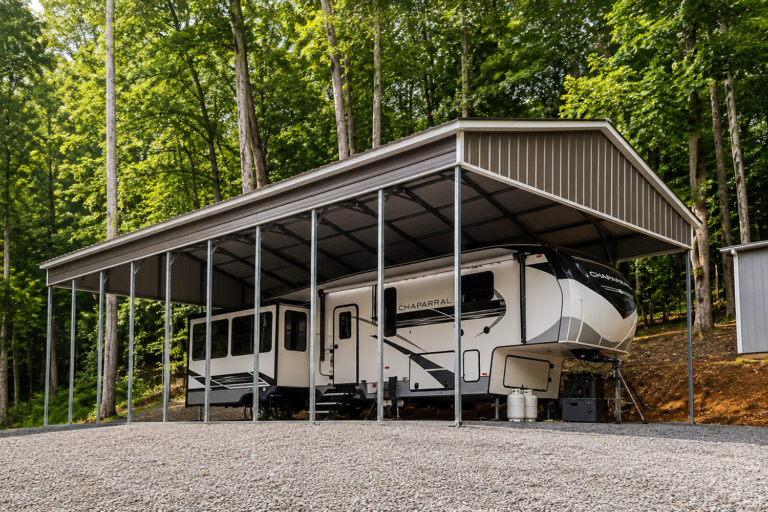
Metal RV covers in Mississippi are designed to protect campers, travel trailers, fifth wheels, motorhomes and boats from sun, heavy rain, humidity, falling limbs and seasonal storms. Mississippi moisture and heat can be hard on RV roofs, seals, vents, slide-outs, paint and exterior plastics, especially when an RV sits uncovered for long periods.
Height is the most important detail when choosing an RV cover. Many RVs need 12-foot, 14-foot or taller clearance depending on the model. Width and length matter too. Extra space makes it easier to open doors, access storage compartments, walk around the RV and keep more of the vehicle protected from direct weather exposure.
Commercial Metal Buildings in Mississippi
Commercial metal buildings can support shops, warehouses, service businesses, agricultural operations, equipment storage, farm support buildings and other business uses. These buildings often require more planning because they may involve occupancy rules, utilities, parking, fire access, drainage, insulation, engineering, wind-load documentation and local review.
Before choosing a commercial building, define the intended use clearly. A warehouse, farm support building, repair shop, retail storage space, equipment shed or service building may all have different planning needs. Early review can help prevent issues with access, permits, utilities, site layout and future expansion.
Roof Styles for Mississippi Rain, Wind and Humidity
The roof is one of the most important decisions for metal buildings in Mississippi. Roof style affects rain runoff, wind performance, moisture control, heat management, maintenance and the long-term condition of the building.
Vertical Roofs
A vertical roof is often the best all-around choice for Mississippi. Vertical panels run from the ridge down toward the eaves, which helps rain, leaves and debris move off the roof more efficiently. This is helpful in a state where heavy rainfall, thunderstorms, humidity and tropical downpours can all affect the same building.
For larger garages, barns, RV covers and enclosed buildings, a vertical roof is usually worth considering. It can reduce the chance of water sitting on seams and can make the building easier to maintain over time.
A-Frame Roofs
An A-frame roof gives a building a clean, traditional look. When paired with vertical panels, it can provide both good appearance and strong weather-shedding performance. Many Mississippi buyers choose A-frame vertical roofs for garages, workshops, barns and RV covers because they look finished while still handling rain and runoff well.
Regular Roofs
A regular roof can work for smaller, budget-focused structures in lighter-use situations. However, it may not be the best choice for every Mississippi property. If the building is large, enclosed, exposed to heavy rain, located in a coastal county or used for valuable equipment, a stronger roof style may be the better long-term decision.
The right roof for metal buildings in Mississippi should be based on the property location, expected use, surrounding exposure, drainage needs, wind exposure and storm risk.
Gutters, Overhangs and Water Control
Mississippi rainfall makes water control important. Gutters, downspouts, splash blocks, gravel edges and proper grading can help move water away from the building. This is especially important where clay soils hold moisture or where the building pad sits near a driveway, low area, drainage ditch, creek, flood-prone area or coastal site.
The NOAA/NCEI Mississippi State Climate Summary notes that Mississippi has abundant precipitation, with statewide annual average precipitation above 50 inches and higher totals along the coast. For metal building buyers, that makes roof selection, drainage and site planning important from the beginning.
Size and Layout Planning
Good sizing starts with what the building needs to hold. A structure that is barely large enough on day one may become frustrating once tools, shelves, trailers, workbenches, tractors, equipment, boats or seasonal storage are added.
Garage Size Planning
For metal garages in Mississippi, common sizes include 20×20, 24×24, 24×30, 30×40 and larger. A basic two-car garage may work for parking, but extra length is helpful for tools, storage or workspace. If the garage will hold trucks, trailers, lawn equipment, farm tools or a workbench area, a larger footprint may be more useful.
Door placement should match how the garage will be used. A garage for daily vehicles may only need one or two overhead doors. A shop may need a wider roll-up door, walk-in door, windows or side access for equipment. In humid areas, ventilation should be part of the layout from the beginning.
Carport Size Planning
For metal carports in Mississippi, common sizes include 12×20, 18×20, 20×20, 20×30 and 24×30. A single-vehicle carport can be narrow, but extra width makes parking easier and leaves more room to open doors. Two-vehicle carports are often more comfortable when they are 20 to 24 feet wide.
If the carport will cover a trailer, tractor, boat, mower or small equipment, measure the tallest and widest item before choosing a size. It is better to leave extra room than to order a structure that feels tight every time it is used.
Barn Size Planning
Metal barns in Mississippi often need more space than a basic garage. A small utility barn may start around 30×40, while larger equipment, hay or livestock buildings may need 40×60, 50×80 or more.
Door placement, clear height and access lanes are very important for barns. If tractors, trailers, hay wagons, cattle equipment, poultry equipment or feed trucks need access, the building should be planned around the way those vehicles move. For livestock, hay or feed storage, airflow and moisture control should also be considered.
RV Cover Size Planning
Metal RV covers in Mississippi should be taller and often longer than the RV itself. Extra length can help protect the hitch, rear ladder, spare tire or accessories. Extra width makes it easier to open doors and access compartments without feeling boxed in.
Because Mississippi can bring heat, heavy rain, humidity, falling limbs and tropical storm conditions, RV owners often benefit from extra roof coverage beyond the exact length of the vehicle. A slightly larger RV cover can make the space easier to use and more protective.
Mississippi Climate and Site Conditions
Metal buildings in Mississippi need to be planned around several climate and site concerns. The most common issues are heat, humidity, heavy rain, hurricanes, tropical storms, severe thunderstorms, tornadoes, hail, flooding, clay soil, coastal corrosion and drainage.
Heat, Humidity and Condensation
Mississippi summers are hot and humid. Enclosed buildings may trap heat and moisture if ventilation is not planned properly. This can be a concern for garages, barns, workshops, stored tools, hay, feed, equipment and business inventory.
Ventilation can help reduce trapped heat and condensation. Ridge vents, wall vents, cupolas, windows, large doors and proper airflow can make a building easier to use and better for stored items. If the building will be used as a shop, animal area or business space, insulation and interior planning may also be worth considering.
Heavy Rain and Flooding
Flooding is one of the most important planning concerns for metal buildings in Mississippi. Heavy rain, tropical systems, drainage ditches, creeks, rivers, low-lying land and coastal storm surge can all affect where a building should be placed.
Before preparing a building site, check local floodplain rules and elevation requirements. The FEMA Flood Map Service Center can help property owners begin checking flood map information, but final requirements should be confirmed with the local county or municipality.
If a site is in a flood-prone area, the building pad, slab, elevation, drainage plan and access route may need additional review. In some cases, elevation certificates, flood vents, raised foundations or flood-resistant site planning may be required.
Hurricanes, Tropical Storms and Coastal Exposure
Mississippi’s Gulf Coast can be affected by hurricanes, tropical storms, storm surge, coastal wind and wind-driven rain. Coastal properties may also face salt air, humidity and corrosion concerns. Buildings near Gulfport, Biloxi, Pascagoula or other coastal communities should be planned with wind exposure, corrosion-resistant materials and drainage in mind.
For metal buildings in Mississippi, wind exposure should be taken seriously. Proper anchoring, bracing and site-specific engineering can help the structure perform better during strong weather. Coastal sites, open rural properties and large clearings may need extra attention because wind can hit the building with fewer natural windbreaks.
Tornadoes, Severe Storms and Hail
Mississippi can experience severe thunderstorms, damaging wind, hail and tornado-producing storm systems. NOAA’s Mississippi billion-dollar disaster summary shows severe storms and tropical cyclones have both caused major losses in the state since 1980.
A metal garage, carport or RV cover can help reduce direct hail exposure for vehicles, campers, tractors, tools and outdoor equipment. Even when hail causes cosmetic marks, covered storage can still protect the property underneath from more serious damage.
A metal building is not a tornado shelter or hurricane shelter. If a property needs life-safety protection during tornado warnings or hurricane warnings, that should be handled with a properly designed safe room, storm shelter or local emergency plan. The metal building itself should still be engineered and anchored for the local code requirements.
Clay Soil and Drainage
Many Mississippi properties have clay-heavy or slow-draining soils. When water sits around a slab, post base or building pad, it can lead to muddy access, moisture problems and long-term maintenance issues.
Before placing a metal building, look at how water moves across the property during heavy rain. Avoid low areas where water collects. A compacted pad, gravel base, proper slope and clean runoff path can help protect the structure and make it easier to use year-round.
Foundation Planning
Foundation requirements can vary by local jurisdiction, flood zone, building size and use. A garage, barn, commercial building or structure with utilities may have different requirements than a small accessory structure.
Before pouring concrete or setting anchors, confirm local requirements for footings, slab thickness, elevation, reinforcement, drainage and inspections. This is especially important for larger metal buildings in Mississippi that will hold heavy vehicles, tractors, equipment, boats or commercial inventory.
Agricultural Metal Buildings in Mississippi
Metal buildings in Mississippi are especially useful for agricultural storage. Mississippi farms and rural properties often need covered space for tractors, hay, feed, livestock supplies, poultry supplies, timber equipment, soybean equipment, cattle equipment, trailers and maintenance tools.
Metal barns can provide wide, open storage areas for farm equipment and supplies. Larger buildings can be planned with tall doors, open bays, center aisles, lean-tos and clear-span layouts for easier equipment movement. A barn used for animals should include airflow planning, shade and enough room for daily work.
Mississippi State Extension reports that poultry remains one of the state’s top agricultural commodities, with forestry also playing a major role in the state’s agricultural economy. The Mississippi State Extension agriculture overview is a useful reference for understanding why covered storage matters for Mississippi farms and rural properties.
Metal carports can also be useful on farms when equipment needs overhead protection without a fully enclosed structure. For larger operations, commercial metal buildings can provide flexible space for shops, storage, business operations or farm support buildings.
Agricultural buildings should still be reviewed locally. A farm-use building, personal garage and commercial structure may each be treated differently depending on the county, municipality, zoning district, flood zone and building use.
Permit and Planning Notes in Mississippi
Permit rules for metal buildings in Mississippi vary by county, city, zoning district, flood zone, building size and intended use. Always check with the local building department before ordering or placing a structure.
Hinds County and Jackson Area
Hinds County provides permit and zoning resources, including building permit applications, residential permit requirements, zoning regulations and flood information. The Hinds County Permit and Zoning page is a useful starting point for Jackson-area and unincorporated county properties.
For commercial or larger pre-engineered structures, Hinds County materials note that building permits are required for commercial structures, including pre-engineered buildings. Buyers should confirm whether the project needs sealed plans, zoning approval, flood review, trade permits or inspections before preparing the site.
Harrison County and Gulf Coast Properties
Harrison County states that commercial, industrial and multi-family building permit applications require an engineered drainage plan showing that runoff from the property will not be increased by the intended construction. The Harrison County building permits page is a useful reference for Gulfport, Biloxi and surrounding unincorporated county areas.
Harrison County also notes that the online residential permit portal is for residential building permits outside a Special Flood Hazard Area, while commercial permits and permits inside Special Flood Hazard Areas must be submitted with required documents. Coastal buyers should review floodplain, drainage, wind exposure and elevation requirements carefully.
DeSoto County and North Mississippi
DeSoto County provides a Citizen Self Service Portal for submitting documents to the Building and Planning Department and tracking activity. The DeSoto County permits page is a useful starting point for north Mississippi properties.
For metal buildings in Mississippi’s DeSoto County area, confirm requirements for residential, commercial and industrial building permits, plot plans, contractor information, floodplain review, design standards, trade permits and inspections. If the property is inside a city such as Southaven, Olive Branch or Hernando, municipal rules may apply.
Other Mississippi Counties and Municipalities
Mississippi permit rules can change significantly from one county or city to another. A small shed, detached garage, RV cover, barn or commercial metal building may be reviewed differently depending on local code, zoning, flood zone, property size and intended use.
If the property is in an HOA, subdivision, floodplain, coastal zone, agricultural district or city limit, additional rules may apply. Always confirm the local requirements before ordering a building, preparing the site or pouring a slab.
Mississippi Metal Building Checklist
Confirm the main purpose of the building before choosing a size.
Measure vehicles, RVs, trailers, tractors, boats and equipment before ordering.
Choose a roof style that fits Mississippi rain, humidity, wind and storm exposure.
Consider a vertical roof for stronger runoff and easier maintenance.
Check local rules for permits, setbacks, height, zoning, floodplain and lot coverage.
Ask whether engineered drawings and wind-load documentation are needed for the structure.
Plan the pad or foundation before finalizing the building location.
Make sure water drains away from the building site.
Use gutters or downspouts when roof runoff needs to be controlled.
For enclosed buildings, plan ventilation to reduce trapped heat and moisture.
For coastal properties, review corrosion, wind and flood exposure carefully.
For flood-prone properties, check floodplain and elevation requirements.
For RV covers, confirm height, width, length and turning clearance.
For barns, plan door placement around tractors, trailers, livestock, poultry supplies and equipment storage.
For commercial buildings, review use, utilities, parking, access, fire requirements and inspections early.
Find the Right Metal Building in Mississippi
Metal buildings in Mississippi can be used for garages, carports, barns, RV covers, workshops, agricultural storage, boat storage and commercial needs. The best choice depends on your location, weather exposure, building use, county requirements and site conditions.
A simple open carport may be enough for basic vehicle coverage. A fully enclosed metal garage may be better for tools, vehicles and workspace. A larger metal barn can support farm and rural storage. A tall RV cover can help protect campers, motorhomes and boats. A commercial metal building can provide flexible space for business use.

 Sale
Sale