Shop metal buildings in Colorado including garages, carports, barns, RV covers and commercial steel buildings. Learn how Colorado weather, snow, hail, wind, wildfire risk, site prep and local planning can affect the right building choice.
Metal buildings in Colorado are a practical choice for homeowners, farmers, ranchers, contractors, RV owners and business owners who need dependable protection for vehicles, equipment, tools, livestock supplies, trailers and commercial storage. Colorado has a wide range of weather and terrain, so choosing the right metal building is not only about size. It also depends on snow load, wind exposure, hail risk, drainage, site access, wildfire concerns and local planning rules.
From the Front Range to the eastern plains and mountain communities, metal buildings in Colorado need to be matched to the property. A simple carport may work well for daily vehicle coverage, while a fully enclosed garage, barn, RV cover or commercial building may be a better fit for long-term storage and year-round use. This guide explains what Colorado buyers should think about before choosing a building style, roof type, layout and site location.
Metal Buildings in Colorado by Building Type
Different metal buildings in Colorado solve different problems. Some buyers only need shade and overhead protection. Others need a fully enclosed space for tools, vehicles, animals, inventory or equipment. Before comparing sizes, start with the main purpose of the building.
Metal Garages in Colorado
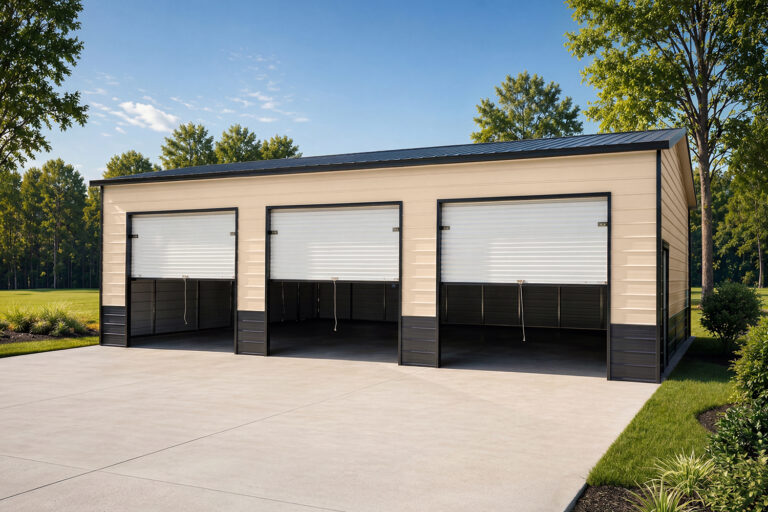
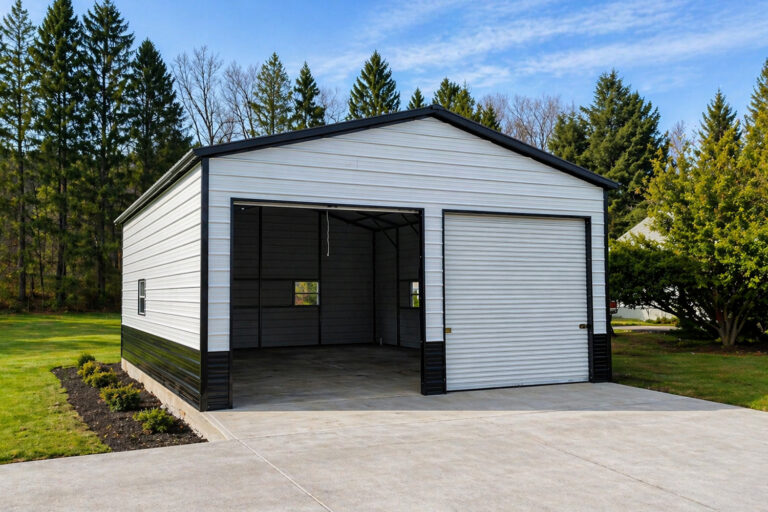
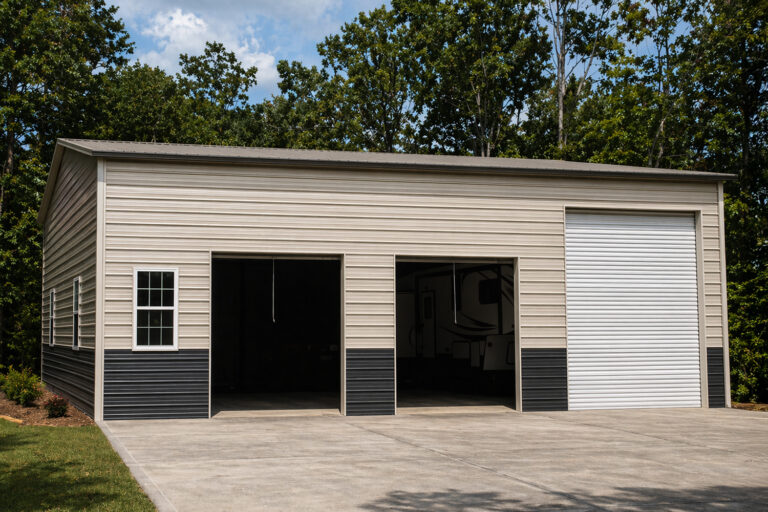
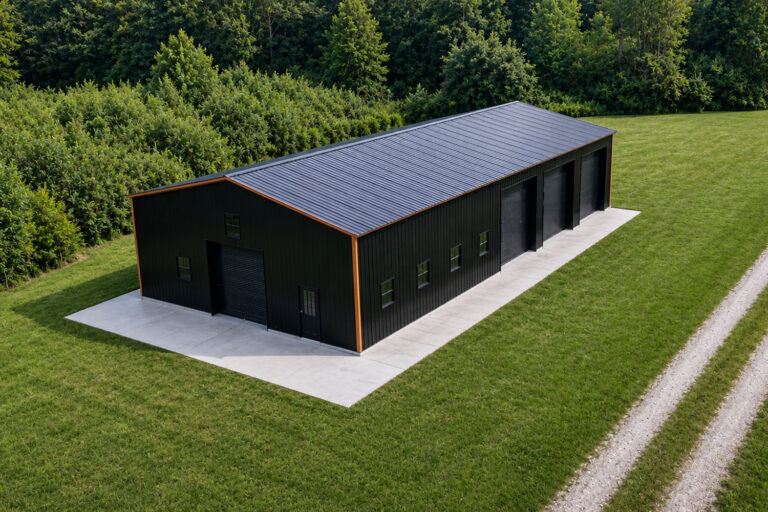
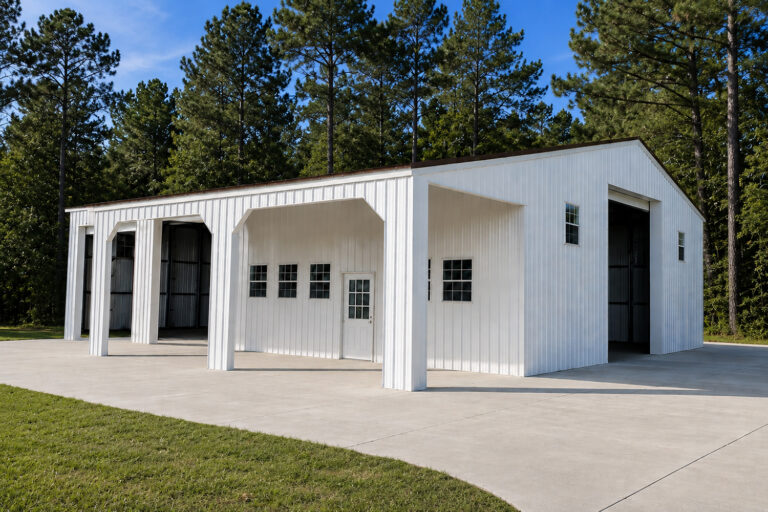
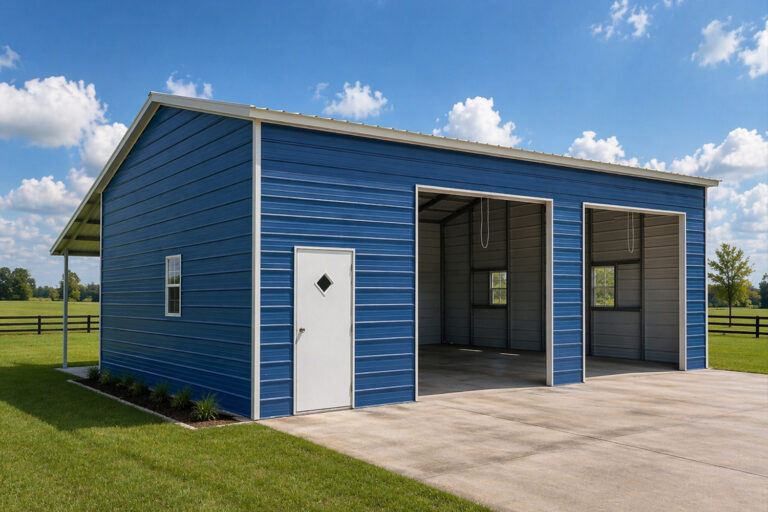
Metal garages in Colorado are a strong option for vehicle storage, home workshops, tool protection, farm support space and small business use. An enclosed garage can help protect cars, trucks, motorcycles, ATVs, mowers, tools and equipment from snow, hail, sun and wind-driven debris.
When planning a metal garage, think about more than the number of vehicles. Colorado buyers should also consider door height, wall height, interior clearance, workbench space, storage shelves, ventilation and winter access. A two-car garage may handle daily parking, but a wider or longer building may be better if the space will also be used for tools, equipment or a workshop.
Metal Carports in Colorado
Metal carports in Colorado are useful for open-air protection. They can cover cars, trucks, tractors, trailers, boats, firewood, hay equipment and other outdoor items without the cost or footprint of a fully enclosed structure.
Carports are especially helpful in hail-prone areas because they place a steel roof between the weather and the property underneath. In windy or snowy areas, partial side panels may add extra protection. Site placement matters too. A carport should be placed where water drains away from the posts and where vehicles can enter and exit safely in winter.
Metal Barns in Colorado
Metal barns in Colorado are commonly used on farms, ranches and rural properties. They can provide space for hay, feed, livestock supplies, tractors, implements, trailers and general agricultural storage.
Metal barns need careful layout planning. Large doors may be needed for tractors and trailers. Ventilation may matter for livestock or hay storage. A taller center section can make the barn more useful for equipment, stacked material or mixed-use storage. If the building will be used for agricultural purposes, local county rules should be reviewed before assuming any exemption applies.
Metal RV Covers in Colorado
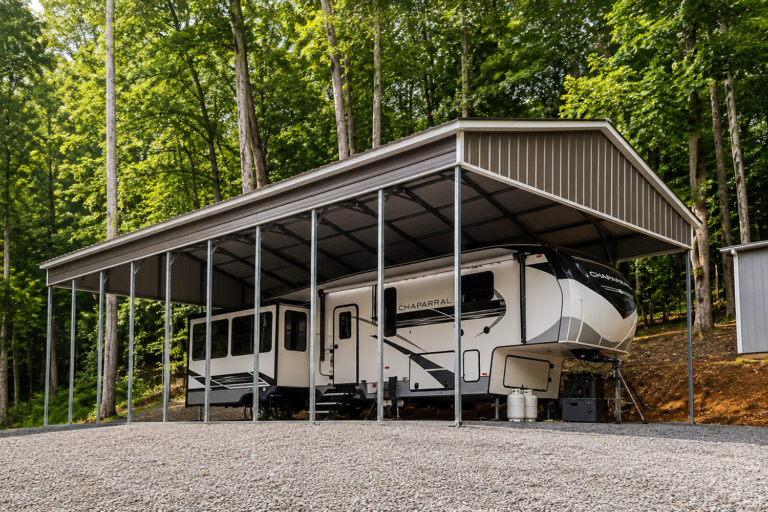
Metal RV covers in Colorado are designed to protect campers, travel trailers, fifth wheels, motorhomes and boats from sun, snow, hail and falling debris. RVs are expensive to repair, and Colorado weather can be hard on roof seals, exterior panels, slide-outs, vents and paint.
Height is the most important detail when choosing an RV cover. Many RVs need 12-foot, 14-foot or taller clearance depending on the model. Width and length matter too. Extra space makes it easier to open doors, access storage compartments, walk around the RV and keep the front and rear better protected.
Commercial Metal Buildings in Colorado
Commercial metal buildings can support shops, warehouses, equipment storage, service businesses, agricultural operations and other business uses. Commercial projects often require more planning because they may involve occupancy rules, utilities, parking, fire access, insulation, engineering and local review.
Before choosing a commercial building, define the intended use clearly. A warehouse, mechanic shop, farm support building and retail storage space may all have different requirements. Early planning helps prevent problems with size, access, permits and future use.
Roof Styles for Colorado Snow, Wind and Hail
The roof is one of the most important decisions for metal buildings in Colorado. Roof style affects snow shedding, water drainage, wind performance and long-term maintenance.
Vertical Roofs
A vertical roof is often the best all-around choice for Colorado. Vertical panels run from the ridge down toward the eaves, which helps snow, rain and debris move off the roof more efficiently. This is especially important in areas that receive regular snowfall or where snow can sit on a roof for long periods.
For larger garages, barns, RV covers and enclosed buildings, a vertical roof is usually worth considering. It can be especially helpful in mountain areas, foothills and properties where snow load is a major concern.
A-Frame Roofs
An A-frame roof gives a building a clean, traditional look. When paired with vertical panels, it can provide both good appearance and strong performance. Many Colorado buyers choose A-frame vertical roofs for garages, workshops, barns and RV covers because they look finished while still helping with drainage and snow movement.
Regular Roofs
A regular roof can work for smaller, budget-focused structures in lower-snow areas. However, it may not be the best choice for every Colorado property. If the building is large, enclosed, located in a snowy area or exposed to strong wind, a stronger roof style may be the better long-term decision.
The right roof for metal buildings in Colorado should be based on the property location, expected use and local weather exposure, not just the lowest upfront cost.
Size and Layout Planning
Good sizing starts with what the building needs to hold. A structure that is barely large enough on day one may become frustrating once tools, shelves, trailers, workbenches or extra equipment are added.
Garage Size Planning
For metal garages in Colorado, common sizes include 20×20, 24×24, 24×30, 30×40 and larger. A basic two-car garage may work for parking, but extra length is helpful for storage or workspace. If the garage will hold a truck, trailer, lift or large tools, taller sidewalls and wider doors may be needed.
Carport Size Planning
For metal carports in Colorado, common sizes include 12×20, 18×20, 20×20, 20×30 and 24×30. A single-vehicle carport can be narrow, but extra width makes it much easier to park, open doors and move around the vehicle. If the carport will cover equipment or trailers, measure the tallest and widest item before choosing a size.
Barn Size Planning
Metal barns in Colorado often need more space than a basic garage. A small utility barn may start around 30×40, while larger equipment, hay or livestock buildings may need 40×60, 50×80 or more. Door placement, interior clearance and access lanes should be planned around how the barn will actually be used.
RV Cover Size Planning
Metal RV covers in Colorado should be taller and often longer than the RV itself. Extra length can help protect the hitch, rear ladder, spare tire or accessories. Extra width makes it easier to open doors and access compartments without feeling boxed in.
Colorado Climate and Site Conditions
Metal buildings in Colorado need to be planned around several climate concerns. The most common issues are snow, wind, hail, wildfire exposure, freeze-thaw cycles and drainage.
Snow Load and Elevation
Snow load can vary widely across Colorado. A property near Denver may have very different requirements than a property in a mountain county. Higher elevations can see heavier snow, and wind can create drifting that places uneven weight on a roof.
Open land, foothills and mountain passes can create strong wind exposure. Wind can affect anchoring, bracing, roof uplift and wall design. A building on an exposed rural property may need stronger planning than a similar structure in a more protected location.
For metal buildings in Colorado, anchoring should match the foundation type and local conditions. Concrete, gravel, asphalt and ground installations may require different anchoring methods.
Hail Protection
Colorado is known for damaging hail, especially along parts of the Front Range. A metal garage, carport or RV cover can help reduce direct exposure to hail for vehicles, campers, tools and equipment.
Hail protection is one reason many buyers choose steel structures instead of leaving property uncovered. Panel gauge, roof style and building placement can all affect long-term performance.
Wildfire Planning
Some Colorado properties are located in wildfire-prone areas, especially in foothill and mountain communities. Steel buildings are not combustible like wood, but the area around the structure still matters.
The Colorado State Forest Service Home Ignition Zone checklist gives helpful guidance for reducing wildfire risk around structures. Keep debris, dry vegetation, firewood and combustible material away from the building whenever possible.
Drainage and Freeze-Thaw Cycles
Colorado freeze-thaw cycles can be hard on pads, slabs and soil. Water that collects near a building can freeze, expand and cause movement over time. Good drainage is important for every building type.
Choose a site where water moves away from the structure. Avoid low spots, swales and areas where snowmelt collects. A properly prepared pad can help the building stay cleaner, drier and easier to use.
Permit and Planning Notes in Colorado
Permit rules for metal buildings in Colorado vary by city, county, zoning district, building size and intended use. Always check with the local building department before ordering or placing a structure.
Denver Area
In Denver, detached structures may involve zoning review, building permits, setbacks, height limits, lot coverage rules and utility permits depending on the project. Larger garages, enclosed buildings and structures with electrical or plumbing should be reviewed carefully before work begins.
If the property is in a historic district, HOA or special zoning area, additional design or placement rules may apply.
Larger garages, barns, carports, RV covers and enclosed buildings should be checked with the proper local authority. Do not assume a structure is exempt just because it is accessory or detached.
Weld County and Agricultural Buildings
Weld County includes many rural and agricultural properties, so metal barns in Colorado are especially relevant there. Weld County language describes agricultural-exempt buildings as structures used for agricultural purposes such as housing farm implements, hay, grain, poultry, livestock or other farm-related products.
That does not mean every building on rural land is automatically exempt. A personal garage, commercial shop or non-agricultural storage building may be treated differently. Confirm zoning, use, setbacks and permit requirements with the county before making final decisions.
Colorado Metal Building Checklist
Confirm the main purpose of the building before choosing a size.
Measure vehicles, RVs, trailers, tractors and equipment before ordering.
Choose a roof style that fits local snow, wind and drainage needs.
Consider a vertical roof for stronger snow and water shedding.
Check local rules for permits, setbacks, height and zoning.
Ask whether engineered drawings are needed for the structure.
Plan the pad or foundation before finalizing the building location.
Make sure water drains away from the building site.
Leave room for snow removal around doors and access points.
For wildfire-prone areas, keep combustible material away from the structure.
For RV covers, confirm height, width, length and turning clearance.
For barns, plan door placement around tractors, trailers, livestock and hay storage.
For commercial buildings, review use, utilities, parking, access and fire requirements early.
Find the Right Metal Building in Colorado
Metal buildings in Colorado can be used for garages, carports, barns, RV covers, workshops, agricultural storage and commercial needs. The best choice depends on your location, weather exposure, building use and site conditions.
A simple open carport may be enough for basic vehicle coverage. A fully enclosed metal garage may be better for tools, vehicles and workspace. A larger metal barn can support farm and ranch storage. A tall RV cover can help protect campers and motorhomes. A commercial metal building can provide flexible space for business use.

 Sale
Sale