Metal buildings in Arkansas need to do more than add square footage. Arkansas buyers have to think about steady rainfall, humid summers, severe thunderstorms, hail, tornado exposure, muddy access, clay-heavy soils in many areas, and flood-prone ground near creeks, rivers, and low spots. NOAA’s Arkansas climate summary reports a long-term statewide precipitation average of 50.1 inches, notes an upward trend in 3-inch rain events, and says Arkansas has averaged about 32 tornadoes per year over 1985–2020 (NOAA).
That is why this guide does not just list products. It helps you compare metal garages, metal carports, metal barns, metal RV covers, and commercial metal buildings for real Arkansas use cases. It also points you to official planning and climate resources such as the NOAA Arkansas climate summary, the USDA NASS Arkansas agriculture overview, the Benton County permit page, Washington County Planning, Pulaski County Planning and Development, and the Arkansas floodplain maps page.
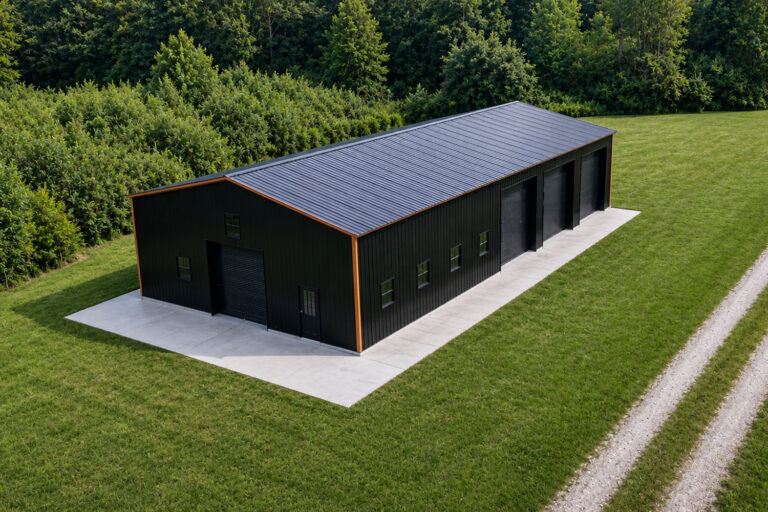
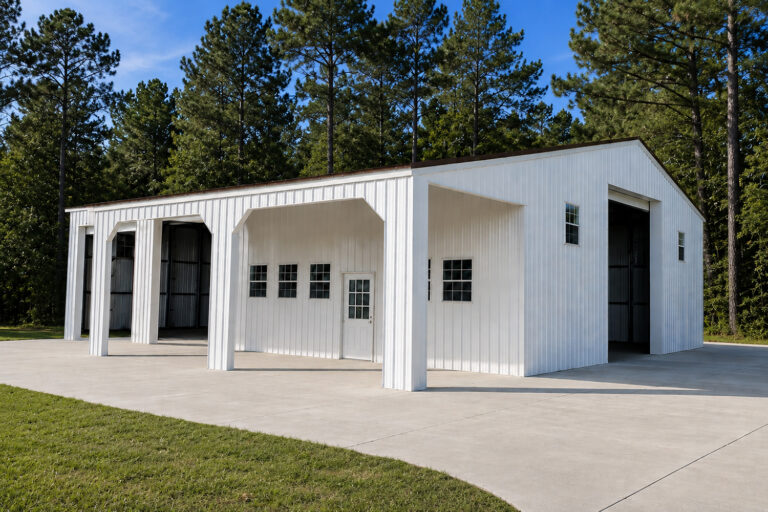
Blue Valley Steel offers several practical types of metal buildings in Arkansas, and the right one depends on what you need to protect. A garage is usually best when you want enclosed storage for vehicles, tools, ATVs, lawn equipment, feed, or job materials. A carport is usually best when you need lower-cost overhead coverage for cars, pickups, boats, tractors, or trailers. A barn-style building often makes more sense when the property is agricultural and the storage list includes hay, implements, compact tractors, larger tractors, utility vehicles, or livestock-related supplies. An RV cover is the better fit when height is the main issue. A commercial metal building is the strongest option when you need a bigger footprint, taller openings, or a more work-ready layout for service, inventory, or equipment.
Arkansas is not a one-size-fits-all market. A suburban homeowner in Rogers may mainly want a garage for a pickup, mower, and household overflow. A landowner near Russellville may need a barn for a compact tractor, rotary cutter, and hay trailer. A row-crop or mixed-use property in eastern Arkansas may need more space, wider access, and a roof style that handles long runs of rainfall and debris. USDA’s 2025 state overview lists about 37,000 farm operations in Arkansas, which is a big reason barns, equipment shelters, and larger storage buildings are real needs here instead of filler topics (USDA NASS).
Metal buildings in Arkansas should be planned around water first. Arkansas gets abundant rainfall, winter and spring are typically the wettest seasons, and NOAA notes a long-term average of 50.1 inches of precipitation with an upward trend in 3-inch rain events (NOAA). That matters because a perfectly good building can become frustrating if it is placed in a low spot, at the bottom of a slope, or where driveway runoff heads straight toward the doors.
Site prep is especially important on ground that stays soft after storms or has clay-rich soil. Shrink-swell clay behavior can make wet-and-dry cycles harder on poorly prepared pads, so it helps to start with a well-compacted base, positive drainage away from the structure, and enough room for runoff to move around rather than under the building. If the building will be used for trucks, tractors, trailers, or RVs, many Arkansas buyers prefer a properly compacted gravel base for open structures and a concrete slab for enclosed garages, shops, and commercial use. The best choice depends on how clean the floor needs to stay, whether you want doors and windows, and what local requirements apply.
Storm exposure matters too. Arkansas regularly experiences severe thunderstorms, flash flooding, hail, tornadoes, and winter ice events (NOAA; NWS). NOAA’s state summary says Arkansas averaged about 32 tornadoes per year over 1985–2020, and NOAA’s disaster database shows severe storms are the most frequent billion-dollar disaster type affecting the state (NOAA). That does not mean every buyer needs the most expensive structure on day one, but it does mean anchoring, local wind or load requirements, and smart placement should never be afterthoughts.
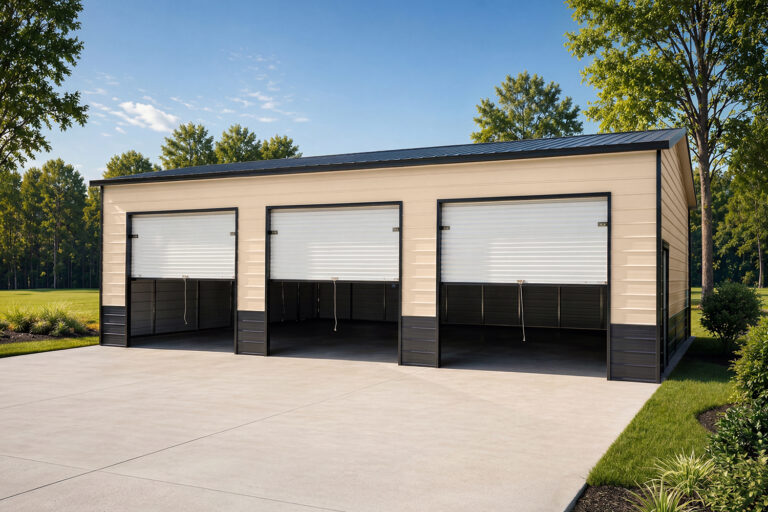
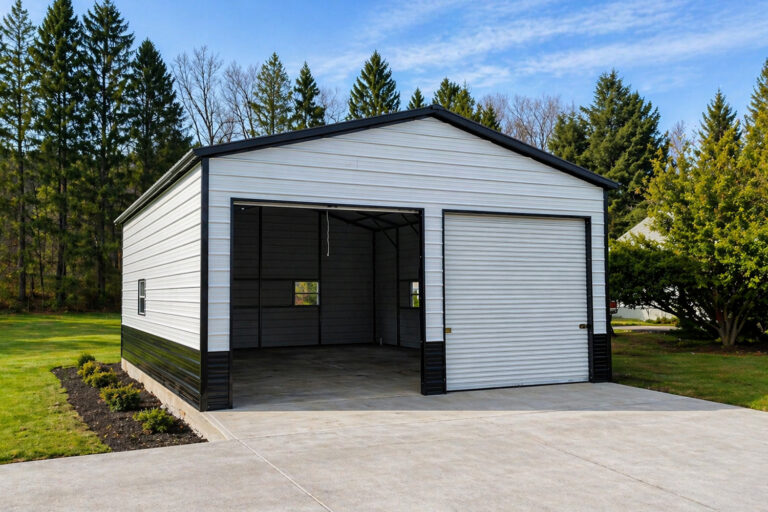
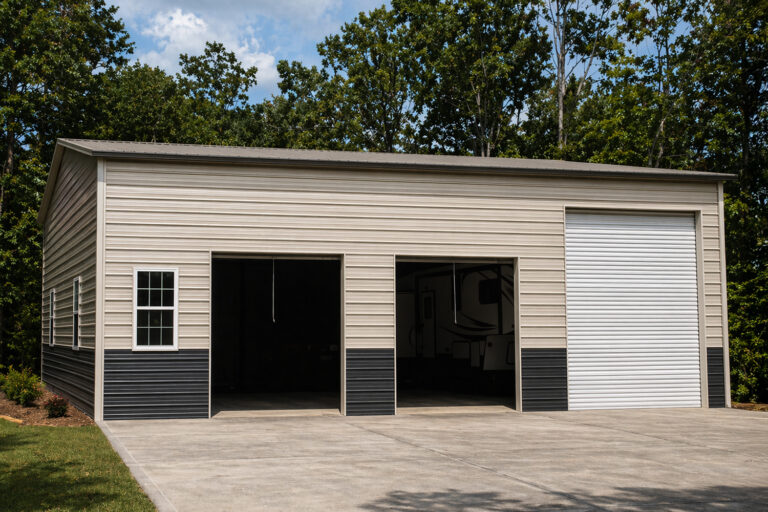
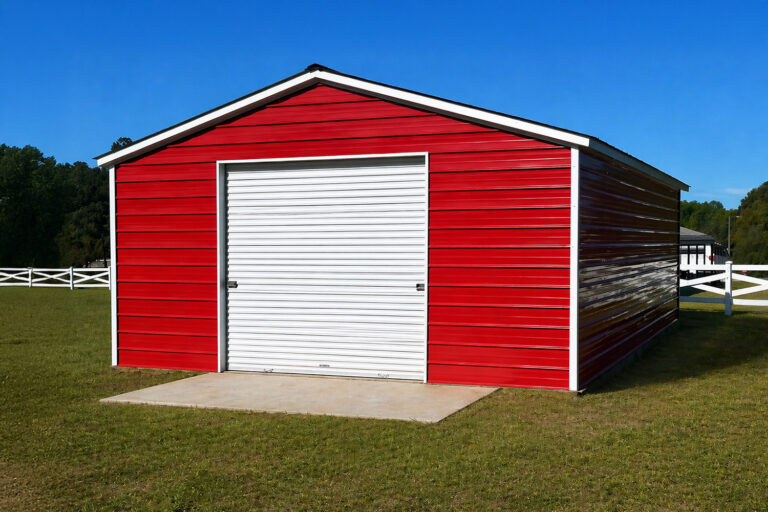
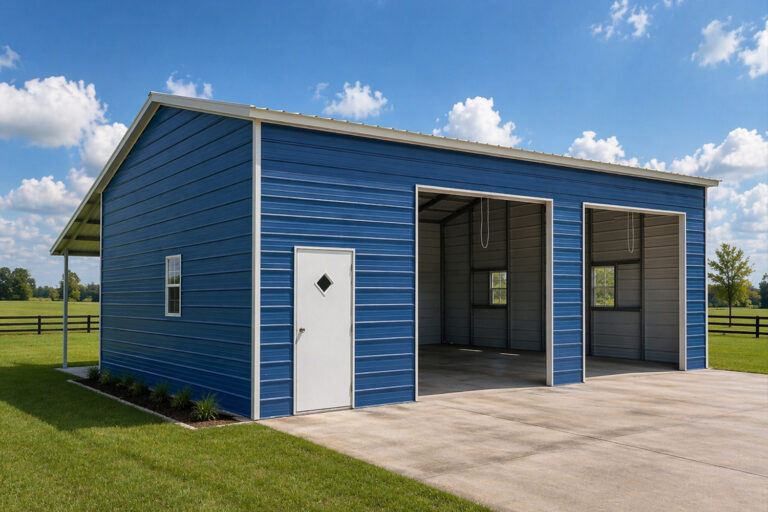
If you need enclosed, lockable storage, start with a metal garage. Garages are usually the best choice for cars, pickups, side-by-sides, lawn equipment, tools, small tractors, motorcycles, and general property storage. They are also the best fit when you want to reduce rain blow-in, dust, pollen, and casual exposure for higher-value items. In Arkansas, garages are especially useful on properties where weather stays wet for long stretches and you want a cleaner transition from driveway to storage.
If you need affordable overhead protection and quick access, start with a metal carport. Carports make sense for daily-driver vehicles, work trucks, trailers, boats, compact tractors, and equipment that gets used often. They are easier to enter and exit quickly than a fully enclosed garage, but they do not protect against wind-blown rain and storm debris as well as an enclosed structure.
If your property is agricultural or rural, a metal barn is often the most practical path. Arkansas has major soybean, rice, hay, corn, and cotton production, and farm properties often need space for tractors, cutters, tillage tools, feed, seed, chemicals, irrigation-related items, and trailers (USDA NASS). Barn-style layouts are useful because they can combine enclosed storage with open side coverage or lean-to space.
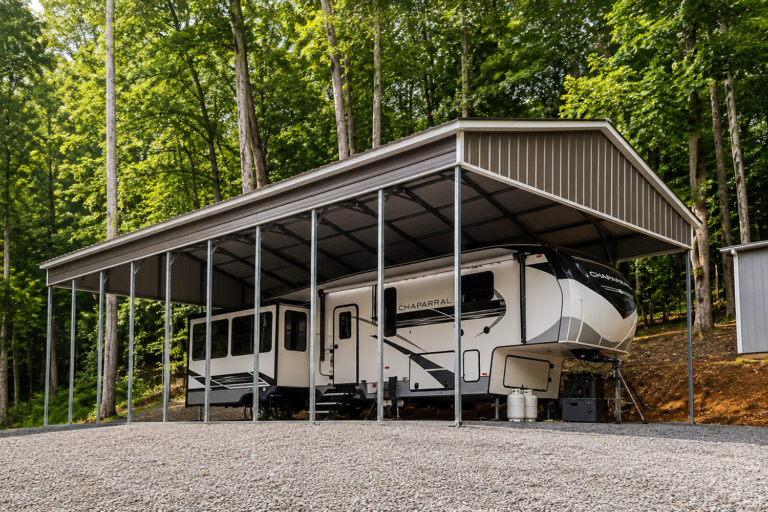
If you own a camper, fifth wheel, or motorhome, choose a metal RV cover instead of trying to force an RV under a standard carport. Measure the true top height of the RV including air conditioners, vents, antennas, solar panels, and ladder clearance. Then give yourself room for mirrors, slide-out access, and comfortable backing distance. Many buyers regret choosing the smallest size that technically fits.
If you need larger bays, more height, or a real work layout, move to a commercial metal building. These make sense for contractors, landscapers, mechanics, farm businesses, and buyers who need inventory space, equipment staging, or multiple overhead doors. In Arkansas, commercial and mixed-use buildings also need the most careful local planning review.
For most buyers, the best all-around roof recommendation for metal buildings in Arkansas is a vertical roof. Arkansas gets regular rainfall, tree debris, pollen, and storm runoff, so vertical panels help water and debris move off the roof more efficiently. Vertical roofs are usually the smartest choice for longer carports, enclosed garages, barns, RV covers, and commercial buildings.
A horizontal A-frame roof can still work if you want a cleaner look than a regular roof at a more moderate cost. A regular roof can make sense for a smaller, budget-oriented carport where the main goal is simple overhead cover. But if you are comparing long-term value in a wet, storm-prone state, vertical roof is usually the recommendation worth making first.
Roof style does not make a building “storm-proof,” and it does not replace proper anchoring or code compliance. It does, however, affect how the building sheds rain, how it handles debris, and how much maintenance the roof may need over time.
Metal buildings in Arkansas should be sized around what you actually own, not just what sounds standard. For a single passenger vehicle, a one-car garage may work, but many Arkansas buyers are storing more than one item. A practical two-car garage often starts around 24×25 or 24×30 if you want room for shelves, a mower, or workbench space. A 30×40 garage is a common step up when you want a pickup, a side-by-side, a mower, and tool storage under one roof.
For agricultural use, compact tractor owners often end up happier with more length and width than they first planned, especially once a loader, cutter, or trailer is involved. If hay equipment, larger tractors, or multiple implements are part of the plan, a wider barn or larger garage-style building is usually easier to live with than trying to save a little upfront and running out of maneuvering room. If you expect to add more equipment later, size for the next purchase, not just the current one.
Door measurements matter as much as building size. A 9×7 garage door is commonly fine for many passenger cars and smaller SUVs. A 10×8 opening is a safer move for many full-size pickups and some boats on trailers. A 10×10 opening is often the better choice for lifted trucks, compact tractors with ROPS, or taller utility trailers. A 12×12 opening is commonly where larger tractors, enclosed trailers, commercial vehicles, or taller equipment start to feel realistic. If you are on the fence, measure the tallest and widest item including accessories and tires, then add working clearance.
For RVs, never guess. Measure total height including rooftop AC units, vents, antennas, solar equipment, and ladder clearance. Also measure door-side access, mirror width, and any slide-out space you need while parked. In many cases, a taller RV cover with a vertical roof is more practical than trying to fit an RV into a garage door opening that is too tight to use comfortably.
Permit rules for metal buildings in Arkansas vary by county, city, zoning district, floodplain status, building use, and whether the structure is detached, attached, residential, agricultural, or commercial. That is why a statewide article should never promise one universal rule.
Official county examples show how much variation there is. In unincorporated Benton County, detached Group U structures such as detached shop buildings with no living space, carports, and storage buildings are generally not required to get building permits, but attached structures and commercial work still do, and driveway permits may also apply (Benton County). In unincorporated Washington County, the county says it does not enforce building codes for agricultural buildings, single-family homes, or residential accessory structures, but floodplain development permits, conditional uses, septic-related requirements, and other planning rules can still apply (Washington County). Pulaski County maintains planning, floodplain, and stormwater controls for unincorporated development and tells applicants to contact Planning and Development for floodplain development permits and fees (Pulaski County).
Here is the simple Arkansas permit checklist to run before you order:
- Ask whether your property is inside city limits, in an extra-territorial planning area, or in unincorporated county jurisdiction.
- Ask whether your building is treated as residential, agricultural, accessory, or commercial.
- Confirm setback rules from property lines, roads, utilities, and easements.
- Ask whether local wind, snow, or anchoring requirements apply to your site.
- Check whether the property is in a mapped floodplain or flood-prone drainage area.
- Ask whether a driveway, culvert, site plan, or stormwater permit is required.
- If utilities are involved, ask about electrical, plumbing, septic, and inspection requirements.
- If the building will support business activity, ask about zoning or conditional-use approval before buying.
Before ordering metal buildings in Arkansas, make sure you can answer these questions clearly:
- Do I need enclosed storage, open overhead cover, or a mixed-use barn layout?
- Am I sizing for what I own today, or what I will likely add next year?
- Have I measured height, width, trailer tongue space, and door clearance correctly?
- Is the site above standing water and sloped so runoff moves away from the doors?
- Would a vertical roof save me problems with rain, leaves, and debris?
- Do I need gravel, concrete, or a more engineered base for my soil and use case?
- Have I checked floodplain, planning, driveway, and local permit requirements?
- Will I still be happy with this layout when the weather is wet and I need to use it every day?
Metal buildings in Arkansas are most useful when they are chosen for real local conditions instead of generic dimensions. If you plan for Arkansas rainfall, storm exposure, clay soils, flood-prone areas, equipment access, and future storage growth, you end up with a building that works better for years. Blue Valley Steel offers garages, carports, barns, RV covers, and commercial buildings that can be compared around those real Arkansas needs instead of guesswork.

 Sale
Sale