Metal Buildings in Arizona Start With Climate and Site Conditions
Metal buildings in Arizona should be chosen around heat, sun exposure, summer monsoon storms, runoff, dust, and local permit rules. In the low deserts, most buyers are solving for shade, airflow, and dirt control. In higher-elevation parts of the state, snow load, wildfire-prone surroundings, and colder winter conditions can matter too. The smartest buy is not just the cheapest size on a quote. It is the building type, roof style, height, and site plan that match your property and the way you will use it.
Blue Valley Steel offers metal garages, metal carports, metal barns, metal RV covers, and commercial metal buildings for Arizona buyers. The right choice depends on whether you need open shade, full enclosure, extra-tall clearance, ranch storage, or a work-ready commercial footprint.
Metal Building Types Available in Arizona
Most Arizona shoppers can narrow the decision quickly once the main job of the structure is clear.
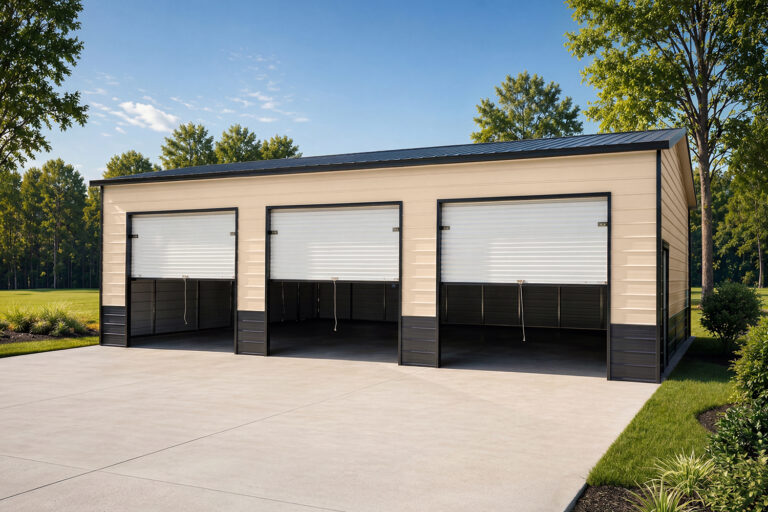
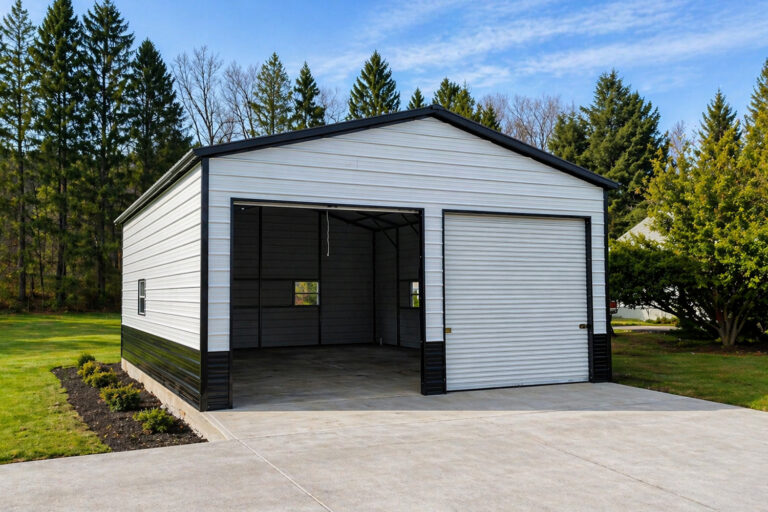
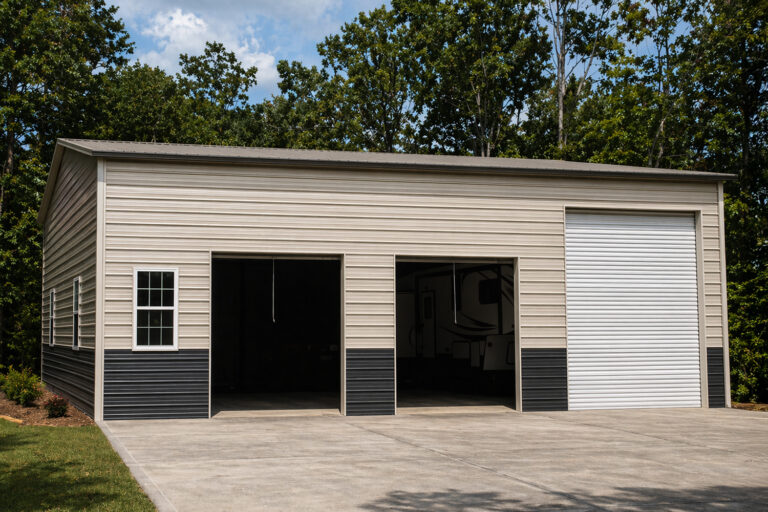
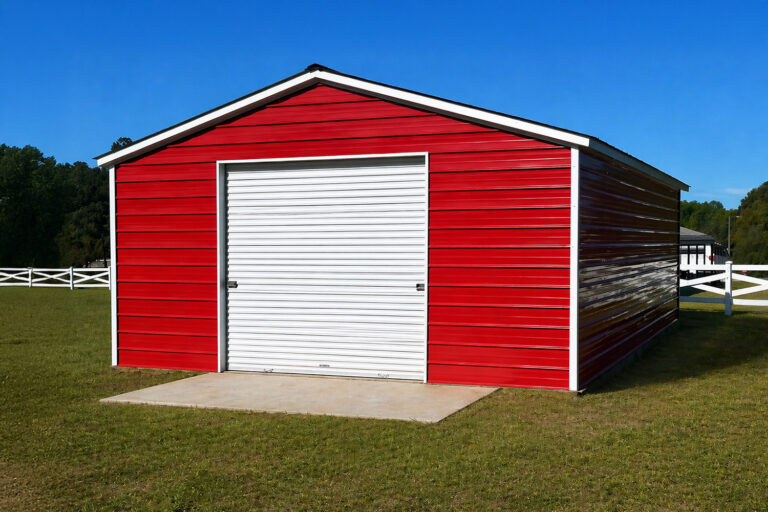
- Metal garages: best when you need enclosed storage for vehicles, tools, side-by-sides, motorcycles, hobby equipment, or dusty properties.
- Metal carports: best when the goal is affordable overhead shade for cars, pickups, boats, tractors, trailers, and quick-access equipment.
- Metal barns: best for ranch and rural storage, including tractors, feed, hay, implements, tack, and mixed enclosed-plus-open layouts.
- Metal RV covers: best for motorhomes, fifth wheels, toy haulers, and travel trailers that need tall clearance and roof protection.
- Commercial metal buildings: best for shops, inventory, contractor storage, service bays, fleet parking, and warehouse-style layouts.
If the main need is simple shade for a daily-driver or pickup, a carport may be enough. If the real worry is dust, security, or long-term storage, start with a garage or commercial building instead. If the property is ranch-oriented or equipment-heavy, a barn-style layout often works better than trying to piece together several smaller covers.
Metal Buildings in Arizona and Local Weather Risks
Heat, Shade, and Airflow
Arizona sun is the reason many people start shopping for metal buildings in Arizona in the first place. Vehicles spend long periods in direct sun, RV roofs take a beating, and outdoor equipment gets harder to use and maintain when it is constantly exposed. That makes roof-only coverage valuable, but it also means building orientation matters. Think about where late-afternoon sun hits the property and whether one open side will still leave the vehicle exposed during the hottest part of the day.
For enclosed garages and shops, heat changes the layout. A walk-in door, good door placement, and a few windows can make a garage far easier to use without opening the largest bay every time. If the building will be used as a workspace instead of simple storage, plan the layout around light, access, and practical movement inside the structure.
Monsoon Rain, Dry Washes, and Flash-Flood Runoff
Arizona can look bone-dry for weeks and still flood hard in summer. That is why the building site matters as much as the structure itself. Avoid low spots, active washes, and any location where runoff naturally crosses the pad. If water already travels through an area during storm season, do not assume the building location will somehow solve that problem.
Door direction matters too. Garage doors facing downhill runoff are more likely to take water, silt, and debris. On RV covers and carports, make sure the entry path stays usable after rain and that water can move away from the posts instead of ponding around them. In Arizona, a good site plan can save more frustration than a small upgrade in size.
Dust, Wind, and Wildfire-Prone Locations
An open carport provides shade, but it does very little for dust. On unpaved or rural lots, that can be the deciding factor between a carport and a garage. If you need to protect tools, furniture, stored inventory, hobby equipment, or anything you do not want coated in fine dust, enclosed space is worth strong consideration.
Wind exposure also changes the buying decision. Open-sided buildings are easy to use, but they are more exposed during outflow winds and downbursts than enclosed buildings. In high-desert or forest-edge areas, buyers should also think about defensible space, nearby vegetation, and whether a local fire district or wildland-urban-interface rule adds extra requirements around siting or materials.
How to Choose the Right Building Type
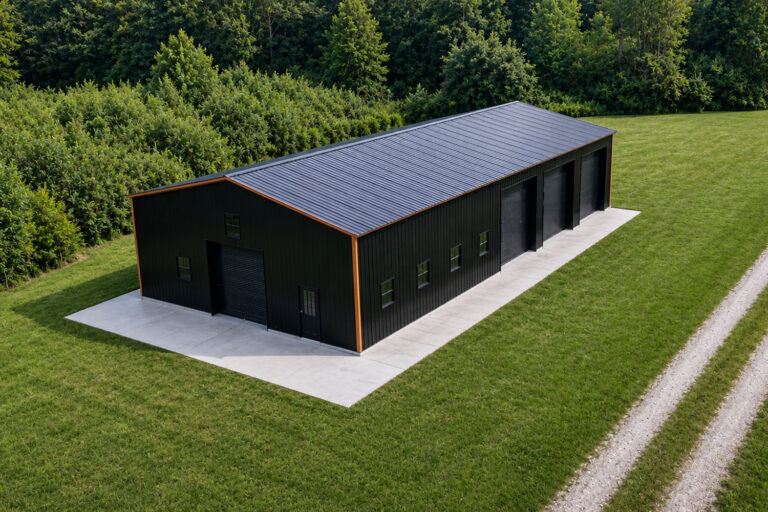
Choose a Metal Garage If You Need Enclosure and Dust Control
A metal garage is usually the best fit for pickups, classic cars, UTVs, motorcycles, tools, and hobby storage on properties where dust is a real issue. It is also the better choice when the building needs to feel organized and secure rather than simply shaded. A single-vehicle garage might start around an 18×21 footprint, while a more practical two-vehicle layout often starts around 24×30.
If you may add shelving, a mower, a workbench, or bins later, buy the extra depth now rather than wishing you had it later. Arizona buyers frequently start with vehicle storage and then realize they also want room for outdoor gear, tools, or workshop space.
Choose a Metal Carport If Shade Is the Main Job
A metal carport is often the simplest and best-value answer when you mainly need overhead shade. Carports work well for daily-driver cars, pickups, boats, trailers, tractors, and equipment that moves often. Smaller single-vehicle covers may start around 12×21, while full-size pickups or side-by-side parking usually require more width and length.
Arizona shoppers should think carefully about sun angle and open-side exposure. A roof-only carport provides important shade, but partial side panels may make it more useful if afternoon sun or blowing dust is part of the problem. If the lot is windy or the structure is long, upgrade the roof style before under-sizing the frame.
Choose a Metal Barn for Ranch and Rural Storage
A metal barn works well on ranches, horse properties, hobby farms, and larger rural lots where the storage needs go beyond one vehicle. Barn-style layouts are a stronger fit when you need room for tractors, implements, feed, hay, tack, water tanks, fencing supplies, or a mix of enclosed and open storage.
Many rural Arizona buyers are better served by a 30×40 or 36×48 barn-style layout than by trying to scatter several small covers around the property. A barn can also be paired with lean-tos or open side storage to keep frequently used equipment shaded while reserving enclosed space for tools, feed, and more valuable items.
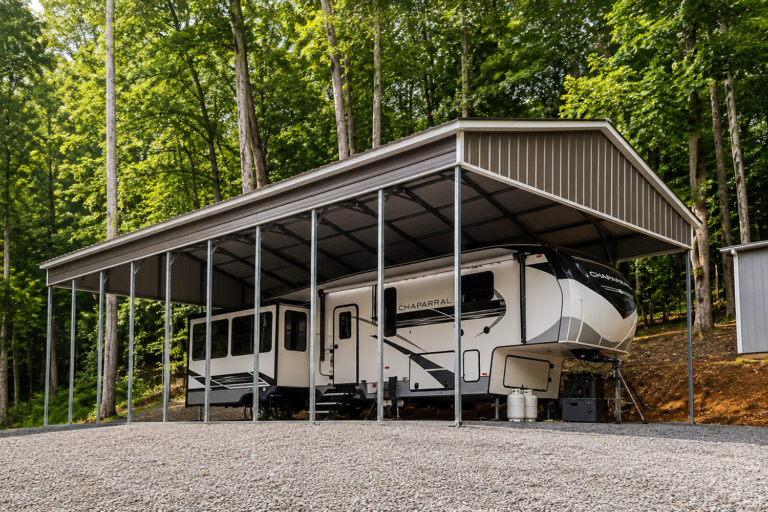
Choose a Metal RV Cover When Height Drives the Project
RV buyers should begin with actual measurements, not estimates. Measure total height to the top of the air conditioner, vent, antenna, solar hardware, or satellite equipment. Then check width for mirrors, steps, and slide-out access, plus length for the full body, ladder clearance, tongue length where relevant, and working room around the unit.
Arizona RV covers commonly start in the 18×40 to 20×45 range for larger units, but the right layout depends on how much access you want after parking. If you want to walk the full side of the RV, open compartments, or work on the unit under cover, do not buy the tightest possible fit.
Choose a Commercial Metal Building for Shops, Fleets, and Business Storage
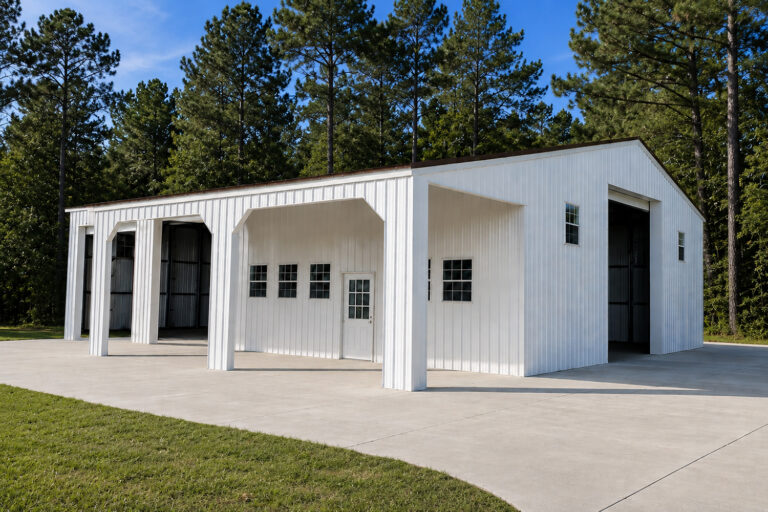
Commercial metal buildings are the better choice when you need larger bay doors, open floor area, inventory space, contractor storage, or room for light service work. Think about workflow first: truck approach, trailer turning, door location, and how materials move through the building. In Arizona, commercial buildings also need more attention to ventilation, dust control, and local permitting than a simple residential cover.
If the building may eventually add utilities, office space, lifts, or larger equipment, plan those possibilities early. Commercial buyers often regret designing only for current square footage instead of future use and vehicle movement.
Roof Choices for Metal Buildings in Arizona
For most buyers, the safest default recommendation is a vertical roof. Arizona weather is not just hot. It also includes short, heavy monsoon bursts, debris, and outflow winds. Vertical panels help water and light debris move off the roof more cleanly and are usually the best fit for longer spans, garages, barns, RV covers, and commercial buildings.
A horizontal A-frame roof can still be a reasonable middle option when the structure is shorter and the budget is tighter. It gives a more defined look than a regular roof, but it still does not move runoff and debris as efficiently as vertical panels. A regular roof is best saved for smaller budget shade covers where the main goal is affordable overhead protection, not long-span performance.
Common Arizona Sizes, Door Widths, and RV Clearance
Passenger cars and smaller SUVs can often work with a 9×7 garage door. Full-size pickups usually deserve at least a 10×8 opening, especially if mirrors, racks, or a little extra approach forgiveness matter. A 10×10 door is a better comfort zone for taller pickups, side-by-sides, compact tractors, or trailers. A 12×12 opening is where many buyers start when larger tractors, enclosed trailers, tall equipment, or shop use enter the picture.
Do not size only for what barely fits. If a pickup technically clears a door by a few inches, daily use may still be annoying. The same rule applies to RVs: measure total height, then add breathing room for roof accessories, approach slope, and future changes. Width matters too, especially if you want to open storage compartments or walk beside the RV after it is parked.
For ranch equipment, think beyond the tractor itself. Front loaders, blades, box scrapers, sprayers, and hay tools change the real space requirement. Many Arizona rural buyers make the mistake of sizing only for the power unit and forgetting the attachment that remains mounted most of the year.
Site Prep, Drainage, Dust, and Anchoring
The building site should be dry, usable, and easy to approach after storms. That usually means positive drainage away from the structure, a pad that sits above nearby grade where practical, and enough turning radius for trucks, trailers, and deliveries. If your lot includes a wash, sheet-flow area, or obvious storm path, plan around it rather than hoping the building placement will solve it.
Gravel and concrete both have a place. Gravel often works well for carports, barns, and simple equipment storage where drainage and budget matter most. Concrete is usually the better choice for enclosed garages, commercial shops, rolling tools, cleaner RV parking, and any building where a more finished floor really improves usability. On expansive or clay-heavy soils, base prep matters just as much as the visible finish.
Anchoring and design loads should always be verified locally. Arizona buyers on exposed lots should ask about wind rating, exposure category, and anchoring for the actual base being used. Buyers in northern or higher-elevation areas should also ask about snow load and related design criteria before finalizing the roof and wall height.
Arizona Permits, Zoning, and Rural Site Checks for Metal Buildings in Arizona
There is no one-size-fits-all Arizona rule for metal buildings in Arizona. Permit, setback, floodplain, and design-load requirements vary by county, city, property zoning, and site conditions. Small accessory-structure exemptions exist in some places, but they do not waive zoning, floodplain, setback, HOA, or fire-district rules.
Before ordering, check the local building or development office for permit triggers, setback rules, floodplain status, required site plans, slab or engineered foundation requirements, wind and snow loads, utility approvals, and whether the structure is treated as residential accessory, agricultural, or commercial. If the property is in or near a wash, floodplain review may matter even when the building looks straightforward.
- Confirm property lines, easements, and access before staking the pad.
- Ask whether setbacks are measured to the posts, the eave, or the roof overhang.
- Verify whether grading, fill, walls, or drainage changes need separate approval.
- Check wildfire or WUI rules if the property sits in forested, foothill, or high-country terrain.
- If septic exists, confirm that the proposed building does not interfere with required clearances.
- Check HOA or neighborhood restrictions before ordering custom colors or larger heights.
Helpful Arizona sources include the Arizona State Climate Office monsoon guide, the NWS Phoenix monsoon safety page, the NWS dust storm safety page, the USDA/NASS Arizona agriculture overview, Maricopa County Planning and Development, Pima County Permitting, and Coconino County Building and Safety.
Final Arizona Buying Checklist
- Need shade only? Start with a carport or RV cover.
- Need dust control and lockable storage? Start with a garage.
- Need tractor, feed, or ranch storage? Compare barn-style layouts and lean-tos.
- Need better runoff performance? Default to a vertical roof.
- Need to store an RV or tractor? Measure total height, width, and turning space before picking doors.
- Building on a rural lot? Watch washes, runoff direction, dust exposure, and delivery access.
- Building in northern or high-country Arizona? Verify snow load and any wildfire-area rules.
- Almost ready to order? Confirm permits, setbacks, anchoring, and the base before installation day.
Metal buildings in Arizona work best when the building type, roof, height, anchoring, and site plan are chosen together. Compare the job you need the structure to do, the weather your property sees, and the access you need every week, not just the size that looks cheapest on paper.

 Sale
Sale