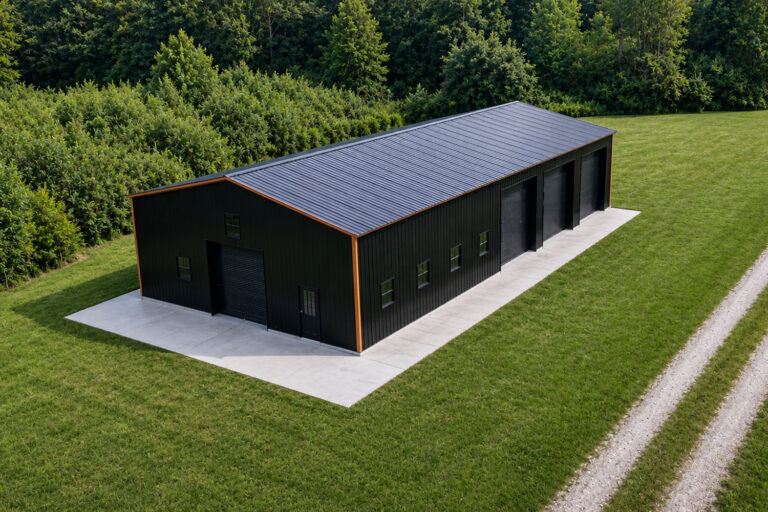
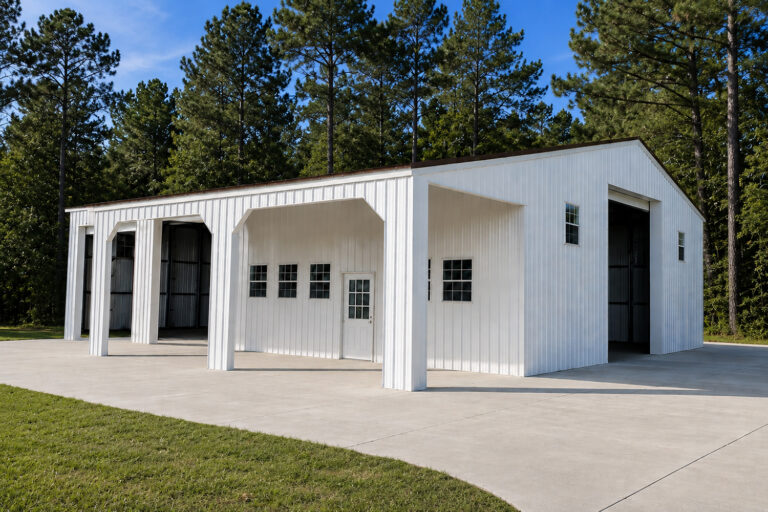
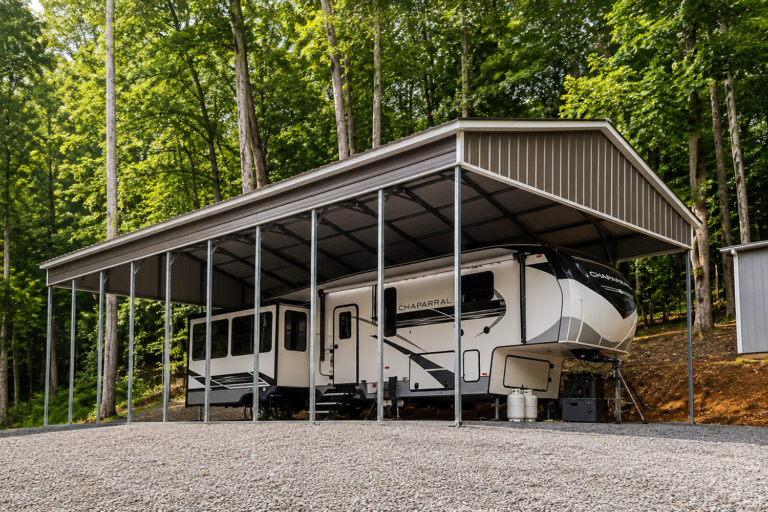
Metal buildings in Alabama work best when buyers plan for rainfall, humidity, ventilation, anchoring, and drainage before choosing size or price. Compare garages, carports, barns, RV covers, and commercial buildings based on how well they protect vehicles, farm equipment, tools, and business storage in Alabama’s storm-prone climate.
Blue Valley Steel Metal Buildings Available in Alabama
Metal buildings in Alabama need to be chosen around rain, humidity, storm exposure, and the way the building will be used every week. Blue Valley Steel offers metal garages, metal carports, metal barns, metal RV covers, and commercial metal buildings for Alabama homes, farms, and small businesses.
If you only need overhead cover for a truck, trailer, tractor, or boat, a carport may be enough. If you want to lock up tools, protect equipment from humidity, or build out a workshop, a garage or commercial building is usually the better move. For rural properties, barns and garage-plus-lean-to layouts often make the most sense because they separate enclosed storage from quick-access equipment parking.
Why Metal Buildings in Alabama Need Weather-First Planning
Metal buildings in Alabama face a wetter and stormier environment than buyers in many western states. Alabama’s long-term statewide precipitation average is 55.4 inches, the 1991–2020 average is 56.88 inches, and 3-inch rain events have been above average since 1995 (Alabama State Climate Summary; Alabama Office of the State Climatologist). That makes runoff, splash-back, mud control, and roof drainage practical buying issues instead of minor details.
Storms matter too. Alabama averages about 43 tornadoes per year historically, typically in spring and fall, and the state is directly impacted by a hurricane about once every six years on average, with greater coastal wind and flood exposure in south Alabama (NOAA State Climate Summary). NOAA/NCEI also shows Alabama has been affected by 116 billion-dollar weather and climate disasters since 1980, including 58 severe storm events and 26 tropical cyclone events (NOAA/NCEI Alabama disaster summary). That is why anchoring, roof style, and site placement deserve real attention before you order.
Rain, Drainage, and Ventilation
For most buyers, the first practical issue is water. Avoid placing the building in a low spot, at the bottom of a slope, or anywhere driveway runoff heads straight toward the doors. If your property stays soft after repeated rain, build up the pad and make sure water moves away from the perimeter. In humid areas, enclosed buildings also benefit from thoughtful access and airflow. A walk-in door, windows, and door placement that encourages cross-ventilation can make the building easier to use all year.
Wind, Tornado, and Coastal Exposure
Open-sided structures are convenient, but they are more exposed than enclosed ones. If your site is open, elevated, or closer to the Gulf Coast, ask early about anchoring, wind ratings, and the base type required for the exact building you want. South Alabama buyers should also think about tropical downpours and tree debris, while north and central Alabama buyers often focus more on thunderstorm wind, hail, and spring tornado risk. Keep major openings pointed away from the direction where runoff and driveway wash usually come from.
Choosing the Right Building Type for Alabama Property
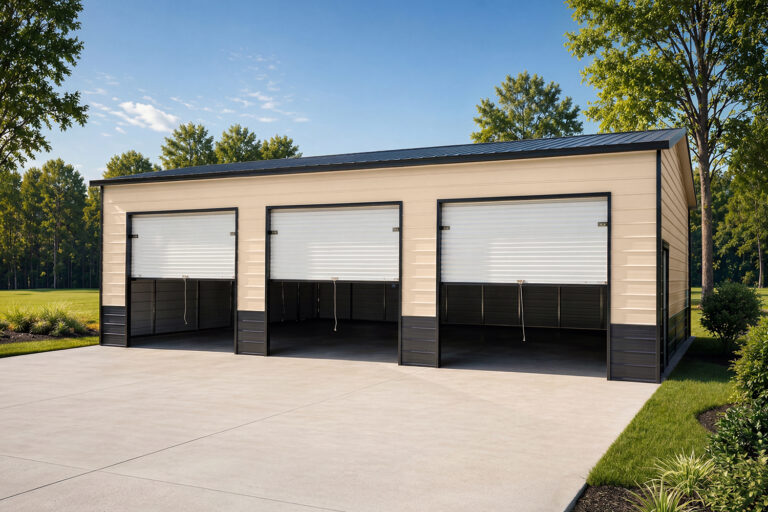
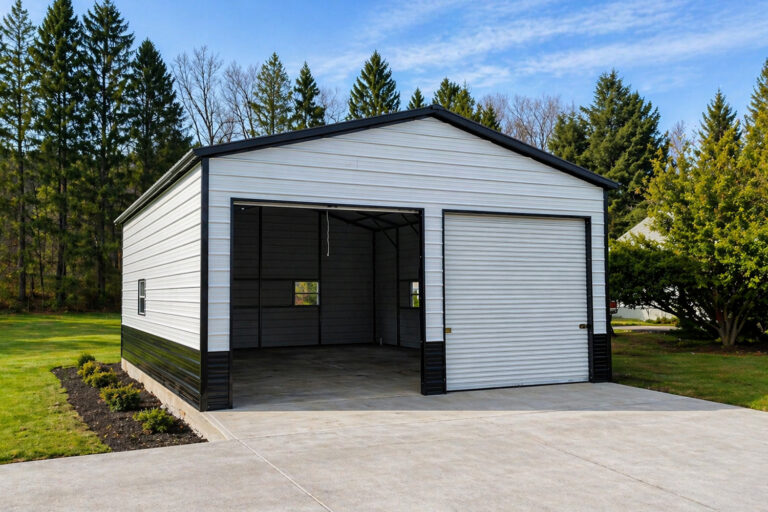
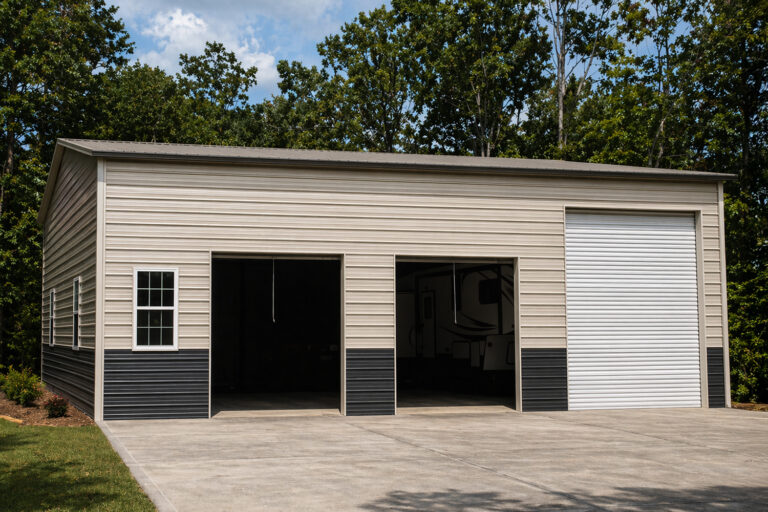
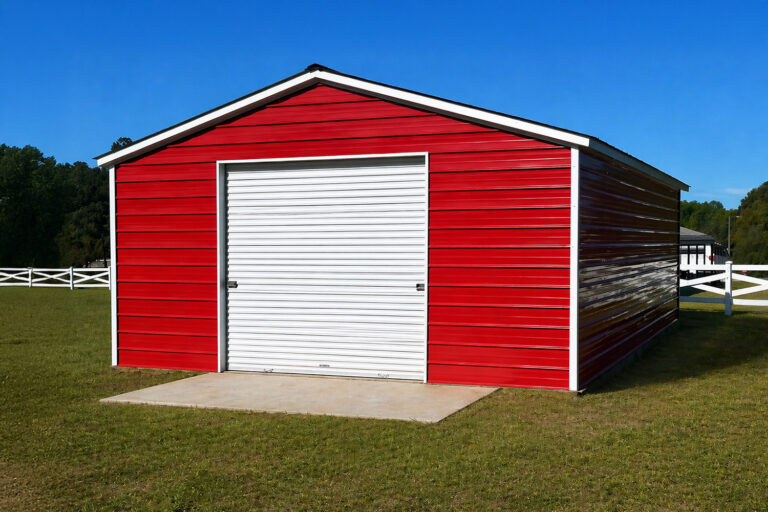
Choose a Metal Garage for Enclosed Storage
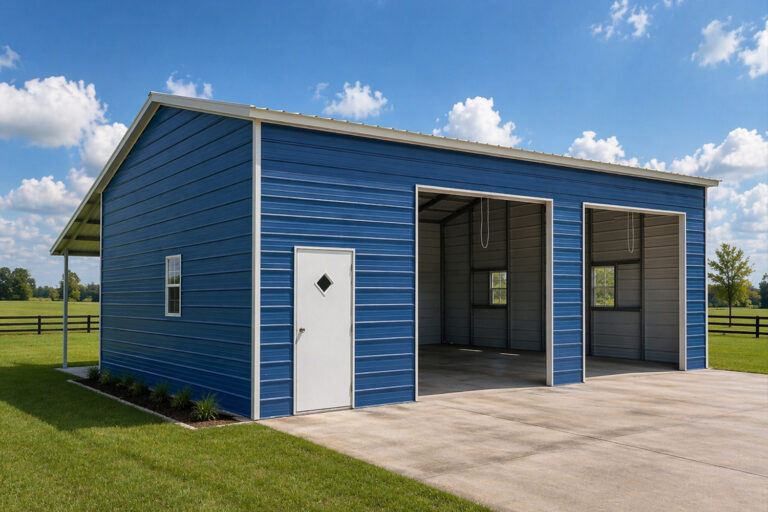
A garage is the best starting point when you need enclosed protection for vehicles, tools, mowers, ATVs, household storage, or a small shop. Common Alabama layouts include a 12×25 single-car garage, a 24×25 or 24×30 two-car garage, and a 30×40 garage for mixed vehicle-and-workshop use. A 9×7 door often works for passenger cars, a 10×8 door suits many pickups and SUVs, a 10×10 door is a safer fit for taller tractors or trailers, and 12×12 is common when larger equipment must clear comfortably.
Choose a Metal Carport for Fast-Access Coverage
A carport is ideal when the goal is shade and rain protection without paying for full enclosure. In Alabama, carports are especially useful for daily-driver vehicles, fishing boats, utility trailers, tractors, and mowers that need quick access. Sizes like 12×20, 18×25, and 20×30 cover many common uses. If the carport is long, near trees, or expected to handle frequent runoff and debris, spend the extra money on a vertical roof.
Choose a Metal Barn for Farm and Rural Storage
A barn makes sense when your storage needs change by season. Alabama had about 37,000 farm operations in the 2025 USDA/NASS overview, and poultry, cattle, hay, cotton, peanuts, soybeans, and timber all help drive demand for equipment and supply storage (USDA NASS Alabama overview; USDA NASS Alabama About Us). A 30×40 or 40×60 barn can handle tractors, implements, feed, and maintenance tools, while a lean-to can cover items that need overhead protection but not full enclosure.
Choose a Metal RV Cover for Height and Clearance
An RV cover is the right answer for motorhomes, campers, travel trailers, and fifth wheels that will not fit under a standard carport. Measure total height with rooftop AC units, vents, antennas, and ladder clearance, then add practical breathing room. Many Alabama RV buyers end up in the 18×35 to 24×50 range with 12- to 14-foot clearance, depending on the rig. Check width for mirrors and slide-out access too; a cover that is only barely wide enough becomes frustrating every time you park or service the RV.
Choose a Commercial Metal Building for Larger Workflows
Commercial buildings are better when you need wide bays, tall doors, tool and inventory storage, or room for contractors, mechanics, landscapers, or agricultural operations. Think about how trucks enter, where materials sit, and whether you need multiple doors instead of one oversized opening. Utilities, signage, occupancy, and fire access can all change the permit path, so commercial projects should be checked locally before site work starts.
Best Roof Styles for Metal Buildings in Alabama
Metal buildings in Alabama usually make the most sense with a vertical roof when budget allows. Vertical panels help rain and leaf debris shed more efficiently, which is a practical advantage in a state with high annual rainfall and regular storm cleanup. Horizontal A-frame roofs can be a reasonable middle option for shorter garages and carports when appearance matters and budget is tighter. Regular roofs work best on small, budget-driven covers where the main goal is simple protection rather than the strongest runoff advantage.
For most Alabama buyers, the practical rule is simple: choose vertical for garages, RV covers, barns, and most commercial buildings; use horizontal A-frame when you want a middle ground; use regular only when budget matters more than drainage efficiency.
Sizing, Doors, and Layout Tips
For pickups and full-size SUVs, give yourself more than the bare minimum width so doors can open comfortably. Boats and utility trailers often need more length than buyers expect once the hitch and tongue are included. Compact tractors may fit through a 10×10 opening, but larger tractors, skid steers with attachments, and hay equipment often push buyers toward 12×12 doors and wider turning space. If you plan to store tools, feed, parts, or shelving along the walls, buy for circulation space, not just parked dimensions.
Metal buildings in Alabama also need the right base. Concrete is usually the best choice for enclosed garages, workshops, and commercial buildings, especially if you want cleaner storage or future utility hookups. Well-compacted gravel can work well for carports, barns, and equipment covers when local rules allow it and drainage is handled properly. On sloped or softer sites, ask whether extra grading or a raised pad is needed before delivery.
Permit and Planning Checklist for Metal Buildings in Alabama
Local rules vary, so verify them before ordering. The City of Montgomery says permits are required when you construct, move, enlarge, alter, repair, demolish, or change the occupancy of a building or structure, and Montgomery County separately requires a building permit for structures over 200 square feet in its jurisdiction (City of Montgomery; Montgomery County). Huntsville also requires permits for accessory structures and applies setback rules, while Madison County lists residential accessory buildings among the work that requires permits (City of Huntsville; Madison County).
State law adds another wrinkle: the Alabama Residential Building Code is enforced by local jurisdictions with permitting and inspection programs, and the code does not apply to agricultural buildings except for any residence contained within them (Alabama Home Builders Licensure Board law summary). That can matter for farm buyers, but it does not mean you should skip local zoning, floodplain, driveway, or utility questions.
- Confirm permit requirements, setbacks, and HOA restrictions.
- Ask about wind, floodplain, and anchoring requirements for your exact site.
- Verify whether agricultural, residential, and commercial uses are treated differently.
- Check whether your base must be concrete, engineered, or otherwise inspected.
- Measure the tallest and widest item that will use the building before finalizing doors.
- Plan drainage so water moves away from posts, walls, and door openings.
Final Buying Checklist for Metal Buildings in Alabama
If you need secure enclosed storage, start with a garage. If you need simple shade and rain cover, start with a carport. If the property is agricultural, compare barn layouts and lean-tos. If the vehicle is tall, measure it like an RV project, not like a carport project. For most longer or higher-value structures, vertical roof designs are the safest general recommendation for metal buildings in Alabama.
Ready to compare options? Start with metal garages, metal carports, metal barns, metal RV covers, and commercial metal buildings, then match the layout to your site drainage, equipment measurements, and local permit requirements before you buy.

 Sale
Sale